
The Vital Role of Naval Ship Libraries During Combat Operations
When a warship deploys into contested waters, the minds of its crew are as critical as its weapons systems. Often overlooked in discussions of combat readiness, shipboard libraries have served as a quiet yet essential resource in the United States Navy for more than two centuries — supporting sailors’ morale, professional development, and the mental resilience that determines whether a crew holds together under fire.
The tradition of naval ship libraries dates to 1800, when President John Adams directed the Secretary of the Navy to establish a collection on the “theory and practice of naval architecture, navigation, and naval combat.”[1] That founding mandate recognized something commanders had long understood: a well-informed, mentally engaged sailor is more effective. From those early origins, the Navy’s commitment to shipboard reading material grew into a comprehensive system. Regulatory guidance once mandated that battleships carry up to 2,000 volumes, aircraft carriers receive allocations of 1,100 to 2,000 books, and even submarines and destroyers maintain collections of 150 to 300 titles.[2] These allowances were not arbitrary — they reflected the Navy’s institutional understanding that knowledge, morale, and combat effectiveness are inseparable.
Today, the Navy General Library Program (NGLP) supports more than 300 afloat library locations, outfitting new ships upon commissioning and supplying ongoing reading material throughout their operational lives.[3] The program has evolved with technology; Library Multimedia Resource Centers (LMRCs) now use digital storage to expand holdings aboard ship, while partnerships with Navy Knowledge Online (NKO) give sailors and Marines access to e-books, audiobooks, and reference materials at no personal cost.[3] These resources remain available even when internet connectivity is restricted due to tactical or security requirements — a critical distinction in a combat environment where bandwidth is carefully managed, and communication blackouts are routine.[2]
The importance of these resources only grows during extended deployments and combat operations. Research consistently shows that sailors face unique psychological burdens aboard ship. A 2022 systematic review published in BMC Psychology found that seafarers are exceptionally isolated, spending both working and non-working hours in the same confined environment, frequently experiencing conflict between ranks and departments, and  suffering from loneliness and homesickness.[4] For naval personnel in combat zones, these stressors are compounded by operational tempo, constant vigilance, and the psychological weight of potential threat. Access to books — whether fiction that offers mental escape or professional texts that sharpen tactical thinking — provides a proven, low-cost buffer against the psychological attrition that erodes combat effectiveness over time.
The Navy has taken the mental health of its sailors with increasing seriousness in recent years. A 2023 qualitative study published in Military Behavioral Health concluded that early, self-directed access to mental wellness resources improves occupational outcomes and directly supports force readiness.[5] The Navy’s 2023 Mental Health Playbook reinforced this by calling on commanders to build environments of positive mental maintenance, acknowledging that the primary stressor across the fleet was exhaustion from a heavily worked force.[6] In this context, shipboard libraries serve as a preventative measure — accessible at any hour, carrying no stigma, and available without an appointment or a referral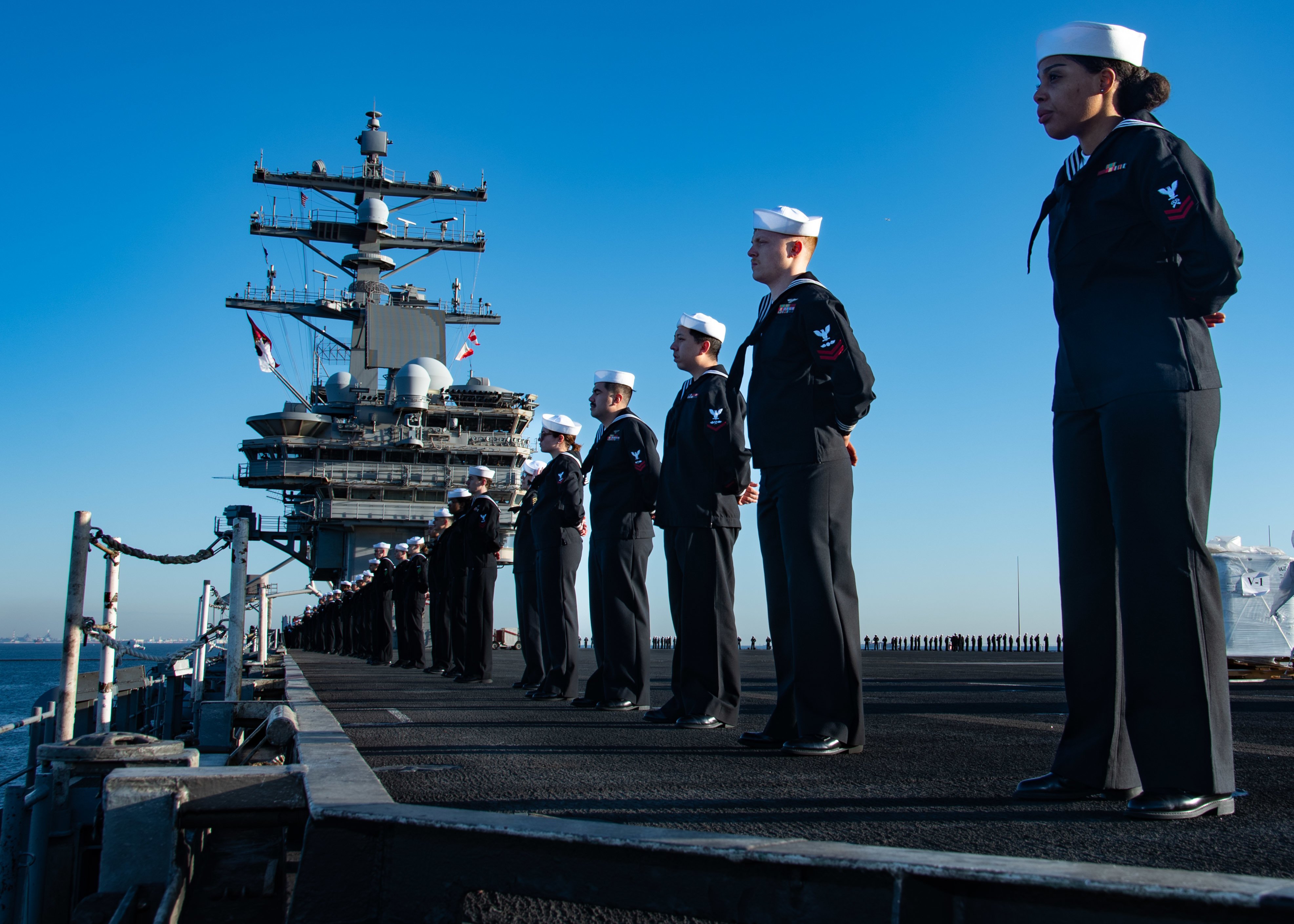
Beyond morale, shipboard libraries serve a concrete professional development function. Technical reference materials, Jane’s reference books, equipment manuals, and copies of Navy Department publications are distributed throughout vessels and integrated into daily operational life.[2] Officers and enlisted personnel alike use these resources to prepare for advancement examinations, deepen tactical knowledge, and study doctrine relevant to the mission at hand. In an era when the Chief of Naval Operations has set a goal of achieving 80 percent combat surge readiness across the fleet by 2027,[7] every tool that sharpens sailors’ knowledge and sustains crew cohesion directly advances that objective.
The naval ship library is not a relic of slower wars fought at greater distances from home. It is a living institution, adapted to digital formats and evolving operational demands, that continues to serve the oldest truth of naval command: the ship is only as strong as the people within it. In the silence between drills, between watches, between moments of contact with the enemy, the library remains — a reminder that wars are won not only by those who fight, but by those who think.
Sources
[1] Wikipedia. Navy Department Library. Updated September 15, 2025. https://en.wikipedia.org/wiki/Navy_Department_Library
[2] The Tides of History. “Naval Ship Libraries – Fair Winds & Following Seas.” Fair Winds & Following Seas, May 25, 2025. https://thetidesofhistory.com/2025/05/25/naval-ship-libraries/
[3] Navy Life MA. “Libraries.” Navy MWR. https://www.navylifema.com/recreation/libraries
[4] Lefkowitz RY, et al. “Mental health and psychological wellbeing of maritime personnel: a systematic review.” BMC Psychology 10, no. 139 (2022). https://doi.org/10.1186/s40359-022-00850-4
[5] Harrison EM, Englert RM, Thomsen CJ, Glassman LH. “Challenges and Opportunities to Maximize Mental Health among Shipboard Sailors: A Qualitative Study.” Military Behavioral Health (2023). https://doi.org/10.1080/21635781.2023.2258785
[6] Mongilio H. “New Navy Guidance Emphasizes Leadership Responsibilities for Sailor’s Mental Health.” USNI News, March 1, 2023. https://news.usni.org/2023/03/01/new-navy-guidance-emphasizes-leadership-responsibilities-for-sailors-mental-health
[7] Lippy RD. “Measuring the Effectiveness of Navy Embedded Mental Health: Supporting Warfighting Readiness.” Journal of Mental Health Disorders 5, no. 1 (2025): 56–60. https://www.scientificarchives.com/article/measuring-the-effectiveness-of-navy-embedded-mental-health-supporting-warfighting-readiness