More Than Books: How Libraries Champion Mental Health in Their Communities
In recognition of Mental Health Awareness Month, May 2026
Mental health has always been part of being human, and is something we’ve all either struggled with or known someone who has. Every May, Mental Health Awareness Month invites communities across the United States to reflect on the scale of the mental health crisis — and on the systems quietly working to address it. When people think of mental health resources, they might picture clinicians, hospitals, or hotlines. Rarely do they picture their local library. Yet libraries — public, academic, and school-based — have emerged as indispensable hubs of mental health support, offering services, spaces, and research infrastructure that reach people where they are, often before they ever seek
https://usafacts.org/answers/how-many-people-have-mental-illness-in-the-united-states/country/united-states/
formal care.
The need has never been more urgent. According to the 2024 National Survey on Drug Use and Health released by the Substance Abuse and Mental Health Services Administration (SAMHSA), approximately 23.4% of U.S. adults — roughly 61.5 million people —  experienced any mental illness in the past year [1]. Among young adults aged 18–25, that figure climbs to 33.2% [2]. And despite growing awareness, access to care remains deeply unequal: nearly half of adults living with mental illness received no treatment at all [3]. This treatment gap is where libraries — trusted, free, and barrier-free — have begun to play an outsized and often underappreciated role.
Libraries as Safe Spaces and Community Anchors
Libraries have a long tradition of meeting people where they are. Long before the phrase “mental health support” entered their mission statements, libraries offered something clinicians and social service agencies often struggle to provide: a stigma-free space where anyone could walk in without an appointment, a co-pay, or a diagnosis.
Research published in BMC Public Health in 2024, drawing on surveys and interviews with library users and staff, confirmed that libraries are widely regarded as “safe places” by community members, regardless of how frequently they use library services [4]. This perception of safety is not incidental — it is foundational to the library’s potential as a mental health resource. Libraries do not ask why you are there. They do not require insurance. They do not turn people away.
In recent years, this welcoming environment has been formalized into structured mental health programming. One of the most significant developments is the whole person librarianship model, in which public librarians partner directly with licensed social workers to provide mental health services and interventions to patrons in need [5]. Cities from San José, California — where the Holistic Library Initiative embeds social workers across branch locations — to Washington, D.C., where the DC Public Library employs a dedicated Health and Human Services Manager, have adopted this model to connect residents with mental health referrals, crisis support, and community resources [6].
A landmark example of library-based mental health programming is the Libraries for Health (L4H) initiative, a pilot program studied by the RAND Corporation that embedded peer mental health specialists in 10 rural libraries across Central Texas from 2022 through 2025. Peer specialists — individuals with lived experience of mental health challenges who are certified through at least 40 hours of training and 250 hours of supervised practice — provided one-on-one and group support directly in library branches. The program demonstrated that libraries can function as frontline mental health hubs, particularly in underserved rural communities where clinical infrastructure is thin [7].
Bibliotherapy, Programming, and Destigmatization
Beyond social work partnerships, libraries have long used the healing power of reading itself as a therapeutic tool. Bibliotherapy — the guided use of literature for emotional and psychological benefit — has been practiced in library settings for over a century [5]. In public libraries, this often takes the form of curated reading lists, “books on prescription” programs, and facilitated reading groups focused on themes of depression, anxiety, grief, and resilience. Research has shown that bibliotherapy delivered through public libraries can help alleviate mild-to-moderate mental health challenges, and that library-based reading groups are perceived as non-stigmatizing by participants — a critical advantage for people who might shy away from formal therapy [8].
In 2023, the American Library Association (ALA) spotlighted the growing practice of bibliotherapy-informed programming, encouraging libraries to host events and develop collections that support mental well-being [9]. LA County Library, one of the largest and most innovative library systems in the United States, has built on this tradition by partnering with the Los Angeles County Department of Mental Health through its Library Engagement & Access Program (LEAP), embedding mental health counselors directly at 17 library branches during Mental Health Awareness Month 2026 — bringing licensed support to communities that might otherwise go without [10].
Librarians themselves have also undergone significant professional development to meet this expanded role. Training in trauma-informed librarianship and Mental Health First Aid has equipped library workers to recognize signs of crisis, respond with compassion, and connect patrons with appropriate resources — without crossing the clinical boundaries that define a social worker’s scope [11]. This model positions librarians not as therapists, but as informed, caring connectors who can make a meaningful difference in whether a person in distress finds help.
Academic Libraries: Supporting Students and Advancing Research
The mental health role of libraries extends well beyond public branches. On college campuses, academic libraries have become crucial allies in what researchers are calling an unprecedented student mental health crisis. According to the Healthy Minds Study, more than 60% of college students reported coping with at least one mental health problem during the 2020–2021 school year [12]. Stress, anxiety, depression, and burnout directly impede academic performance, retention, and graduation — making student wellbeing a core institutional concern.
Academic libraries have responded with concrete programs. At institutions across the country, libraries now offer stress-relief spaces, therapy-dog visits during finals, mindfulness events, and resource guides that link students to counseling services. Librarians create subject guides on mental health topics to help students and faculty navigate the research landscape. As highlighted at the 2023 Charleston Conference, academic librarians are leading the charge on student mental health by curating specialized ebook collections, developing outreach programs, and building inclusive, calming physical spaces that support student wellbeing [13].
Beyond student services, academic libraries are also indispensable to the advancement of mental health research itself. Researchers studying depression, anxiety, trauma, psychosis, and every other aspect of mental health depend on library infrastructure to do their work. Academic libraries provide access to critical databases — including PsycINFO, MEDLINE, Embase, CINAHL, the Cochrane Library, and Web of Science — that are routinely used in systematic reviews and clinical research [14]. A 2025 scoping review protocol published in a peer-reviewed journal listed searches across APA PsycInfo, MEDLINE, Scopus, and the Cochrane Library as foundational to mapping the state of student mental health research in higher education [15].
Access to these resources is not trivial. Research teams studying mental health phenomena — from the neuroscience of trauma to the epidemiology of suicide — require  institutional library subscriptions to access the peer-reviewed literature that forms the evidence base of their field. A 2025 study published in BMC Public Health examining the professional well-being of academic mental health researchers found that these scholars often work with deeply distressing material, and that systematic institutional support — including access to resources, professional infrastructure, and knowledge networks — is essential to sustaining the quality of mental health research over time [16]. Libraries are a quiet but essential part of that infrastructure.
Academic libraries also support the open-access movement that is reshaping how mental health research circulates. By negotiating transformative agreements with publishers, managing institutional repositories, and guiding faculty through open-access publishing options, libraries help ensure that mental health research reaches clinicians, policymakers, and the public — not just those with expensive journal subscriptions.
A Resource for Everyone, Especially the Underserved
What makes libraries uniquely powerful in the mental health landscape is their democratic reach. Libraries serve populations that are often left out of conversations about mental health care: people experiencing homelessness, rural residents, immigrants, youth, the elderly, and those without health insurance. These are precisely the groups facing the greatest burden of untreated mental illness [1, 2].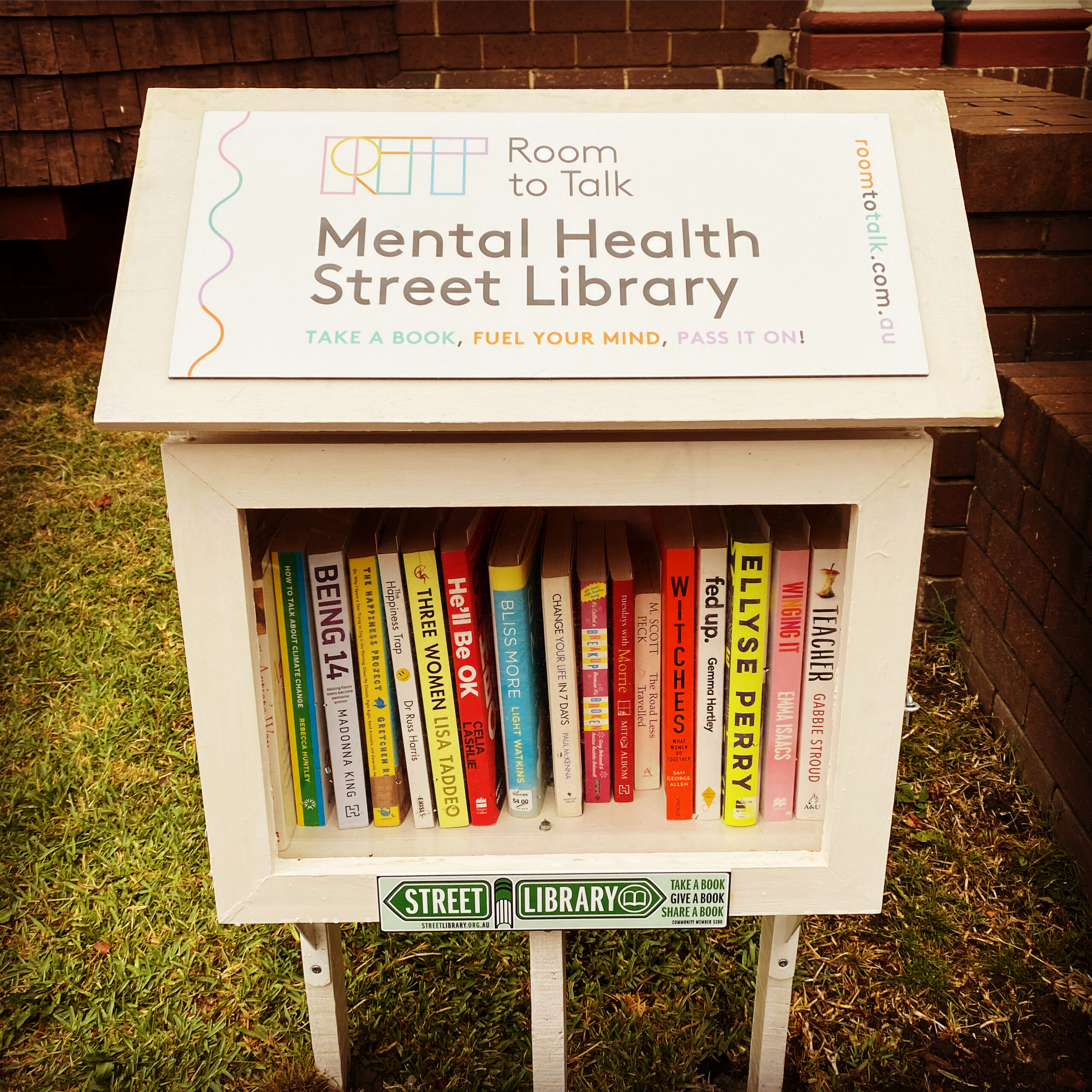
The treatment gap in the United States is not simply a clinical problem — it is an access and equity problem. Libraries, by meeting people where they are and offering services without cost or precondition, chip away at that gap one interaction at a time. Whether through a social worker stationed in a branch, a bibliotherapy reading group, a curated mental health research guide, or simply the quiet dignity of a safe place to sit, libraries demonstrate that mental health support does not always begin in a clinic. Sometimes, it begins between the shelves.
This Mental Health Awareness Month, it is worth recognizing and advocating for the libraries doing this work — often without the recognition, staffing, or funding they deserve.
Sources
- National Association of Counties. “SAMHSA Releases New 2024 Data on Rates of Mental Illness and Substance Use Disorder in the U.S.” August 2025. https://www.naco.org/news/samhsa-releases-new-2024-data-rates-mental-illness-and-substance-use-disorder-us
- USAFacts. “How Many People Have Mental Illness in the US?” August 2024. https://usafacts.org/answers/how-many-people-have-mental-illness-in-the-united-states/country/united-states/
- Innerwell. “Mental Health Statistics 2026: Key Trends.” April 2026. https://helloinnerwell.com/reflections/mental-health-statistics
- Karki M, El Asmar ML, Sasco ER, El-Osta A. “Public Libraries to Promote Public Health and Wellbeing: A Cross-Sectional Study of Community-Dwelling Adults.” BMC Public Health, 2024. https://pmc.ncbi.nlm.nih.gov/articles/PMC11069228/
- Grimes, N., Innes, G. R., & Salvesen, L. M. “How Libraries Support the Mental Health and Wellness Needs of Communities and Library Workers.” In Perspectives and Considerations on Navigating the Mental Healthcare System, IGI Global, 2023. https://www.academia.edu/124983725/How_Libraries_Support_the_Mental_Health_and_Wellness_Needs_of_Communities_and_Library_Workers
- McSilver Institute for Poverty Policy and Research, NYU. “‘Beyond Books’ Discussion Explores Library-Based Social Work.” May 2024. https://mcsilver.nyu.edu/beyond-books/
- Ayer, L., Christianson, K., Todd, I., et al. “Libraries as Community Hubs for Expanding Mental Health Supports: Libraries for Health Initiative (L4H).” RAND Corporation, 2025. https://www.rand.org/pubs/research_briefs/RBA3597-1.html
- Chia, J., et al. “The Effectiveness of Bibliotherapy in Public Libraries: Evidence Based Library and Information Practice.” Evidence Based Library and Information Practice, 19(2), 2024. https://journals.library.ualberta.ca/eblip/index.php/EBLIP/article/download/30475/22806/89002
- American Library Association. “Bibliotherapy-Informed Practices, Programs, and Events.” November 2023. https://www.ala.org/news/2023/11/bibliotherapy-informed-practices-programs-and-events
- LA County Library. “LA County Library Brings Mental Health Support Directly to Local Communities During Mental Health Awareness Month.” May 2026. https://lacountylibrary.org/announcing-mental-health-support-at-seventeen-libraries/
- Grimes, N. D. “Navigating Mental Health and Wellness in Communities: A Review of the Literature and Implications for Libraries, Librarians, and Library Workers.” The Reference Librarian, 65(3–4), 81–104, 2024. https://doi.org/10.1080/02763877.2024.2394070
- ProQuest. “How Academic Librarians Support Student Mental Health.” September 2024. https://about.proquest.com/en/blog/2024/how-academic-librarians-support-student-mental-health/
- ProQuest. “Four Ways Libraries Can Improve Student Outcomes.” April 2024. https://about.proquest.com/en/blog/2024/four-ways-libraries-can-improve-student-outcomes-with-mental-health-support/
- Clovis Community College Library. “Mental Health Resources: Research Databases.” LibGuides, 2026. https://cloviscollege.libguides.com/MentalHealthResources/FindingArticles
- Cogan, N., Murray, A., Long, E., et al. “Student Mental Health in UK Higher Education Institutions: Protocol for a Scoping Review of Trends, Gaps, and Research Directions.” Published 2025. https://www.ncbi.nlm.nih.gov/pmc/articles/PMC12332455/
- Bennett, J., Di Cara, N., & Winstone, L. “Understanding and Supporting the Mental Health and Professional Quality of Life of Academic Mental Health Researchers: Results from a Cross-Sectional Survey.” BMC Public Health, February 2025. https://www.ncbi.nlm.nih.gov/pmc/articles/PMC11829397/