Finding Their Shelf: How Genre Influencers Are Turning Reluctant Readers Into Book Lovers
The Right Book, Found Faster
For years, the standard advice for reluctant readers was simply to “find the right book.” The problem was that finding it meant wandering the shelves, skimming back-cover copy, or trusting a bestseller list built for someone else. Genre-focused social media creators have transformed that. A romantasy reviewer, a horror BookToker, or a creator who covers only cozy mysteries does the sorting in advance, so followers arrive already knowing what kind of story they want.
The timing is notable. The National Literacy Trust’s 2026 Annual Literacy Survey of 125,375 UK children and young people found that 36.1% of 8- to 18-year-olds enjoy reading in their free time, up from 32.7% in 2025 and the first increase since 2021 [1]. The biggest gains came among older teens aged 14 to 18 [1], the age group most active in online book communities. The survey does not show that social media caused the rise, but it arrived in the same year TikTok signed on as a partner in the UK’s National Year of Reading [8].
Why A Niche Feed Beats A General Bestseller List
Genre creators describe books in the terms readers actually use: tropes, mood, and pacing. Instead of a plot summary, a viewer hears “enemies to lovers,” “slow burn,” or “found family” and can tell in seconds whether a book resembles the last one they enjoyed. For someone who has bounced off assigned reading, that precision removes most of the guesswork.
The reach is large. TikTok reported in March 2026 that more than 75 million posts now carry the #BookTok hashtag, and that over a third of 16- to 39-year-olds in Germany discover new books there [2]. More than half of that age group said platforms like BookTok had motivated them to read more or buy books, and about two-thirds said creators influence their purchases at least somewhat [2]. In Sweden, a September 2026 Novus survey of 1,010 people aged 18 to 29 found that one in four had bought, borrowed, or otherwise obtained a book after a TikTok tip; among 18- to 22-year-olds, three in ten often find new books this way [3].
Trust plays a role. In the same Swedish survey, 38% rated TikTok recommendations about as reliable as reviews on culture websites [3]. Followers tend to see a creator as a peer with matching taste rather than a distant critic. Creators interviewed by The Bookseller credited romantasy with drawing younger generations back to books, noting that many of the genre’s most  visible reviewers are in their late teens and twenties [4].
The menu of entry points keeps widening, too. Germany’s #BookTok bestseller list now tracks 17 genres and has added dedicated young adult and new adult categories [2]. For readers whose tastes sit outside the mainstream, each new niche is another door in.
What Libraries Gain
Libraries benefit every time a viral recommendation becomes a hold request. At the 2026 Public Library Association conference, Portland State University researchers presented 2025 data showing that 67% of Gen Z had visited a library in the previous 12 months, up from 54% in 2022 [5]. Libraries now rank second only to bookstores as the way this generation gets books, ahead of Amazon, and 36% of Gen Z say they get books through librarian recommendations [5].
Digital lending shows the same momentum. OverDrive reported that readers borrowed 820.5 million digital titles through its Libby and Sora apps in 2025, roughly 10% more than the year before [7]. Children’s and young adult checkouts rose 9%, comics rose 22%, and audiobooks rose 13% [7]. Audiobooks and graphic formats often bridge the gap, keeping a struggling reader with a story long enough to finish it.
Influencer culture also gives librarians a shared vocabulary with new patrons. A study published in Public Library Quarterly in July 2026 analyzed BookTok comment threads and found that users mostly trade book information, express emotional attachment to stories, and invite others into the conversation [6]. The authors argue that libraries can use these patterns to shape collection development, reader’s advisory, and programming [6]. In practice, that looks like “As Seen on BookTok” displays, trope-based read-alike lists, and genre book clubs.
There is a catch. The same PLA findings showed that 28% of Gen Z had skipped a book because the library wait was too long, and 69% considered a wait of more than a week unacceptable [5]. Libraries that track trending titles and buy extra copies early are best positioned to keep the readers influencers send their way.
What Publishers Gain
For publishers, genre creators act as a year-round discovery engine that can also revive older backlist titles. TikTok’s analysis of NielsenIQ BookData and Media Control figures found that more than 50 million BookTok-recommended books sold across six European markets in 2025, worth about €800 million [2]. Germany alone accounted for 28 million of those sales, more than double the 12 million recorded in 2023 [2]. In the UK, BookTok was linked to over 11 million sales and £86 million in revenue in 2025 [8].
In the United States, genre fiction is propping up an otherwise soft market. Circana BookScan data reported by Publishers Weekly showed total print unit sales slipping 0.3% in the first half of 2026, while adult fiction rose 5.7% [9]. Earlier in the year, Circana analyst Brenna Connor told booksellers that dark romance and escapist fiction drove much of the adult fiction growth, and she predicted more genre mash-ups in 2026 [10].
Retailers are responding with shelf space. An Indigo executive told The Globe and Mail in August 2026 that romantasy is getting more dedicated shelving and more distinct titles, including new authors and series rather than just more copies of established names [11]. That widening of the list is exactly what a reader who could never find “their” book needs.
Limits, and What’s Next
The influencer effect has real limits. Much of the headline data comes from TikTok or research it commissioned [2][3][8], and 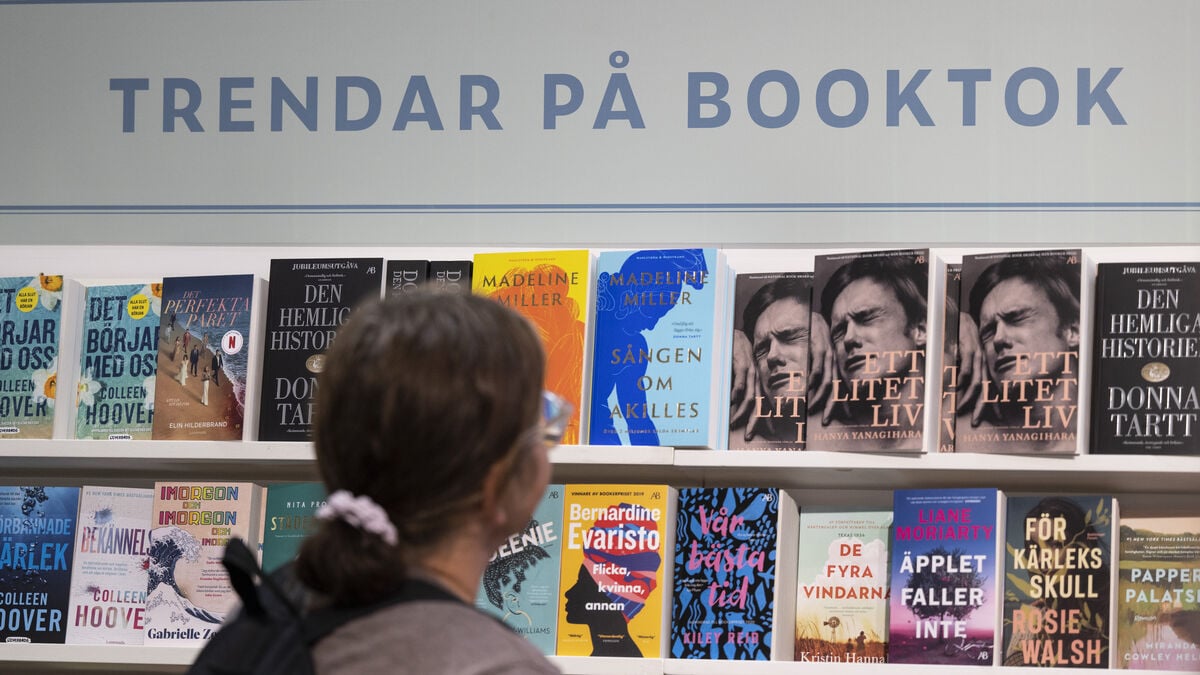 the platform has an obvious interest in strong numbers. Romance and romantasy dominate many feeds, which can crowd out other genres, and sales can lean heavily on a few blockbusters: US romance print sales fell 25.4% in the first quarter of 2026, largely because no new release matched the roughly 1.9 million copies Onyx Storm sold in early 2025 [12]. Online discovery is not reaching every child equally, either. The National Literacy Trust found reading enjoyment at 32.1% among pupils receiving free school meals, compared with 37.3% among their peers [1].
Still, the pattern is hard to miss. Readers who once assumed books were “not for them” are finding a creator who loves the same kind of story they do. Libraries can turn that spark into free access and lasting habits, and publishers can turn it into a deeper, more varied list. The smartest move for both is to follow genre communities closely and make sure the next recommended book is easy to find.
References
- National Literacy Trust. (2026, June). Children and young people’s reading in 2026. https://literacytrust.org.uk/research-services/research-reports/children-and-young-peoples-reading-in-2026/
- TikTok Newsroom. (2026, March 19). #BookTok community helps sell more than 50 million books across Europe as TikTok expands Bestseller List. https://newsroom.tiktok.com/booktok-community-50-million-books?lang=en-150
- TT News Agency. (2026, September 25). TikTok shapes young adults’ book choices, survey finds. Sweden Herald. https://swedenherald.com/article/tiktok-shapes-young-adults-book-choices-survey-finds
- The Bookseller. (2026, January). Books on BookTok: 2026 genre predictions. The Bookseller. https://www.thebookseller.com/books/books-on-booktok-2026-genre-predictions
- Cabrera, N. (2026, April 17). What Gen Z wants from libraries: Takeaways from PLA 2026. Public Libraries Online. https://publiclibrariesonline.org/2026/04/what-gen-z-wants-from-libraries-takeaways-from-pla-2026/
- BookTok boom and public libraries: A thematic analysis of “fangirl” comments on TikTok, berrypicking behavior, and implications for public library services. (2026, July 6). Public Library Quarterly. https://doi.org/10.1080/01616846.2026.2696742
- OverDrive. (2026, January 21). Libraries break digital lending records in 2025 with over 820 million checkouts and over 1 billion minutes streamed. https://company.overdrive.com/2026/01/21/libraries-break-digital-lending-records-in-2025-with-over-820-million-checkouts-and-over-1-billion-minutes-streamed/
- TikTok Newsroom. (2026, April). A new chapter: TikTok joins the National Year of Reading and invites teens to join the World’s Biggest Book Club. https://newsroom.tiktok.com/tiktok-joins-the-national-year-of-reading-and-invites-teens-to-join-the-worlds-biggest-book-club?lang=en-GB
- Publishers Weekly. (2026, July). Print book sales flat in first half of 2026. Publishers Weekly. https://www.publishersweekly.com/pw/by-topic/industry-news/financial-reporting/article/100790-print-book-sales-flat-in-first-half-of-2026.html
- Allen, B. (2026, March 4). A spot of good news! Adult fiction sales are up 1%. Literary Hub. https://lithub.com/a-spot-of-good-news-adult-fiction-sales-are-up-1/
- The Globe and Mail. (2026, August 7). Romantasy is transforming the publishing industry – and readers can’t get enough. The Globe and Mail. https://www.theglobeandmail.com/culture/books/article-romantasy-booktok-publishing-trends-2026/
- Publishers Weekly. (2026, April 6). Print sales fell 3.1% in the first quarter of 2026. Publishers Weekly. https://www.publishersweekly.com/pw/by-topic/industry-news/financial-reporting/article/100067-first-quarter-print-sales-fell-3-1.html