
Publisher Fiscal Issues Impacting Libraries: The Baker & Taylor Collapse and Beyond
 The October 2025 closure of Baker & Taylor, one of the nation’s oldest and largest library wholesalers, has sent shockwaves through the library community, revealing the precarious state of the publishing supply chain and its profound impact on libraries across the country. Founded in 1828, the company served more than 4,000 institutional customers and employed over 900 people before announcing its plans to wind down all business activities by the end of 2025 (1). This closure represents far more than the loss of a single vendor—it illuminates the systemic vulnerabilities that threaten libraries’ ability to serve their communities effectively, particularly as libraries face simultaneous pressures from budget cuts, rising digital content costs, and shifting patron demands.
The Collapse of a Library Industry Giant
Baker & Taylor’s demise followed a pattern of financial distress that had been building for

Aman Kochar
years. The company experienced significant challenges beginning with a major cyberattack in 2022 that disrupted its services, compounded by pandemic-related downturns in library orders (1). By mid-2025, the company’s primary creditor, CIT Northbridge Credit LLC, declared the loans supporting B&T’s operations in default (1). A last-ditch attempt at survival through acquisition by ReaderLink Distribution Services collapsed on September 26, 2025, just as the deal was scheduled to close (1). Without a buyer and facing mounting pressure from creditors, CEO Aman Kochar informed employees that the company had no path forward (2).
 The warning signs had been evident to librarians well before the official closure announcement. Lesley Caldwell, collections and technical services manager at Tacoma Public Library, reported that delivery times had deteriorated dramatically. Items that previously took two weeks now require up to 16 weeks, including essential frontlist titles (3). Seattle Public Library’s Kate Sellers echoed these concerns, noting that in 2025 alone, her library had ordered 5,500 items from Baker & Taylor, with nearly 500 copies still back-ordered at the time of the closure announcement (3). These operational failures signaled more profound financial instability that would ultimately prove fatal for the 197-year-old company.
Immediate Operational Disruptions
The closure of Baker & Taylor has created immediate and severe operational challenges for libraries nationwide. Christopher Platt, director of libraries at Santa Cruz Public Libraries and a former B&T employee, emphasized that the company’s Customized Library Services “has defined many libraries’ workflows over the last couple of decades, allowing titles to arrive catalogued and processed according to local specifications” (3). The loss of these shelf-ready services forces libraries to either find vendors who can replicate this functionality or absorb the labor-intensive tasks of cataloging and processing materials themselves—tasks that many libraries lack the staff res ources to handle efficiently.
The financial implications extend beyond operational inconvenience. When the ReaderLink acquisition was announced, libraries were forced to cancel orders to accommodate the expected transition to a new system that never materialized. Seattle Public Library alone had to cancel 90 orders covering approximately 500 copies, while shifting other planned orders to alternative vendors (3). Tacoma Public Library had already cancelled about 7% of its orders from B&T and, upon hearing of the ReaderLink deal, moved all future orders to Ingram (3). These cancellations represent not just administrative headaches but fundamental gaps in library collections that directly impact patron access to materials.
Publishers face their own losses from Baker & Taylor’s closure. Multiple publishers reported having unsettled invoices with B&T, with considerable uncertainty about whether those debts would be repaid (1). Additionally, publishers risk losing inventory held in B&T warehouses as the company liquidates, creating both financial losses and distribution challenges that ripple throughout the entire book supply chain.
Libraries Already Operating Under Financial Strain
The Baker & Taylor closure arrives at a particularly challenging moment for American libraries, many of which are already struggling with constrained budgets and increased demands. Library Journal’s 2025 Budgets and Funding Survey, which received responses from 292 U.S. public libraries, revealed a more varied and precarious funding landscape than in previous years (4). State funding declined by 9.2% across responding regions, while local funding saw only a mini mal 0.7% increase—the smallest year-over-year change since 2015 (4).
Operating budget increases for 2024 averaged just 3.5%, less than half of the 7.9% increase libraries experienced in 2023 (4). While some larger urban systems reported funding boosts due to property tax increases, many rural and small-town libraries face stagnant or declining resources. One Pennsylvania library reported cutting 25% of its staff in 2024 due to budget shortfalls, aiming to achieve a balanced budget in 2025 (4).
The budget pressures have forced difficult choices about materials spending precisely when libraries need flexibility to navigate vendor transitions. Overall, materials budgets among survey respondents decreased by 4.3% (4), even as patron demand continues to evolve and grow. Libraries are increasingly turning to grants to support collections. In 2024, 60% of libraries received federal or state grants, up from 55% in 2023, with most planning to spend these funds on materials (4).
These financial constraints mean that disruptions like the Baker & Taylor closure hit libraries when they can least afford additional complications. Libraries operating on tight budgets have limited capacity to absorb unexpected costs associated with changing vendors, updating workflows, or dealing with delayed material acquisitions.
The Digital Content Dilemma
Baker & Taylor’s troubles illuminate the fundamental fragility of the library book industry, but they also reflect broader market shifts that are reshaping how libraries operate. The profit margins on library materials tend to be small, while costs for distribution centers and business infrastructure remain high (1). This thin margin for error leaves wholesalers vulnerable to any significant disruption, whether from cyberattacks, pandemic-related slowdowns, or shifting market conditions.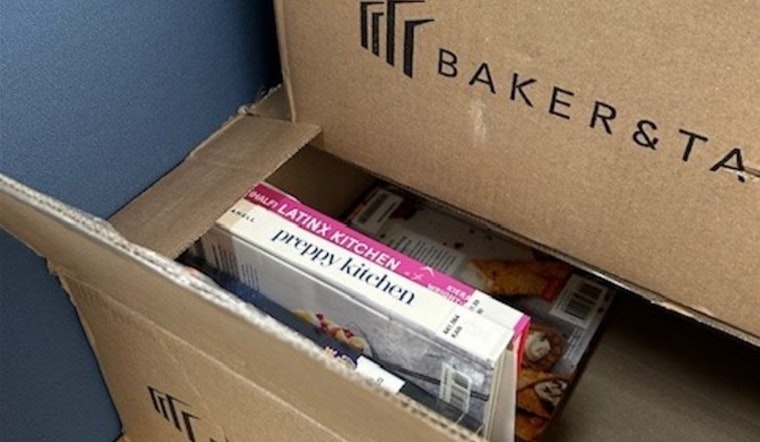
The library materials market faces additional pressures from the explosive growth of digital content. In 2024, library patrons borrowed over 739 million ebooks, audiobooks, and digital magazines through OverDrive’s Libby app alone—a 17% increase over 2023 (5). Audiobook borrowing surged by 19%, while digital magazine borrowing skyrocketed by 70% (5). More than 9.1 million people installed the Libby app in 2024, with over 118.9 million new users joining library systems globally (5).
This dramatic shift in patron preferences creates profound challenges for traditional print distributors. Demand for digital content from providers like OverDrive continues to consume larger portions of library collection budgets, causing corresponding decreases in print materials spending (1). Baker & Taylor attempted to compete in this space with its Boundless ebooks service launched in 2023, but the platform failed to gain substantial market share (1). This inability to successfully pivot to digital formats while maintaining traditional print distribution operations ultimately contributed to the company’s financial instability.
Libraries allocated an average of 28% of their materials spending toward digital materials in 2024, a slight increase over 2023’s 27.2% (4). Nearly half of libraries reported maintaining their percentage of digital materials, but a significant 46% reported an increase (4). As one Pennsylvania library stated, “electronic resources (specifically ebooks and streaming media) need to be increased based on popularity” (4). The Miami-Dade County Public Library expects to keep its physical materials budget flat while allocating more toward digital content, with Director Ray Baker noting that “it remains difficult to purchase enough [digital content] to meet demand fully” (4).
However, digital materials present their own fiscal challenges. Ebooks often cost libraries four or more times what consumers pay, with pricing models that favor publishers over libraries (6). This pricing disparity strains already tight materials budgets and forces libraries to make difficult choices about collection depth and breadth.
The Vulnerability of Library Supply Chains
The closure has exposed libraries’ dangerous dependence on a small number of vendors. With Baker & Taylor’s departure, the slate of major library material suppliers has narrowed considerably. Ingram Library Services and Brodart Library Services remain the primary players. At the 
In the wake of Baker & Taylor’s closure, libraries are urgently seeking alternative vendors, but the transition is neither seamless nor straightforward. Caldwell from Tacoma Public Library expressed a common concern: “We like Ingram, but we don’t want to have one monopolized vendor” (3). This wariness reflects libraries’ recognition that over-reliance on a single supplier creates dangerous vulnerabilities.
Ingram Content Group appears best positioned to absorb much of Baker & Taylor’s former business. Carolyn Morris, VP of Ingram Library Services, noted that most large library systems already maintain at least one account with Ingram, and many libraries increased their Ingram volume during the pandemic (3). The company stocks approximately 19 million titles and has seen a steady uptick in orders since the collapse of the B&T-ReaderLink deal (3). To meet expected demand increases, Ingram is rolling out a new cataloging and processing system designed to onboard new shelf-ready customers more quickly. He plans to add as many as 50 new positions to its library business (3).
Bookazine, a 100-year-old New Jersey-based book wholesaler, has also seen immediate interest from libraries. Richard Kallman, the company’s co-owner and COO, reported working with over 100 new accounts in the days following Baker & Taylor’s closure announcement (3). The company is expanding its sales representation to the library channel and upgrading processes to better meet library requirements (3).
Perhaps most surprisingly, Amazon has entered the competition for the library business. In late June 2025, Amazon Business quietly launched Amazon Business Books for Libraries, creating a dedicated Library Hub that offers libraries access to new titles and MARC record downloads, with discounts ranging from 30%-40% off list price (3). Library staff in the Puget Sound region reported that Amazon representatives have been actively visiting libraries to pitch their services (3). While Amazon’s entry may provide another option for libraries seeking alternatives, it also raises questions about the long-term implications of relying on a retail giant that has historically disrupted traditional book industry business models.
Broader Industry Instability
The Baker & Taylor closure is not an isolated incident but part of a broader pattern of instability in publishing and distribution. In March 2024, Small Press Distribution (SPD), which served hundreds of independent publishers, fell into financial collapse due to a combination of declining grants, slow sales, and warehouse relocation costs, before filing for dissolution (7). The company’s predominantly small publisher clients drew little interest from more established distributors, leaving a significant gap in the independent publishing ecosystem (7).
Academic and society publishers face their own financial pressures that ultimately affect library acquisitions. A 2025 survey of 66 learned societies, primarily in the UK, revealed a revenue crisis threatening the existence of community-driven publishing and the learned societies themselves (8). Meanwhile, academic libraries continue to grapple with rising journal subscription costs, with e-journal packages handled by EBSCO Information Services showing an average price increase of 4% in 2024 (9).
The convergence of vendor instability, budget constraints, and format transitions creates a perfect storm for libraries. As traditional distributors struggle or collapse, libraries must navigate these disruptions while simultaneously managing the shift to digital formats, responding to patron demands, and operating within increasingly tight fiscal constraints.
Long-Term Consequences for Libraries and Communities
The fiscal instability of publishers and distributors creates cascading effects that undermine libraries’ core mission of providing equitable access to information. When wholesalers collapse, libraries face immediate gaps in their ability to acquire materials, forcing them to scramble for alternatives while continuing to serve patron needs. The time and resources devoted to vendor transitions detract from other critical library functions, from programming to reference services.
With fewer wholesalers competing for library business, the remaining companies gain greater pricing power and less incentive to innovate or improve services. Libraries may find themselves with limited leverage to negotiate favorable terms or address service issues. The shift toward fewer, larger vendors also creates single points of failure in the library supply chain. If another major wholesaler encounters financial difficulties, libraries could face even more severe disruptions than those caused by Baker & Taylor’s closure.
Perhaps most concerning is the potential impact on collection diversity. Smaller, independent publishers often rely on specialized distributors to reach library markets. As these distribution channels disappear, libraries may find it increasingly difficult to acquire materials from diverse voices and smaller presses, leading to collections that favor titles from major publishers with their own robust distribution networks. The collapse of Small Press Distribution already demonstrated this risk, as hundreds of independent publishers lost their primary access point to libraries (7).
This homogenization of collections runs counter to libraries’ commitment to representing diverse perspectives and serving all community members. As library budgets tighten and vendor options narrow, the risk grows that collections will reflect what’s easiest and cheapest to acquire rather than what best serves community needs. One library director in Massachusetts noted that format shifts are already driving collection decisions, with the library reducing funding for physical collections to support digital purchases (4). While this responds to patron demand, it also reflects constrained choices about how to allocate limited resources across multiple format needs.
The budget survey revealed that professional development funding has declined for three consecutive years, with a 3% drop in 2024, and total average spending down 6%, from $27,600 to $26,044 (4). This reduction in staff development comes precisely when library workers need training to navigate new vendor relationships, master different ordering systems, and develop expertise in emerging digital formats. The combination of vendor instability and reduced professional development funding leaves library staff less prepared to respond effectively to ongoing industry disruptions.
The Political and Advocacy Dimension
Libraries’ fiscal challenges extend beyond market forces to include political pressures that threaten their funding stability. The 2025 budget survey revealed that libraries with measures on the November 2024 ballot saw an 80% pass rate, down from a 10-year average of 90% (4). This decline in voter support suggests growing skepticism about library funding in some communities, complicating libraries’ ability to secure stable resources.
Some libraries are responding by increasing advocacy spending. In 2024, 12% of libraries reported spending money on advocacy and lobbying services, up from 7% in 2023 (4). Libraries are paying dues to state and national library organizations that employ lobbyists, directly contracting for lobbying services, and funding advocacy training for board members and trustees (4). As one Missouri library explained, “With recent legislation, our board has decided in the last two years to spend funds on a lobbying consultant to help advocate for libraries in our state” (4).
This increased need for advocacy spending comes as libraries face potential cuts to federal support. Concerns about the future of federal grant  programs, such as those delivered through the Library Services and Technology Act (LSTA) and the Institute of Museum and Library Services, add another layer of uncertainty to library budgets (4). If federal funding declines while vendor options narrow and materials costs rise, libraries could face a compounding crisis that severely limits their ability to serve communities.
The closure of Baker & Taylor serves as a stark reminder of the vulnerability of the infrastructure that libraries depend upon to fulfill their missions. As one of the country’s largest and oldest library wholesalers shuts its operations, the ripple effects extend far beyond immediate order fulfillments and vendor relationships. The collapse reveals systemic weaknesses throughout the library ecosystem: thin profit margins in book distribution, vulnerability to disruption, market consolidation, the challenges of digital transformation, strained library budgets, and declining political support in some communities.
For libraries, the path forward requires vigilance, adaptability, and advocacy. Diversifying vendor relationships, while more complex to manage, provides crucial resilience against future disruptions. Building relationships with multiple wholesalers, including newer entrants like Amazon and smaller players like Bookazine, helps ensure that no single vendor failure can cripple a library’s operations. Libraries must also continue advocating for sustainable business models throughout the publishing supply chain, recognizing that the health of their vendors directly impacts their ability to serve communities.
The convergence of challenges facing libraries—vendor instability, budget constraints, format transitions, rising costs, and political pressures—suggests that the Baker & Taylor closure is unlikely to be the last disruption in library supply chains. As the publishing industry continues to evolve, libraries must remain prepared to navigate an unstable landscape while maintaining their fundamental commitment to providing community access to diverse, high-quality information resources.
The stakes extend beyond library operations to the communities libraries serve. When supply chains fail and budgets contract, the impact falls most heavily on those who depend most on library services: rural communities with limited bookstore access, lower-income families who cannot afford to purchase books, students who rely on library resources for academic success, and individuals seeking information to make informed decisions about their lives and communities.
The accurate measure of the library field’s resilience will be its ability to adapt to these challenges while ensuring that fiscal instability in the publishing industry does not translate into diminished service to the public. This will require not only operational flexibility and strategic vendor management but also sustained advocacy for adequate library funding, fair pricing for digital content, and policies that support a diverse, competitive book distribution ecosystem. The future of equitable access to information depends on libraries successfully navigating these turbulent waters while preserving their core mission in an increasingly challenging environment.
Sources
- American Libraries Magazine. “Baker & Taylor to Cease Operations.” October 8, 2025. https://americanlibrariesmagazine.org/2025/10/08/baker-taylor-to-cease-operations
- Publishers Weekly. “Baker & Taylor Prepares Plan to Shut Down.” October 2025. https://www.publishersweekly.com/pw/by-topic/industry-news/publisher-news/article/98777-baker-taylor-prepares-plan-to-shut-down.html
- Publishers Weekly. “Libraries Look to Fill the Gap Left by Baker & Taylor.” October 2025. https://www.publishersweekly.com/pw/by-topic/industry-news/libraries/article/98808-libraries-look-to-fill-the-gap-left-by-baker-taylor.html
- Library Journal. “What’s Up, What’s Down | Budgets and Funding 2025.” March 3, 2025. https://www.libraryjournal.com/story/whats-up-whats-down-budgets-and-funding-2025
- OverDrive. “Libraries Break Digital Lending Records in 2024 with Over 739 million Checkouts.” January 27, 2025. https://company.overdrive.com/2025/01/27/libraries-break-digital-lending-records-in-2024-with-over-739-million-checkouts
- WBUR News. “Libraries struggle to afford the demand for e-books, seek new state laws in fight with publishers.” March 12, 2024. https://www.wbur.org/news/2024/03/12/libraries-ebooks-audio-books-cost-laws
- Publishers Weekly. “The Top 10 Book Business News Stories of 2024.” December 20, 2024. https://www.publishersweekly.com/pw/by-topic/industry-news/publisher-news/article/96765-the-top-10-book-business-news-stories-of-2024.html
- The Scholarly Kitchen. “Guest Post – Society Publishers at a Crossroads: New Evidence of an Accelerating Crisis.” July 30, 2025. https://scholarlykitchen.sspnet.org/2025/07/30/guest-post-society-publishers-at-a-crossroads-new-evidence-of-an-accelerating-crisis/
- Library Journal. “Learning from the Past | Periodicals Price Survey 2025.” April 14, 2025. https://www.libraryjournal.com/story/learning-from-the-past-periodicals-price-survey-2025