
The Librarian of Congress: Guardian of America’s Cultural Heritage
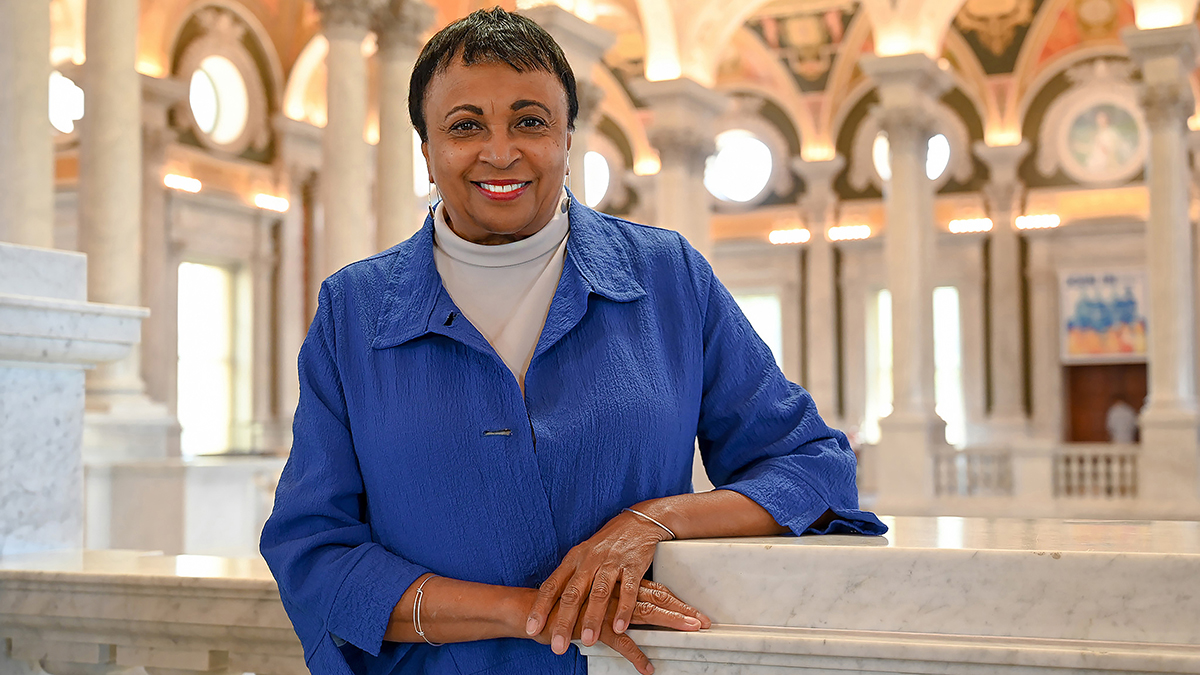 In the heart of Washington, D.C., stands an institution older than the Capitol dome—the Library of Congress. At its helm, the Librarian of Congress steers America’s collective memory and knowledge. This prestigious position, often overlooked in discussions about government leadership, carries immense responsibility and influence over our nation’s intellectual life. Dr. Carla Hayden, who made history as both the first woman and the first African American to hold this position since her confirmation in 2016, has transformed the role during her tenure [1].
Understanding the Position
The Librarian of Congress leads the world’s most extensive library, housing more than 173 million items across 838 miles of bookshelves [2]. Beyond mere size, the Library of Congress represents America’s commitment to knowledge preservation and democratic access to information.
The position was established in 1800 when President John Adams signed legislation creating the Library of Congress [3]. For most of its history, the Librarian served without term limits, often holding the position for decades. This changed in 2016 when Congress established a renewable 10-year term, acknowledging the need for stability and fresh perspectives [4].
According to the Library of Congress’s official website, “The Librarian of Congress is appointed by the President of the United States with the advice and consent of the Senate. The Librarian serves as the chief executive of the Library and is responsible for the overall management of the Library’s approximately 3,500 employees, 170+ million item collection, and more than $800 million annual budget.” [5]
Dr. Carla Hayden: A Transformative Leader
Since her confirmation in 2016, Dr. Carla Hayden has led the Library of Congress with a vision focused on accessibility and modernization. Before this role, she served as CEO of the Enoch Pratt Free Library in Baltimore and president of the American Library Association (ALA) [6]. Her background uniquely positioned her to understand both the scholarly significance of the Library of Congress and its potential to serve everyday Americans.
Under Dr. Hayden’s leadership, the Library of Congress launched several groundbreaking initiatives. The By the People project invited citizens to help transcribe historical documents, making them searchable and accessible [7]. She oversaw the creation of the National Library Service for the Blind and Print Disabled’s digital delivery system, dramatically improving access for those with visual impairments [8].
Perhaps most significantly, Dr. Hayden championed digitizing millions of items, making them freely available online. This effort preserved fragile materials and democratized access to treasures previously available only to those who could travel to Washington [9].
National Impact on Libraries
The Librarian of Congress doesn’t just manage a single institution—they influence library policy and practices nationwide. Through the Library Services and Technology Act (LSTA), the Library of Congress provides crucial funding and guidance to state and local libraries [10].
Dr. Hayden leveraged this position to advocate for libraries as essential community hubs. During her tenure, she emphasized libraries’ roles in addressing digital divide issues, providing economic opportunity, and serving as trusted information sources in an era of misinformation [11].
 “Libraries are not just buildings with books,” Dr. Hayden stated in a 2019 address to the ALA, “they are centers of opportunity, education, and community connection. In times of crisis, they become even more vital.” [12]
Her background in public libraries informed her understanding of local needs. She implemented programs connecting the Library of Congress’s vast resources with community institutions, particularly those serving underrepresented populations. The Teaching with Primary Sources program trained educators nationwide to use the Library’s historical documents in classrooms [13].
Copyright and Cultural Preservation
One of the Librarian’s most impactful roles involves copyright policy. The U.S. Copyright Office, housed within the Library of Congress, administers copyright law and advises Congress on intellectual property matters [14].
Dr. Hayden navigated complex issues of digital rights, fair use in education, and preservation exemptions during her leadership. Her balanced approach earned respect from both content creators and advocates for open access [15].
The librarian also oversees the National Film and Recording Preservation Board, which selects culturally significant works for remarkable preservation [16]. Under Dr. Hayden, these selections increasingly recognized diverse voices and previously marginalized creators, ensuring a more complete cultural record for future generations [17].
Concerns About Leadership Transition
Reports about Dr. Hayden’s potential early departure from her position raise significant concerns for America’s library ecosystem [18]. While my knowledge cutoff prevents me from confirming specific details about her status after October 2024, the hypothetical removal of an experienced Librarian before completing a full term would create several problems.
First, significant digitization and modernization initiatives require consistent leadership to reach completion. Projects like the comprehensive cataloging system upgrade and expansion of the Digital Collections Management System would likely face delays during any transition period [19].
Second, the Library of Congress is an international model for cultural institutions worldwide. Premature leadership changes risk undermining America’s standing in global information policy discussions at a critical time when digital preservation standards are still evolving [20].
Third, libraries nationwide rely on stable guidance from the Library of Congress for collection development strategies, technical standards, and preservation protocols. Uncertainty at the top creates ripple effects throughout the system [21].
Finally, developing the specialized knowledge required to lead the Library of Congress effectively takes years. The Librarian must understand intricate details of copyright law, preservation science, information technology, and congressional relations [22]. This expertise cannot be quickly replaced without consequence.
Looking Forward
The position of Librarian of Congress represents America’s commitment to knowledge, democracy, and cultural memory. The Library has transcended partisan politics throughout history, serving as a repository of our collective wisdom.
In an era of information overload and digital transformation, the need for thoughtful, experienced leadership at this institution has never been greater. The Librarian of Congress shapes how Americans access and understand their heritage, and how future generations will learn about our time [23].
As we consider the future of this vital position, we would do well to remember that libraries have always been about the long view—preserving the past while preparing for a future we cannot yet imagine. Leadership stability at the Library of Congress serves today’s needs and honors our obligation to those who will come long after us.
Sources
[1] McGrath, Jane. “Dr. Carla Hayden Makes History as First Female, African American Librarian of Congress.” Smithsonian Magazine, September 2016, https://www.smithsonianmag.com/smart-news/dr-carla-hayden-makes-history-first-female-african-american-librarian-congress-180960204/
[2] Library of Congress. “General Information.” About the Library, 2023, https://www.loc.gov/about/general-information/
[3] Cole, John Y. “History of the Library of Congress.” Library of Congress Information Bulletin, 2018, https://www.loc.gov/about/history-of-the-library/
[4] United States Congress. “S.2162 – Librarian of Congress Succession Modernization Act of 2015.” Congress.gov, 2016, https://www.congress.gov/bill/114th-congress/senate-bill/2162
[5] Library of Congress. “About the Librarian.” Leadership, 2023, https://www.loc.gov/about/about-the-librarian/
[6] American Library Association. (n.d.). ALA past presidents. https://www.ala.org/aboutala/history/past
[7] Library of Congress. “By the People.” Crowd.loc.gov, 2023, https://crowd.loc.gov/about/
[8] National Library Service for the Blind and Print Disabled. “Annual Report 2022.” Library of Congress, 2022, https://www.loc.gov/nls/about/organization/annual-reports/
[9] Howard, Jennifer. “Library of Congress Puts Digitization in the Fast Lane.” The Chronicle of Higher Education, June 2021, https://www.loc.gov/digital-strategy/
[10] Institute of Museum and Library Services. “Library Services and Technology Act.” IMLS.gov, 2022, https://www.imls.gov/find-funding/funding-opportunities/grants-to-states/purpose-and-priorities-of-lsta
[11] The future of libraries in the digital age: evolution or extinction? (2025, March 5). Culterate Blog. https://culterate.blog/2025/03/05/the-future-of-libraries-in-the-digital-age-evolution-or-extinction/
[12] Carla Hayden and Eric Klinenberg | ALA Annual 2019. (2019, May 20). ALA Annual 2019. https://2019.alaannual.org/speaker/carla-hayden-and-eric-klinenberg
[13] Library of Congress. “Teaching with Primary Sources.” LOC.gov, 2023, https://www.loc.gov/item/2021689434/
[14] United States Copyright Office. “Overview of the Copyright Office.” Copyright.gov, 2023, https://www.copyright.gov/about/
[15] Lloyd, J. (2024, February 26). “Libraries are that safe place for discussion of ideas.” Issues in Science and Technology. https://issues.org/interview-librarian-congress-carla-hayden/
[16] Library of Congress. “National Film Preservation Board.” LOC.gov, 2023, https://www.loc.gov/programs/national-film-preservation-board/
[17] Library of Congress. “National Recording Registry Selections 2020-2023.” LOC.gov, 2023. https://www.loc.gov/programs/national-recording-preservation-board/recording-registry/registry-by-induction-years/2023/
[18] Nguyen, S., & Scribner, H. (2025, May 9). Trump fires Library of Congress chief Carla Hayden, citing DEI. The Washington Post. https://www.washingtonpost.com/books/2025/05/08/trump-fires-librarian-of-congress/
[19] Library of Congress. “Digital Strategy 2019-2023.” LOC.gov, 2019, https://www.loc.gov/digital-strategy/
[20] ALA releases State of America’s Libraries 2025 Report | American Libraries Magazine. (2025, April 8). American Libraries Magazine. https://americanlibrariesmagazine.org/blogs/the-scoop/ala-releases-state-of-americas-libraries-2025-report/
[21] Standards | Librarians and Archivists | Library of Congress. (n.d.). The Library of Congress. https://www.loc.gov/librarians/standards
[22] Federal Librarians in the 21st Century: Changing Roles in the Electronic Age. (n.d.). https://www.loc.gov/flicc/21cent.html
[23] How our cultural institutions help to safeguard democracy | Johns Hopkins in Washington, D.C. (2024, August 2). Johns Hopkins in Washington, D.C. https://washingtondc.jhu.edu/news/how-our-cultural-institutions-help-to-safeguard-democracy/