
The Importance of Physical Archives in 2025
In an era where digital technologies and political strife increasingly loom over our information landscape, physical archives play a vital role in preserving our collective memory and cultural heritage. Despite advances in digital preservation, tangible repositories of documents, artifacts, and records maintain unique benefits that their electronic counterparts cannot fully replicate. Let’s review the continued relevance of physical archives, examining their resilience, authenticity, accessibility, and complementary relationship with digital preservation methods.
Preservation Through Physical Permanence
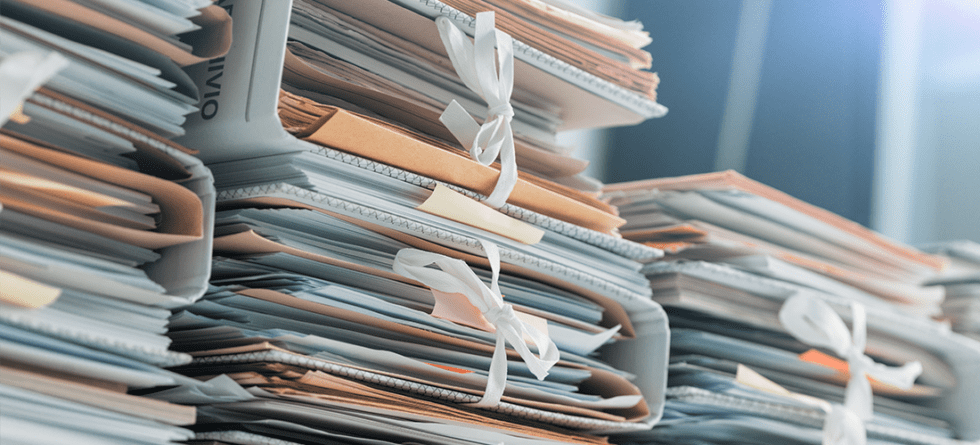 Physical archives maintain a critical advantage through their material permanence. While digital formats require continuous migration to new platforms as technology evolves, properly preserved physical materials can remain stable for centuries with minimal intervention. The National Archives and Records Administration (NARA) emphasizes that properly stored paper documents can last hundreds of years, while digital formats face rapid obsolescence [1].
This permanence remains relevant even as digital preservation advances. As Terry Kuny warned in his prescient paper on “digital dark ages,” digital preservation faces challenges of format obsolescence, media degradation, and technological change that physical archives inherently avoid [2]. Recent assessments of digital preservation confirm that these challenges persist despite technological advances, with the Digital Preservation Coalition noting that “digital preservation is not a one-time investment but an ongoing commitment of resources” [3].
Authenticity and Provenance in an Era of Misinformation
The tangible nature of physical archives provides critical authenticating functions. Physical documents contain material evidence—paper composition, ink chemistry, binding techniques—that establishes provenance in ways digital watermarking cannot yet match.
As Luciana Duranti’s work on archival diplomatics demonstrates, the physical characteristics of records contribute significantly to establishing their authenticity [4]. This
Democratizing Access Beyond the Digital Divide
Despite widespread assumptions about universal digital access, significant portions of the global population remain disconnected from reliable digital infrastructure. The International Telecommunication Union reported that as of 2024,  approximately 2.6 billion people still lacked internet access [6].
Physical archives located in community spaces provide critical information access to underserved populations. As Isto Huvila’s research demonstrates, local archives serve as vital community memory institutions, particularly for groups underrepresented in digital collections [7]. The International Federation of Library Associations’ recent report confirms that physical archives remain essential access points in regions with limited digital infrastructure [8].
Cognitive and Educational Benefits
Research demonstrates unique cognitive benefits associated with physical document interaction. Studies in educational psychology have found that engagement with physical materials often leads to better information retention and more profound learning compared to screen-based alternatives. Anne Mangen’s research shows that “the haptic and tactile feedback of a physical page” contributes to cognitive processing in ways that digital interfaces do not replicate [9].
These findings have influenced educational approaches. A 2022 study in The American Archivist found that hands-on archival research experiences fostered stronger critical thinking skills and subject engagement among university students compared to exclusively digital research methodologies [10]. Michelle Caswell notes that physical archives offer “embodied encounters with the past, ” creating distinctive learning experiences [11].
Complementary Preservation: The Hybrid Model
Rather than viewing physical and digital preservation as competing approaches, contemporary archivists advocate for complementary strategies. The Society of American Archivists’ framework for digital preservation emphasizes that “responsible preservation requires redundancy across both physical and digital domains” [12].
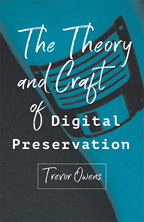 In his influential work on digital preservation, Trevor Owens argues for “preservation through plurality,” acknowledging that format diversity provides resilience [13]. Major institutions like the British Library maintain hybrid preservation models, preserving physical collections and multiple digital backups across diverse storage technologies [14].
Environmental Considerations
The environmental impact of preservation methods requires nuanced assessment. While paper production has significant environmental costs, the carbon footprint of digital preservation—including server maintenance, cooling infrastructure, and perpetual migration—is substantial and often underestimated.
Peluaga et al. found that digital preservation’s environmental impacts are cumulative and ongoing, challenging assumptions that digital alternatives are inherently more sustainable [15]. The National Archives of Australia demonstrates that properly maintained physical archives with passive climate control systems can achieve lower lifetime carbon emissions than energy-intensive digital alternatives [16].
Cultural and Emotional Dimensions
Physical archives offer cultural and emotional dimensions that digital surrogates may not fully capture. Jeannette Bastian notes that archives are not merely information repositories but “memory institutions” with profound cultural significance [17]. The materiality of archives—the texture of paper, the smell of old books, the physical presence of historical artifacts—creates connections to the past that digital representations cannot fully replicate.
 This emotional dimension influences how communities relate to their heritage. Sabiescu demonstrates that physical archives often serve as essential cultural touchstones, particularly for groups connecting with their heritage [18].
As we navigate the complex information landscape of 2025, physical archives remain essential components of our preservation infrastructure. Their material permanence, authenticating capabilities, democratic accessibility, cognitive benefits, and cultural significance ensure their continued relevance alongside digital preservation methods.
Rather than viewing physical archives as outdated relics, forward-thinking institutions recognize them as critical components in a diversified preservation strategy. The resilience of our collective memory depends not on choosing between physical and digital approaches but on leveraging the complementary strengths of both.
By maintaining and investing in physical archives while simultaneously developing digital preservation capabilities, we create a more robust, accessible, and trustworthy information ecosystem that can withstand technological disruption and the passage of time.
Sources
[1] National Archives and Records Administration. (2021). “Strategy for Digitizing Archival Materials.” Retrieved from https://www.archives.gov/digitization/strategy.html
[2] Kuny, T. (1997). “A Digital Dark Age? Challenges in the Preservation of Electronic Information.” International Preservation News, 17, 8-13. https://www.academia.edu/19711051/A_Digital_Dark_Ages_Challenges_in_the_Preservation_of_Electronic_Information
[3] Digital Preservation Coalition. (2023). “Digital Preservation Handbook.” Retrieved from https://www.dpconline.org/handbook
[4] Duranti, L. (2020). “Diplomatics as a Global Discipline.” In Records, Archives and Memory: Selected Papers from the Conference and School on Records, Archives and Memory Studies. University of Zadar. https://www.academia.edu/113319390/Records_archives_and_memory_selected_papers_from_the_Conference_and_School_on_records_archives_and_memory_studies_University_of_Zadar_Croatia_May_2013_Willer_Mirna_Gilliland_Anne_J_Tomi%C4%87_Marijana_ur_Zadar_Sveu%C4%8Dili%C5%A1te_University_2015_386_str
[5] International Council on Archives. (2022). “Managing Archives in the Digital Age: Best Practices Guide.” ICA Publications. https://www.ica.org/professional-programme/training-programme/managing-digital-archives/
[6] International Telecommunication Union. (2024). “Measuring Digital Development: Facts and Figures 2023.” Geneva: ITU Publications. https://www.itu.int/hub/publication/d-ind-ict_mdd-2024-4/
[7] Huvila, I. (2022). “Archives, Libraries, and Museums in the Contemporary Society: Perspectives of the Professionals.” Journal of Documentation, 78(2), 229-246. https://www.academia.edu/6902208/Archives_Libraries_and_Museums_in_the_Contemporary_Society_Perspectives_of_the_Professionals
[8] International Federation of Library Associations. (2023). “IFLA World Library and Information Congress Proceedings.” IFLA Publications. https://www.ifla.org/g/it/conferences/
[9] Mangen, A. (2016). “The Digitization of Literary Reading: Contributions from Empirical Research.” Orbis Litterarum, 71(3), 240-262. https://onlinelibrary.wiley.com/doi/10.1111/oli.12095
[10] Hinchliffe, L. J., & Prom, C. J. (2022). “Teaching with Primary Sources: Outcomes from Archival Instruction.” The American Archivist, 85(1), 173-202. https://meridian.allenpress.com/american-archivist/article/80/2/462/24404/Teaching-with-Primary-Sources
[11] Caswell, M. (2021). “Urgent Archives: Enacting Liberatory Memory Work.” Routledge. https://www.taylorfrancis.com/books/oa-mono/10.4324/9781003001355/urgent-archives-michelle-caswell
[12] Society of American Archivists. (2021). “Guidelines for Preservation, Management, and Access.” SAA Technical Series. https://www2.archivists.org/sites/all/files/Guidelines%20for%20College%20and%20University%20Archives%202023%20-%20ApprovedSAACouncil_2023-07-26_0.pdf
[13] Owens, T. (2018). “The Theory and Craft of Digital Preservation.” Johns Hopkins University Press. https://www.press.jhu.edu/books/title/11947/theory-and-craft-digital-preservation
[14] British Library. (2023). “Collection Care: Preventive Conservation.” Retrieved from https://blogs.bl.uk/collectioncare/2023/10/index.html
[15] Peluaga, I., Fernandes, J., & Natraj, S. (2022). Towards environmentally sustainable long-term digital preservation. International Journal of Digital Curation, 17(1), 6. https://doi.org/10.2218/ijdc.v17i1.848
[16] Archival policy and planning | naa.gov.au. (n.d.). https://www.naa.gov.au/about-us/who-we-are/accountability-and-reporting/archival-policy-and-planning
[17] Bastian, J. A. (2019). “Memory Research/Archival Research.” In Research in the Archival Multiverse, 269-287. Monash University Publishing. https://doi.org/10.1080/01576895.2017.1330595
[18] Sabiescu, A.G. (2020), Living Archives and The Social Transmission of Memory. Curator, 63: 497-510. https://doi.org/10.1111/cura.12384