
Beyond the Book: 10 Immersive Technologies Libraries Use to Improve Accessibility
Libraries have long stood as pillars of public access to information and culture. Today, that mission extends far beyond physical shelves, as libraries embrace a wave of immersive and assistive technologies to ensure every patron — regardless of ability — can fully participate in library life. From extended reality headsets to autonomous robots, institutions across the globe are investing in tools that dismantle barriers and redefine what inclusion looks like. Here are ten of the most impactful immersive technologies libraries are deploying to improve accessibility for their patrons.
1. Virtual Reality (VR)
https://www.ijfmr.com/papers/2024/6/31169.pdf
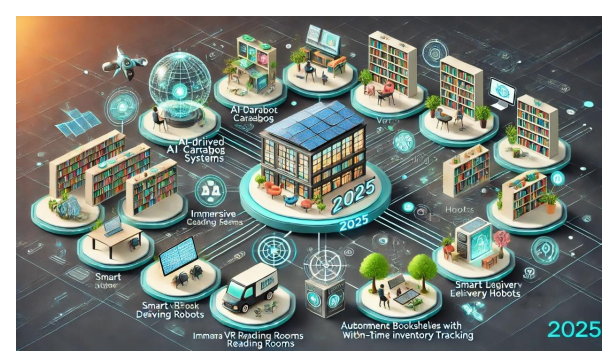
Virtual reality offers patrons the chance to experience places, events, and environments they could not otherwise access. Libraries are using VR to offer virtual tours of famous landmarks, create interactive educational exhibits, and simulate real-world scenarios for skill-building [1]. For patrons with physical disabilities or limited mobility, VR can be especially transformative — providing immersive travel, cultural, and educational experiences from the comfort of a library chair. However, adoption remains uneven: according to the Public Library Association, only around 16% of surveyed libraries currently have access to VR headsets, largely due to the high cost of equipment [2].
2. Augmented Reality (AR)
Augmented reality overlays digital content onto the physical world, offering a more affordable and accessible alternative to full VR. Libraries such as the University of California, San Diego, have used AR to create immersive library tours, while the University of Maryland Libraries have applied it to make their collections more interactive with added context and information [2]. AR can also provide access to rare or fragile materials by presenting patrons with detailed digital representations, removing the need to handle delicate texts. For users with cognitive disabilities, AR can layer helpful visual cues and guides onto real-world environments.
3. Artificial Intelligence (AI) and Conversational Agents
AI-powered chatbots and virtual assistants are reshaping accessibility in libraries by offering 24/7, personalized support. These tools help patrons navigate catalogs, locate 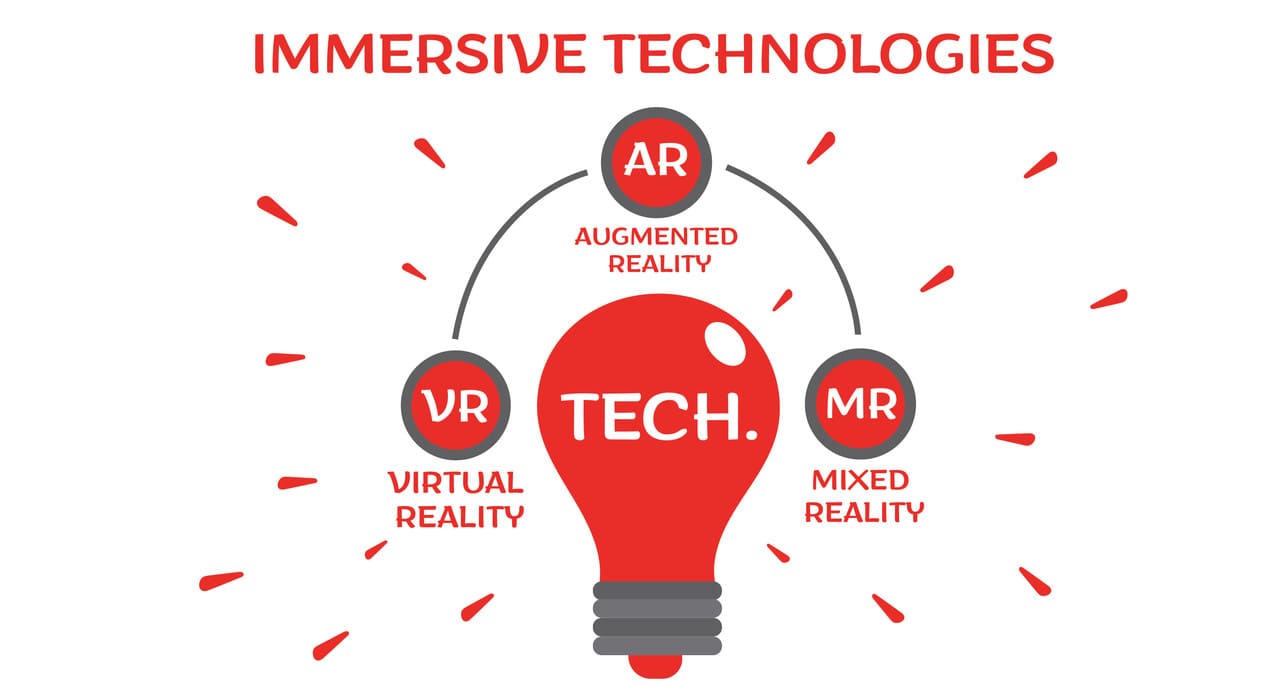 materials across databases, and receive tailored reading recommendations [2]. In academic settings, AI research assistants trained on peer-reviewed literature help users find and evaluate relevant papers without requiring direct staff intervention. For patrons with hearing impairments, AI is also improving the quality of real-time captioning for live-streamed and recorded library programming [3]. Research highlights that conversational AI agents offer richer and more useful interactions over time, with significant potential to assist visually impaired users by providing autonomous, tailored support [4].
4. Extended Reality (XR) for Inclusive Education
Extended reality — an umbrella term encompassing VR, AR, and Mixed Reality (MR) — is being studied systematically to assess its role in inclusive education. A 2025 systematic survey published in Human Behavior and Emerging Technologies examined XR’s application across formal and informal learning contexts, grounded in the Universal Design for Learning (UDL) framework. The study found that XR supports diverse learners by offering multiple means of representation, engagement, and expression — key principles of UDL [5]. Libraries, as community learning hubs, are well-positioned to deploy XR tools that meet the needs of users with diverse disabilities.
5. Autonomous Robots
Robots are beginning to appear in forward-thinking libraries as assistants for both staff and patrons. Research published in the Journal on Computing and Cultural Heritage identifies autonomous robots as potential “smart librarians” capable of navigating library environments, retrieving materials, and assisting patrons — including those with visual impairments — with greater independence [4]. These robots rely on Simultaneous Localization and Mapping (SLAM) technology to orient themselves in real time. While challenges around adaptability and user interaction remain, early implementations show promise for libraries seeking to reduce physical barriers to collection access.
6. Accessible Self-Service Kiosks
Modern library kiosks have evolved well beyond simple checkout stations. Today’s self-service technology is being redesigned to meet rigorous accessibility standards, including WCAG 2.1 AA compliance for software and Section 508 specifications for hardware [6]. In the United States, Colorado’s HB21-1110 set a national example by mandating digital  accessibility for all state and local government systems, including library kiosks, effective July 2025 [6]. Meanwhile, the European Union’s Accessibility Act, which came into force in June 2025, requires self-service technologies across member states to remove barriers for people with disabilities [6]. Today’s accessible kiosks offer tactile controls, private audio output, and screen navigation operable without sight.
7. 3D Printing for Assistive Devices
Library makerspaces equipped with 3D printers are becoming hubs for creating custom assistive technology. Before 3D printing, assistive devices were often prohibitively expensive, slow to produce, and difficult to customize. 3D printing changes that equation dramatically, enabling the creation of custom-fitted tools — from adaptive grips and prosthetics to specialized mounts and ergonomic supports — tailored to each user’s unique anatomy [7]. Libraries, universities, and state disability offices are now recognized as key access points for this technology [8]. The open-source nature of many 3D printing communities also fosters collaboration and rapid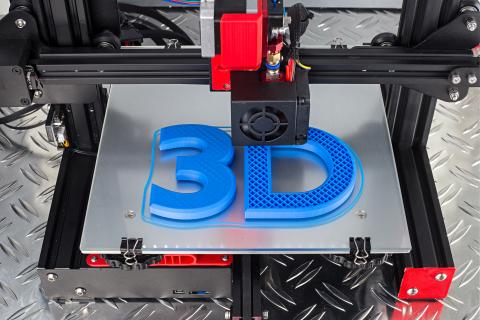 innovation in assistive device design [7].
8. Screen Readers, Text-to-Speech, and Digital Magnification
Among the most established and widely deployed accessibility technologies in libraries, screen readers and text-to-speech tools remain essential. These software-based tools enable patrons who are blind, have low vision, or have reading disabilities to independently navigate digital catalogs, access e-books, and engage with online resources [9]. The Andrew Heiskell Braille and Talking Book Library at the New York Public Library exemplifies this model at scale, offering free talking books, Braille materials, digital downloads, and personalized assistive technology coaching — serving patrons across New York City and Long Island through the National Library Service [10]. Screen magnification programs and large-print interfaces complement these tools for patrons with partial vision.
9. Assistive Listening Systems and Captioning Technology
For patrons with hearing impairments, libraries are investing in assistive listening devices — including hearing loop systems and personal amplifiers — as well as real-time captioning for library events and programming. AI is improving the quality of these services: automated captioning tools are becoming more accurate for live events, and translation technologies are beginning to break down language barriers [3]. These tools not only improve access to library programs but also foster social inclusion, allowing patrons with hearing loss to fully participate in community events, author talks, and workshops.
10. Digital Twins and the Internet of Things (IoT)
Emerging on the horizon of library accessibility are digital twins and IoT-enabled environments. A digital twin is a virtual replica of a physical space that can be used to simulate navigation, plan accessible routes, or train AI systems to better assist users with disabilities. Researchers identify these technologies — alongside XR and AI — as part of the next frontier for smart, inclusive libraries [4]. IoT sensors embedded throughout library buildings can assist patrons with wayfinding, alert staff to accessibility issues, and personalize environmental settings (such as lighting or audio) to individual patron needs in real time.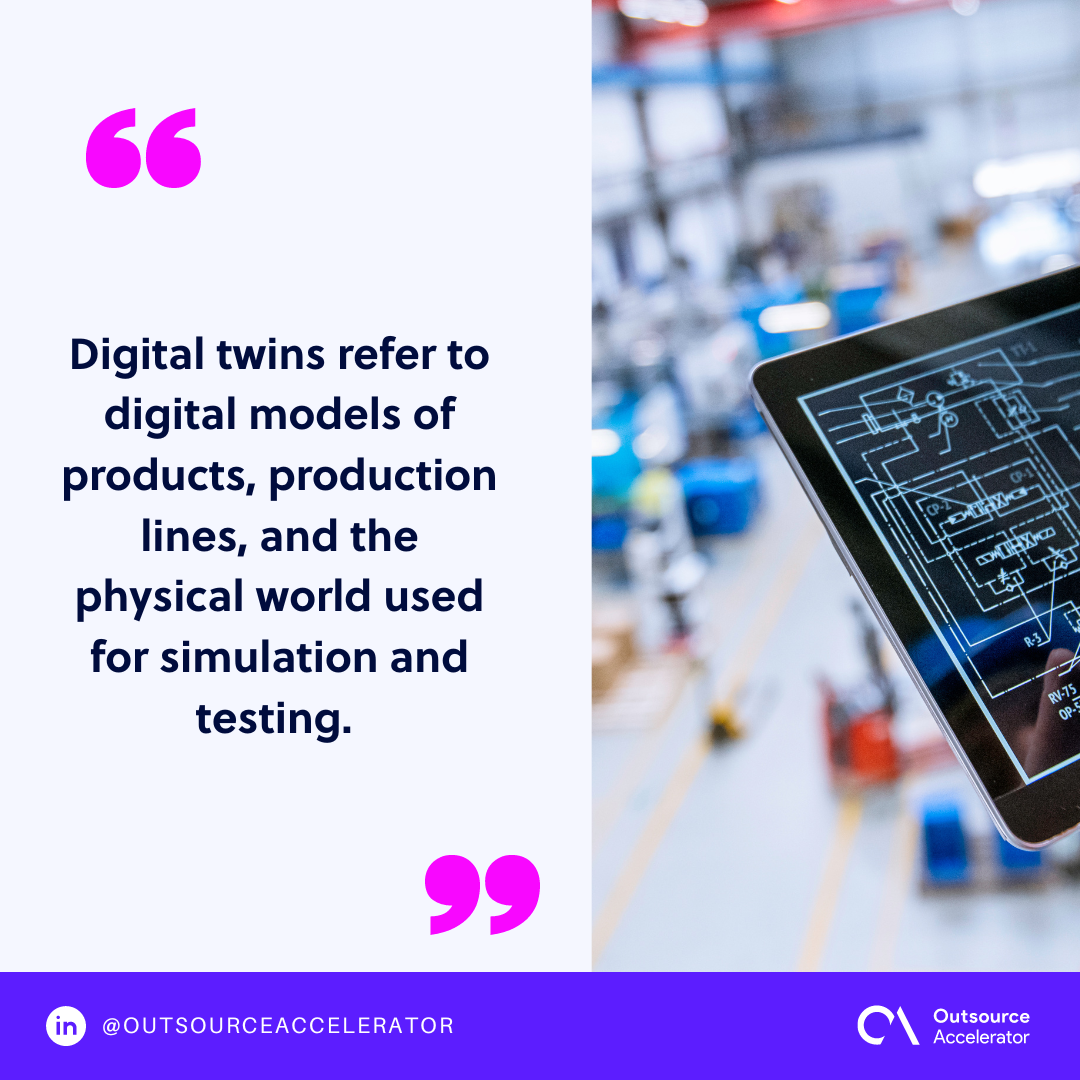
Libraries are doing far more than keeping pace with technology — they are using it to fulfill their foundational promise of universal access. From VR headsets that bring the world to patrons who cannot travel, to 3D-printed assistive devices that restore independence, the tools available today represent a genuine shift in what inclusion can look like. As regulatory frameworks like the EU Accessibility Act and Colorado’s digital accessibility laws raise the baseline expectation [6], and as research continues to validate XR, AI, and robotics in inclusive education [4, 5], libraries that invest in these technologies are investing in the dignity and participation of every member of their community.
Sources
- International Journal for Multidisciplinary Research (IJFMR). (2024). New library technologies and trends in 2025. https://www.ijfmr.com/papers/2024/6/31169.pdf
- collectionHQ. (2024, September 25). The impact of emerging technologies on libraries. https://www.collectionhq.com/the-impact-of-emerging-technologies-on-libraries/
- The Digital Librarian. (2024, October 25). Library tech trends for 2024. https://the-digital-librarian.com/2023/12/28/library-tech-trends-for-2024/
- ACM Digital Library / Journal on Computing and Cultural Heritage. (2025). Emerging technologies in smart libraries for visually impaired people: Challenges and design considerations. https://dl.acm.org/doi/10.1145/3727965
- Poggianti, M., et al. (2025). Immersive technologies for inclusive digital education: A systematic survey. Human Behavior and Emerging Technologies. https://onlinelibrary.wiley.com/doi/10.1155/hbe2/8888303
- Bibliotheca. (2025, November 12). Accessibility rules are driving library upgrades. https://www.bibliotheca.com/library-accessibility-self-service-upgrades/
- The Heritage at Lowman. (2024, February 1). 3D printing for accessibility. https://www.theheritageatlowman.org/blog/3d-printing-accessibility
- TechOWL / Temple University. (2025). 3D printing catalog. https://techowlpa.org/maker-catalog/
- Liblime. (2024, April 9). The evolution of accessibility in libraries: A history of empowering the disabled through assistive technology. https://liblime.com/2024/04/09/the-evolution-of-accessibility-in-libraries-a-history-of-empowering-the-disabled-through-assistive-technology/
- Equal Entry. (2025, November 18). How a library transforms access for print disabilities. https://equalentry.com/assistive-technology-print-disabilities/