
ADHD Awareness Month and Library Support: A Historical Perspective
Attention-Deficit/Hyperactivity Disorder (ADHD) is a neurodevelopmental disorder affecting millions of individuals worldwide. As our understanding of ADHD has evolved, so has the recognition of the need for greater awareness and support. Let’s examine the history of ADHD Awareness Month and how libraries have been crucial in supporting individuals with ADHD over the years.
The Evolution of ADHD Awareness Month
The concept of a dedicated month for ADHD awareness is relatively recent, reflecting the growing recognition of ADHD as a significant public health concern. ADHD Awareness Month is observed annually in October, providing a focused period for education, advocacy, and community engagement [1].
ADHD Awareness Month began in the early 2000s. In 2004, a coalition of ADHD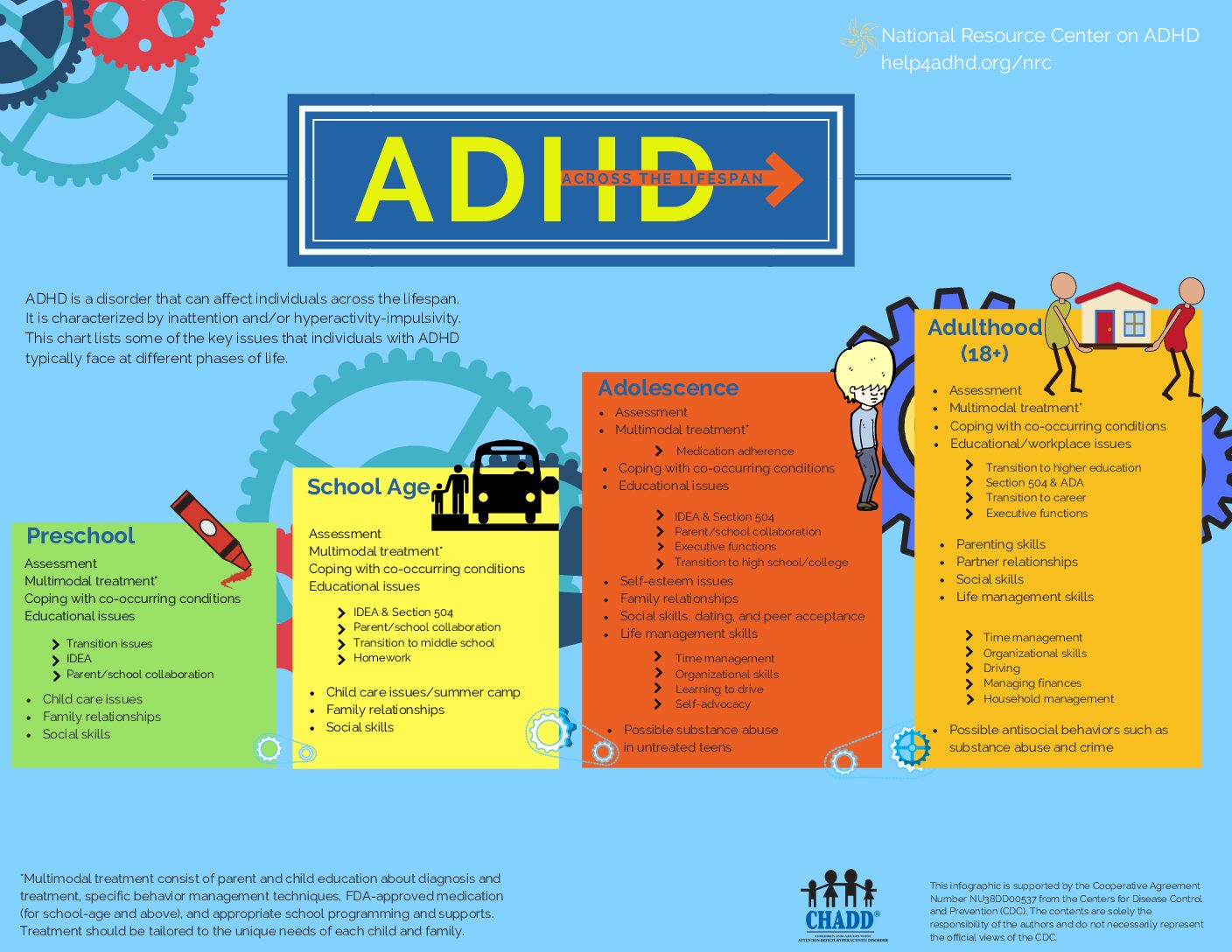 organizations in the United States established September 7th as ADHD Awareness Day [2]. This initial step was crucial in bringing national attention to the challenges faced by individuals with ADHD and their families.
As the impact of this day became evident, there was a push to expand the initiative. In 2008, the U.S. Senate passed a resolution recognizing September 18th as National ADHD Awareness Day [3]. This official recognition marked a significant milestone in the journey toward greater understanding and acceptance of ADHD.
The transition from a single day to an entire awareness month occurred in 2014 when October was designated ADHD Awareness Month [4]. This expansion allowed for more comprehensive campaigns, events, and educational initiatives throughout the month, reaching a broader audience and fostering a deeper understanding of ADHD.
Libraries as Pillars of Support
Libraries have long been at the forefront of providing resources and support for individuals with diverse needs, including those with ADHD. Over the years, libraries have adapted their services and environments to accommodate better the unique challenges faced by individuals with ADHD.
Resource Collection and Curation
One of the primary ways libraries have supported individuals with ADHD is through the thoughtful collection and curation of relevant resources. As early as the 1990s, libraries began to recognize the importance of providing materials related explicitly to ADHD [5]. This included books on ADHD management, educational resources for parents and teachers, and self-help materials for individuals with ADHD.
 Many libraries have created dedicated sections or displays featuring ADHD-related materials, making it easier for patrons to find relevant information. Additionally, libraries have expanded their collections to include audiobooks and e-books, which can be particularly beneficial for individuals with ADHD who may struggle with traditional reading formats [6].
Adaptive Technologies and Spaces
Recognizing the diverse needs of their patrons, libraries have increasingly incorporated adaptive technologies and created specialized spaces to support individuals with ADHD. In the early 2000s, some libraries introduced assistive technologies such as text-to-speech software and noise-cancelling headphones [7].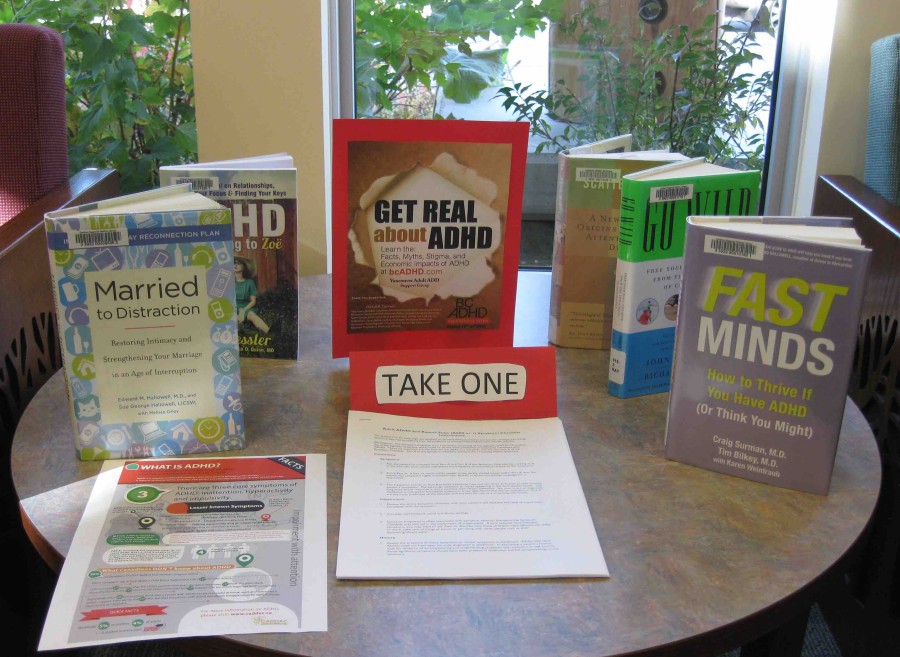
Many libraries have also redesigned their spaces to be more ADHD-friendly. This includes creating quiet study areas, introducing flexible seating options, and incorporating sensory-friendly elements. For example, the Salt Lake City Public Library introduced a “sensory room” in 2018, designed to provide a calming environment for individuals with sensory processing difficulties, including those with ADHD [8].
Educational Programs and Workshops
Libraries have played a crucial role in community education about ADHD. Many libraries host regular workshops, seminars, and support groups on ADHD awareness and management. These programs often feature expert speakers, including psychologists, educators, and ADHD coaches.
 For instance, the New York Public Library has offered workshops on understanding and managing ADHD in children and adults [9]. These initiatives provide valuable information and help create a supportive community for individuals affected by ADHD.
Collaboration with ADHD Organizations
Libraries have increasingly collaborated with ADHD advocacy organizations to enhance their services and reach. Many libraries partner with local ADHD support groups to host meetings and events, particularly during ADHD Awareness Month in October.
The American Library Association (ALA) has also promoted ADHD awareness and support within the library community. In 2016, the ALA’s Association of Specialized Government and Cooperative Library Agencies (ASGCLA) published guidelines for library services for people with attention-deficit/hyperactivity disorder [10].
Establishing ADHD Awareness Month has been crucial in promoting understanding and acceptance of ADHD. From its humble beginnings as a single awareness day to its current month-long observance, it has provided a platform for education, advocacy, and community building.
Libraries, committed to accessibility and lifelong learning, have been invaluable allies in supporting individuals with ADHD. Through thoughtful resource curation, adaptive technologies, educational programs, and community partnerships, libraries have continuously evolved to meet the needs of their patrons with ADHD.
As we continue to advance our understanding of ADHD and its impacts, libraries will undoubtedly remain at the forefront of providing support and resources. Their ongoing efforts, particularly during ADHD Awareness Month, contribute significantly to creating a more inclusive and understanding society for individuals with ADHD.
References
- ADHD Awareness Month. (n.d.). Retrieved from https://www.adhdawarenessmonth.org/
- Attention Deficit Disorder Association. (2004). ADHD Awareness Day Proclamation. https://add.org/adhd-awareness/
- S.Res.649 – 110th Congress (2007-2008): A resolution designating September 18, 2008, as “National Attention Deficit Disorder Awareness Day”. (n.d.). Congress.gov | Library of Congress. https://www.congress.gov/bill/110th-congress/senate-resolution/649
- ADHD Awareness 2024: Awareness is Key! – CHADD. (2024, September 24). CHADD. https://chadd.org/attention-article/adhd-awareness-2024-awareness-is-key/
- Magnus, W., Nazir, S., Anilkumar, A. C., & Shaban, K. (2023, August 8). Attention deficit hyperactivity disorder. StatPearls – NCBI Bookshelf. https://www.ncbi.nlm.nih.gov/books/NBK441838/
- Geddes, J. K. (n.d.). How Librarians Help kids with ADHD thrive. School Library Journal. https://www.slj.com/story/how-librarians-help-kids-with-adhd-thrive
- American Library Association. (n.d.). Library services for youth with autism spectrum disorders. https://www.ala.org/news/2013/05/library-services-youth-autism-spectrum-disorders
- Salt Lake City Public Library. (n.d.). Salt Lake City Public Library. https://events.slcpl.org/event/1007518
- About Attention-Deficit / Hyperactivity Disorder (ADHD). (2024, October 3). Attention-Deficit / Hyperactivity Disorder (ADHD). https://www.cdc.gov/adhd/about/index.html
- 10. American Library Association. (n.d.). Services to People with Disabilities: An Interpretation of the Library Bill of Rights. https://www.ala.org/advocacy/intfreedom/librarybill/interpretations/servicespeopledisabilities