
The Best Leadership Styles for Library Board Leaders — and Why Servant Leadership Stands Out
Library boards occupy a peculiar position in civic life. Trustees are volunteers, usually unpaid, who carry fiduciary, strategic, and moral responsibility for an institution that exists to serve everyone in a community, regardless of income, belief, or background. Choosing the right leadership style for board chairs and trustees is not a cosmetic decision; it shapes how directors are evaluated, how conflicts are resolved, and how trust is built or eroded with staff and the public. While several leadership styles have value in this  context, the evidence increasingly points to servant leadership as the most ethically sound and practically effective approach for those who govern libraries.
Why Library Governance Calls for a Distinct Leadership Style
Trustees are bound by standards that differ from those for corporate board service. According to the New York State Handbook for Library Trustees, board members owe duties of “care, loyalty and obedience” and must conduct library business “in an open and ethical manner,” always placing institutional goals ahead of personal interest (14). The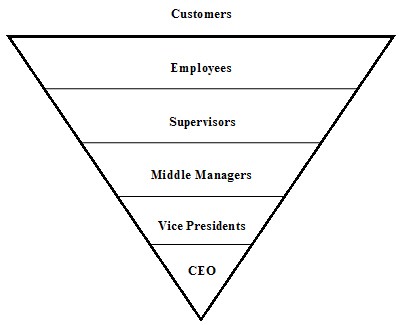 American Library Association’s Code of Ethics similarly directs trustees to provide equitable access, protect intellectual freedom, and avoid advancing private interests at the expense of users or colleagues (13). These obligations naturally push toward leadership grounded in stewardship rather than command, since the trustee’s authority is held in trust for the public, not for personal advancement.
Comparing Leadership Styles
Transformational leadership, which emphasizes inspiring a shared vision and motivating change, is useful for boards undertaking strategic planning or capital campaigns, but research on nonprofit leadership has found that transformational, authentic, and ethical leadership styles correlate so heavily with one another that their distinct value is limited unless applied to very specific outcomes (3). Distributed or collaborative governance models, examined in a comparative study of leading North American public libraries, were found to balance moral legitimacy with administrative efficiency and to institutionalize a shared organizational vision through transparent, documented decision-making (1). This collaborative orientation overlaps substantially with servant leadership’s emphasis on shared authority and collective ownership of outcomes.
Servant Leadership: A Strong Ethical Fit
Servant leadership, a concept introduced by Robert Greenleaf, inverts the traditional hierarchy: the leader’s central purpose is to serve followers’ growth and well-being rather than to direct them toward the leader’s own goals. A review of the model’s application to nonprofit organizations found that servant leaders are characterized by authenticity, empathy, empowerment of others, and stewardship, and concluded that servant leadership performs as a strong stand-alone leadership approach capable of explaining a wide range of organizational outcomes (3). This matters for library boards because trustees are explicitly stewards, not owners, of the institutions they govern.
Scholarship focused specifically on nonprofit culture argues that servant leadership is a “universal” fit for mission-driven organizations, because staff and volunteers are typically drawn to the work by genuine alignment with the mission rather than by financial incentives, making supportive, needs-responsive leadership more effective than directive control (2). Nonprofit leadership commentary echoes this point in practical terms, noting that servant leaders are in service not only to the people their organization helps but also to their own staff, donors, volunteers, and board colleagues, and that this orientation builds new leaders rather than dependent followers (4).
 Practitioner research on developing servant leaders identifies the core behavioral markers boards should look for and cultivate: empathy, commitment to others’ growth, active listening, self-awareness, persuasion rather than coercion, healing, foresight, and stewardship (5). These behaviors map directly onto a trustee’s fiduciary duties of loyalty and care, since a board chair who listens, empowers fellow trustees, and prioritizes the director’s and community’s needs over personal influence is less likely to drift into self-dealing or the “appearance of impropriety” that ethics guidance for trustees explicitly warns against (14).
The Ethical Payoff
The ethical case for servant leadership on library boards rests on alignment between means and ends. Libraries exist to serve the public good, and a leadership style built around serving others mirrors that mission internally, within the boardroom, and in relations with library staff. Distributed-authority models documented in public library research show that this kind of leadership also produces concrete governance benefits: greater transparency, shared responsibility, and longer-term policy sustainability (1). For trustees navigating contested issues such as collection challenges, budget constraints, or director evaluations, a servant orientation reduces the temptation toward unilateral or self-interested decisions and instead reinforces the open, accountable conduct that library ethics codes require (13, 14).
Conclusion
No single leadership style fits every governance moment; transformational approaches still serve boards well during major change initiatives, and collaborative, distributed-authority structures support transparency in everyday decision-making. But for the foundational posture of a library trustee, servant leadership offers the closest ethical match to the role’s fiduciary and public-trust obligations.
Sources
- Servant leadership theory in practice: North America’s leading public libraries. ResearchGate. https://www.researchgate.net/publication/327574659_Servant_leadership_theory_in_practice_North_America’s_leading_public_libraries
- Servant Leadership In Nonprofit Culture. Master of Nonprofit Administration, University of San Francisco. https://usfblogs.usfca.edu/nonprofit/2017/10/06/servant-leadership-in-nonprofit-culture/
- An Introduction to Servant Leadership and Its Potential for Nonprofit Organizations. ResearchGate. https://www.researchgate.net/publication/357852439_AN_INTRODUCTION_TO_SERVANT_LEADERSHIP_AND_ITS_POTENTIAL_FOR_NONPROFIT_ORGANIZATIONS
- Is Servant Leadership the Right Approach for Nonprofit Leaders? Joan Garry Consulting (2022). https://joangarry.com/servant-leadership/
- Martinez, S. (2022). Developing Servant Leaders in Nonprofit Organizations. Journal of Nonprofit Innovation, 2(2), Boise State University. https://vahara-o2-public.s3.amazonaws.com/media/91777/JoNI–March-2022–Articles.pdf
- ALA Code of Ethics. American Library Association. https://www.ala.org/tools/ethics
- Trustee Duties and Responsibilities. Handbook for Library Trustees of New York State (2023 Edition). New York State Education Department. https://nyslibrary.libguides.com/Handbook-Library-Trustees/duties-responsibilities