
Why People Choose Library Service as a Career: The Top 5 Reasons
Library science may not be the first profession that comes to mind when people imagine high-impact careers, but for those who pursue it, the motivations run deep. From a commitment to community to the thrill of lifelong learning, librarianship attracts a remarkably passionate workforce. Here are the top five reasons people choose library service as a career.
- A Passion for Community Impact
At its heart, librarianship is about people. Open-ended survey responses from library workers reveal genuine enthusiasm for the field — one public services librarian described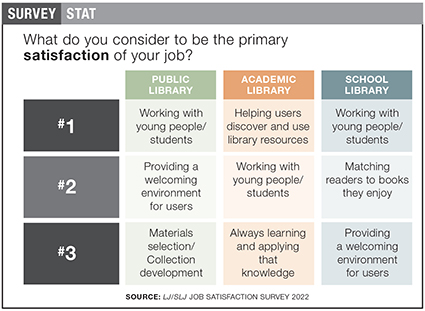 the work as “very rewarding” because it meant helping people from all walks of life discover new things and learn new skills. Library Journal: This human connection is a powerful draw. Those who envision themselves running community programming and fostering literacy are naturally drawn to library science as a career path. Syracuse University. For many, the library is one of the last truly democratic public spaces, and working within it feels like meaningful civic service.
- A Commitment to Intellectual Freedom and Core Values
Many people enter library service because it aligns with their deepest values. Graduates consistently prioritize positions that reflect a commitment to DEI practices and strong institutional stances on upholding intellectual freedom rights — one newly employed library worker noted she was looking for a workplace with a “willingness to defend and protect libraries and our position as library staff.” Library Journal Librarianship is anchored in equitable access, the protection of intellectual freedom, and the representation of diverse voices at the University of Nevada, Las Vegas — principles that resonate strongly with mission-driven individuals.
- Intellectual Stimulation and Lifelong Learning
Library careers offer something increasingly rare in modern workplaces: genuine intellectual variety. Professional autonomy and variety in responsibilities contribute significantly to job satisfaction, particularly in smaller library systems, where one community college librarian described the appeal of having “a huge variety of responsibilities and autonomy.” Liblime The field is also rapidly evolving — librarians today teach AI literacy, develop emerging technology resources, and work with digital assets in formats that didn’t even exist when many libraries were founded. Liblime For curious minds, this constant evolution is a feature, not a burden.
- Decent Employment Prospects
Library science offers more career security than many assume. Employment in the field is expected to grow by 3 percent over the next decade, and the median salary exceeded  $64,000 in 2023, according to the U.S. Bureau of Labor Statistics. University of Southern California. The BLS projects over 13,000 annual job openings for librarians from 2023 to 2033. TheBestSchools.org: Beyond traditional roles, graduates with library science degrees are increasingly finding careers in data analytics, research administration, digital archives, and corporate knowledge management. Librarian certification — a diversification that adds long-term flexibility.
- Meaning in the Work Itself
Perhaps the most powerful motivator is a sense of purpose. Research on librarian workplace engagement found that those who believed their work was important and contributed to a greater good were far more satisfied and engaged — as one respondent put it, “Being a Librarian is very rewarding for me when I am assisting a student one-on-one, and I meet their information need. It makes me feel like I am worth something to someone.” Ala-apa Despite challenges related to salary and staffing, more than three-quarters of library workers said they would choose their career again, and 78 percent would recommend librarianship to a young person just entering college. Library Journal
Library service is not a career people stumble into — it is one they choose deliberately, driven by values, curiosity, and a genuine desire to serve. In a world increasingly defined by information overload, those who guide others through it may be more essential than ever.
Sources
- Library Journal. (2024, October 15). Challenges, opportunities: Placements and salaries survey 2024. https://www.libraryjournal.com/story/challenges-opportunities-placements-and-salaries-2024
- Library Journal. (2023, October 16). Holding steady: Placements and salaries survey 2023. https://www.libraryjournal.com/story/holding-steady-placements-and-salaries-survey-2023
- Library Journal. (2023, March 6). Satisfaction (not always) guaranteed: Job satisfaction survey 2022. https://www.libraryjournal.com/story/Satisfaction-Not-Always-Guaranteed-job-satisfaction-survey-2022
- Liblime. (2025, July 28). Job satisfaction rates among public library librarians: A 2024 analysis. https://liblime.com/2025/07/28/job-satisfaction-rates-among-public-library-librarians-a-2024-analysis/
- University of Nevada, Las Vegas Libraries. (n.d.). Trends & future of librarianship. https://guides.library.unlv.edu/libjobs/trends
- University of Southern California. (2024, September 19). Library science jobs: The best careers for grads. https://online.usc.edu/news/library-science-degree-jobs-best-careers/
- The Best Schools. (2024, September 18). What to know about earning a library science degree in 2024. https://thebestschools.org/degrees/library-science/
- ALA-APA. (2019). Job satisfaction and workplace engagement in libraries. https://ala-apa.org/newsletter/2019/09/10/job-satisfaction-and-workplace-engagement-in-libraries/
- Librarian Certification. (n.d.). Salary expectations and career growth in library science. https://www.librariancertification.com/salary-expectations-and-career-growth-in-library-science/
- Syracuse University Online. (2021, May 7). Library science careers & job outlook. https://onlinegrad.syracuse.edu/information-science/mslis/library-science-careers/