Libraries Embracing Virtual Programs Post-Covid
Public libraries across the United States have transformed how they serve communities by embracing virtual programming. What began as a necessity during the COVID-19 pandemic has evolved into a permanent expansion of library services, reaching patrons far beyond physical building walls and creating new opportunities for learning, connection, and community engagement.
The shift to digital platforms represents more than just a temporary adaptation. Brooklyn Public Library reported that tens of thousands of people attended its virtual programs over two years, with participants joining from across the United States and other countries (1). This international reach demonstrates how virtual programming has expanded libraries’ audiences in ways that traditional in-person events never could, enabling institutions to serve not only local patrons but also global communities interested in their specialized offerings.
Libraries have developed diverse virtual program catalogs that span all age groups and interests. Charlotte Mecklenburg Library offers programs ranging from storytimes via Facebook Live and Zoom to book clubs, STEAM activities, writing groups, gaming  sessions, and college and career connections (2). Similarly, the Free Library system provides virtual meditation workshops, book clubs for specific communities, including trans and nonbinary readers, and career development workshops covering topics such as AI-assisted resume writing (3). These examples illustrate how libraries have recreated virtually the full spectrum of programming they once offered exclusively in physical spaces.
The technical infrastructure supporting virtual programs has become increasingly sophisticated. Libraries such as the Downers Grove Public Library offer programs via live Zoom sessions, where patrons can interact with presenters in real time, as well as on-demand recordings that can be viewed at any time (4). This dual approach accommodates different patron needs—some prefer the immediacy and interactivity of live sessions. In contrast, others appreciate the flexibility of asynchronous content they can access on their own schedules.
Children’s programming has particularly thrived in virtual formats. Dakota County Library in Minnesota hosted Virtual Storytimes three times weekly to support early literacy

https://dglibrary.org/virtual-programs/
and reading readiness while schools were closed (5). Los Gatos Library in California used Facebook Live to stream regularly scheduled storytimes, including Bilingual Storytime and Terrific Twos Storytime (5). These programs demonstrate how libraries maintained their crucial role in early childhood development even when families couldn’t visit branches in person.
Program attendance data reveals sustained engagement with virtual offerings. From 2005 to 2018, total program attendance at public libraries increased 57%, growing from 24.7 to 38.9 attendees per 100 people in library service areas (6). While this data predates the 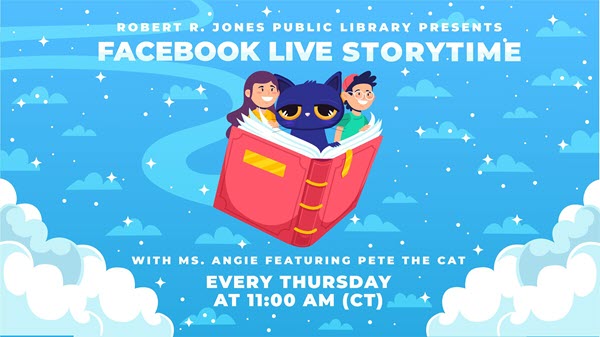 pandemic-driven virtual programming boom, it laid the foundation for a growing interest in library programs that virtual formats have continued to build upon. Although some online services, such as virtual programs declined slightly from pandemic peaks in 2020 to 2023, access to technology resources and services increased across nearly all categories (7).
The technology enabling these programs has become more accessible. Ninety-five percent of public libraries now circulate e-books and e-audiobooks, while more than half provide streaming services and downloadable content (7). Additionally, 95% of public libraries offer informal or formal digital literacy training (7), ensuring patrons can effectively participate in virtual programming regardless of their initial technology skills.
Virtual programming has also proven valuable for specialized services. Brooklyn Public Library’s PowerUP Business Plan Competition, which offers cash awards up to $20,000 to aspiring entrepreneurs, conducts virtual orientation sessions that allow participants across the region to attend without travel barriers (8). Adult learning centers have similarly moved high school equivalency preparation classes online, making educational advancement more accessible to working adults and those with transportation challenges (9).
 Looking forward, libraries are strategically planning their virtual programming futures. Brooklyn Public Library’s strategic plan emphasizes identifying programs that perform well on virtual platforms, enhancing production values, and creating opportunities for staff to learn from one another about best practices (1). This commitment to quality and continuous improvement suggests that virtual programming will remain a core library service rather than reverting to purely in-person models.
The expansion of virtual programming has fundamentally changed how users access library services. Patrons no longer need to coordinate transportation, childcare, or work schedules around specific program times and locations. International audiences can participate in specialized programs from major urban library systems. People with mobility challenges or those living in rural areas gain equal access to enriching educational and cultural programming. As libraries continue refining their virtual offerings while maintaining valued in-person services, they demonstrate remarkable adaptability in meeting 21st-century community needs.
Sources
- Brooklyn Public Library. (n.d.). Strategic Plan 2022-2024. https://www.bklynlibrary.org/strategicplan
- Charlotte Mecklenburg Library. (n.d.). Virtual Programming. https://www.cmlibrary.org/virtual-programming
- Free Library of Philadelphia. (n.d.). Virtual Programming – Events. https://libwww.freelibrary.org/calendar/virtual-programs/
- Downers Grove Public Library. (n.d.). Virtual Programs. https://dglibrary.org/virtual-programs/
- WebJunction. (2020). Youth Programming Goes Virtual—Storytimes, Crafts, Teen Activities, and More. https://www.webjunction.org/news/webjunction/youth-programming-goes-virtual.html
- American Academy of Arts and Sciences. (n.d.). Use of Public Libraries. Humanities Indicators. https://www.amacad.org/humanities-indicators/public-life/use-public-libraries
- Library Research Service. (2024). Public Libraries and Technology: Beyond the Public Library Survey. https://www.lrs.org/2024/09/13/public-libraries-and-technology-beyond-the-public-library-survey/
- Brooklyn Public Library. (2024). 2024 PowerUP Business Plan Competition Virtual Orientation. https://www.bklynlibrary.org/calendar/2024-powerup-business-virtual-20240403
- Brooklyn Public Library. (n.d.). Adult Learning Centers. https://www.bklynlibrary.org/adult-learning/learning-centers