
Archive Technologies Used in 2025
The year 2025 marks a pivotal turning point in the field of archival science. As global data creation is projected to reach 175 zettabytes by the end of this year [2.3], archivists no longer function merely as custodians of physical papers but as advanced data engineers managing a complex digital ecosystem.1 The transition from reactive storage to proactive, intelligence-driven management is being fueled by five core technologies that have moved from experimental pilots to industry standards.
1. Generative AI and Automated Metadata Enrichment
Artificial Intelligence (AI) has become the cornerstone of modern archival workflows. In 2025, the primary focus for institutions like the National Archives and Records Administration (NARA) is the deployment of AI for automated classification and metadata generation [3.1].3
Traditionally, archivists spent thousands of hours manually tagging records. Today, Large Language Models (LLMs) and specialized machine learning pipelines analyze the semantic content of documents to “self-describe” records.4 These systems can:

- Extract Entities: Automatically identify people, places, and events within unstructured text.5
- Generate Summaries: Create concise abstracts for collections that previously lacked finding aids.6
- Privacy Redaction: AI tools can now identify and redact sensitive Personally Identifiable Information (PII) with higher accuracy than human review alone, thereby ensuring compliance with evolving privacy laws [3.1, 3.2].7
According to the 2025 Enterprise Cloud Index, 98% of organizations prioritize modernizing IT operations to support compute-intensive AI workloads [1.2].8 For archivists, this means “dark archives”—collections that are processed but unsearchable—are finally becoming visible to the public.
2. Next-Generation Handwritten Text Recognition (HTR)
For centuries, historical manuscripts written in cursive or archaic scripts remained a barrier to digital discovery. However, in 2025, there was a breakthrough in Handwritten Text Recognition (HTR) with the use of Transformer-based models [7.1].9
Unlike traditional Optical Character Recognition (OCR), which relies on identifying individual characters, modern HTR uses contextual reasoning to understand entire lines of text. This is critical for archives holding 18th-century correspondence or non-standardized scripts like Sütterlin. Recent developments include:
- Few-Shot Learning: Models that can learn an individual’s handwriting style from just ten training examples [3.2].
- Multilingual Support: Systems capable of processing mixed-language documents and regional dialects standard in colonial-era records [7.2].
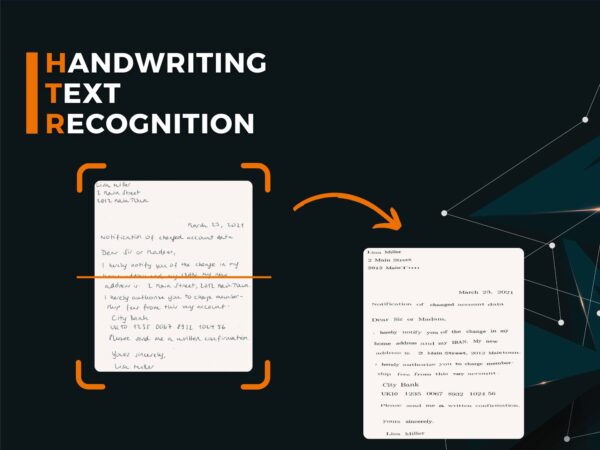
- Image Optimization: AI-driven binarization that cleans up faded ink, creases, and stains before the transcription process begins [7.2].10
These technologies have reduced transcription time by up to 60%, enabling archives to make millions of pages of historical data searchable “at the click of a button” [7.2].
3. Cloud-Native and Hybrid Archival Infrastructures
The debate between on-premise and cloud storage has largely settled into a Hybrid Cloud consensus in 2025. Organizations are increasingly adopting “cloud-native” architectures, which use containerization (such as Docker and Kubernetes) to ensure that archival software is portable and scalable [1.1, 2.1].11
Archivists in 2025 utilize a “tiered” storage model to manage costs and accessibility:
| Layer | Technology | Purpose |
| :— | :— | :— |
| Hot Tier | Standard Cloud (e.g., Azure, Google Cloud) | Frequently accessed records and active workspaces. |
| Cool Tier | Object Storage (e.g., Amazon S3) | Records that are accessed monthly for research. |
| Cold Tier | Deep Archive (e.g., S3 Glacier) | Long-term preservation of inactive data at minimal cost [5.3]. |
This shift toward the cloud is not just about storage; it is about interoperability. Centralized archival platforms now consolidate data from disparate sources, such as Microsoft 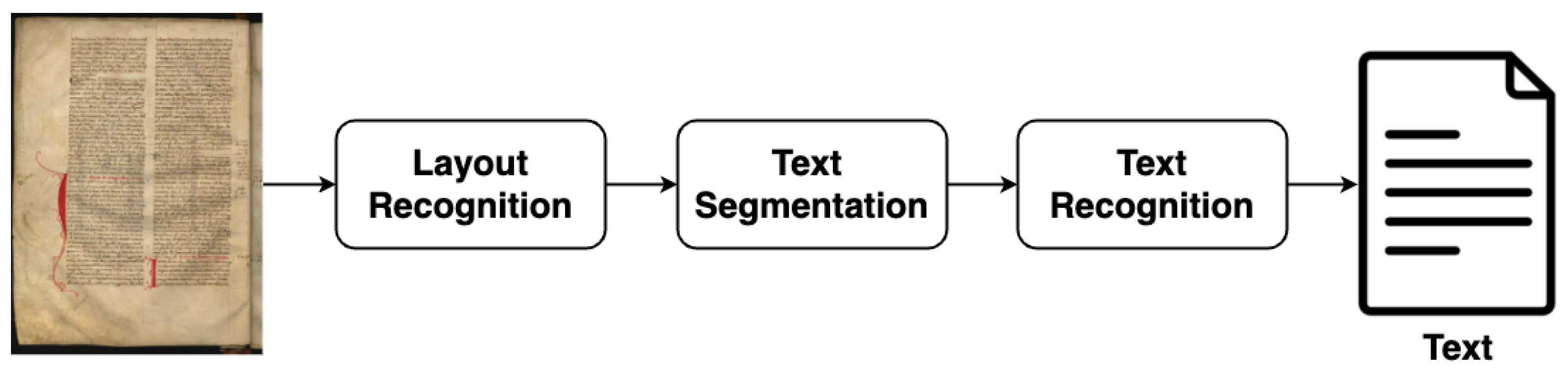 SharePoint and SAP systems, into a single “source of truth,” thereby making regulatory compliance and legal discovery significantly more efficient [2.1].
4. Blockchain for Data Integrity and Provenance
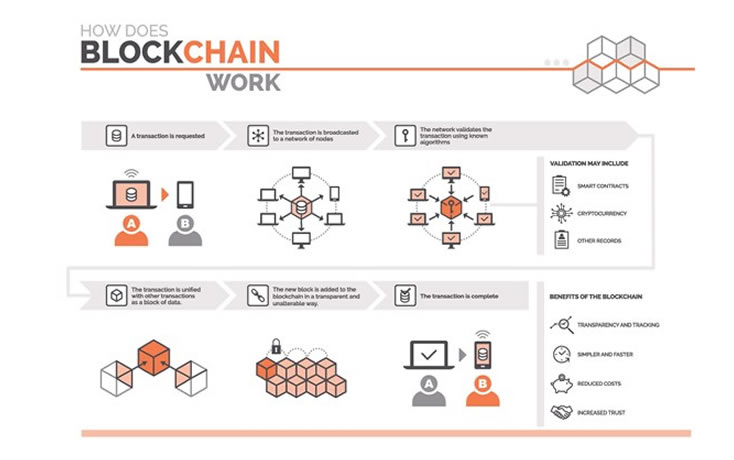
As the threat of “deepfakes” and unauthorized data manipulation grows, archivists are turning to Blockchain and Distributed Ledger Technology (DLT) to guarantee the “chain of custody.” In 2025, blockchain is being leveraged as a foundational infrastructure for digital forensics [4.3].
Archival blockchain applications focus on three key areas:
- Immutability: Once a record is ingested, its cryptographic hash is recorded on an append-only ledger. Any subsequent change to the file will break the hash, alerting archivists to tampering.
- Self-Sovereign Identity (SSI): Blockchain technology enables users to access restricted archives using verified digital credentials without compromising their complete identity [4.1].
- Strategic Reserves: Some government agencies have even begun exploring the use of digital asset stockpiles and specialized custodial accounts to manage records born on the blockchain [4.2].
By 2025, blockchain will have moved beyond cryptocurrency to become a “silent revolution” in the preservation of digital evidence and legal records [4.1].
5. Linked Open Data (LOD) and Knowledge Graphs
The final frontier for the 2025 archivist is the transition from “siloed” catalogs to the Global Web of Data. Through Linked Open Data (LOD), archives are no longer dead ends for researchers. Instead, they are nodes in a massive, interconnected knowledge graph.
Technologies like OCLC Meridian and WorldCat Entities have enabled archives to enrich their records with Universal Resource Identifiers (URIs) [8.2]. For example, a search for a specific author in a local archive can now automatically pull in related photographs from a national library, birth records from a state registry, and digitized letters from a university collection—all because the data is “linked” through standard identifiers.
Key advancements in 2025 include:
- Semantic Search: AI-powered search engines that understand the meaning behind a query rather than just matching keywords [3.1].
- BIBFRAME Integration: The continued shift away from MARC (Machine-Readable Cataloging) toward the BIBFRAME model, which is designed for the linked data environment [8.2].
- Knowledge Panels: Similar to Google’s knowledge panels, archival catalogs now provide rich contextual information for entities (people, places, and things) directly within the search interface [8.1].
The Path Forward: Ethical and Sustainable Archiving
As these technologies proliferate, the role of the archivist is evolving into that of an Ethical Data Steward. The rapid adoption of GenAI has introduced new hurdles regarding the ethics of “training data. “. Archivists in 2025 are increasingly seeking “AI-ready” storage solutions that allow them to opt out of having their cultural heritage collections used for training commercial models without permission [5.2].
Furthermore, “Green Cloud” initiatives are increasingly prioritized. As archival data volumes grow rapidly, institutions are selecting cloud providers based on their carbon footprint and energy efficiency, ensuring that the preservation of the past does not come at the expense of the future [1.1].
The archivist of 2025 is a technologist, a legal expert, and a guardian of truth. By leveraging AI, HTR, cloud-native systems, blockchain, and linked data, they are ensuring that our collective history remains not only preserved but actively discoverable in an increasingly digital world.
Source List
- Nutanix (2025). AI and Cloud Native Technologies Proliferate in 2025 Enterprise Cloud Index.19 [1.2] https://www.nutanix.com/theforecastbynutanix/news/ai-and-cloud-native-technologies-proliferate-in-2025-enterprise-cloud-index
- SAPinsider (2025). Top 2025 trends to shape data and document archiving. [2.1] https://sapinsider.org/map/top-2025-trends-to-shape-data-and-document-archiving/
- National Archives (NARA) (2025). Inventory of NARA Artificial Intelligence (AI) Use Cases. [3.1] https://www.archives.gov/ai
- GlobeNewswire (2025). The Global Enterprise Information Archiving Market 2025. [2.3] https://www.globenewswire.com/news-release/2025/04/28/3069410/28124/en/The-Global-Enterprise-Information-Archiving-Market-2025-Growth-Forecasts-to-2029-2034-Featuring-Strategic-Profiles-of-Atos-Barracuda-Networks-Dell-Technologies-Google-Veritas-Techn.html
- Carahsoft (2025). How AI Records Management Transforms Government Ops. [3.2] https://www.carahsoft.com/wordpress/visualvault-how-ai-powered-records-management-transforms-government-operations-from-reactive-to-proactive-blog-2025/
- arXiv (2025). Handwritten Text Recognition of Historical Manuscripts Using Transformer-Based Models. [7.1] https://arxiv.org/abs/2508.11499
- PLANET AI (2025). Handwriting Text Recognition (HTR) | IDA Recognition. [7.2] https://planet-ai.com/handwriting-text-recognition-htr/
- OCLC (2025). 2024: A year of accelerating linked data. [8.2] https://www.oclc.org/en/news/announcements/2025/2024-accelerating-linked-data.html
- MDPI (2025). The Application of Blockchain Technology in the Field of Digital Forensics.20 [4.3] https://www.mdpi.com/2813-5288/3/1/5
- Public Libraries Online (2025). Transforming Library Catalogs: The Promise and Challenges of Linked Data. [8.1] https://publiclibrariesonline.org/2025/01/transforming-library-catalogs-the-promise-and-challenges-of-linked-data/
- G2 (2025). Best Archive Storage Solutions: User Reviews from December 2025. [5.3] https://www.g2.com/categories/archive-storage-solutions