Libraries Use Text Analysis Software to Improve Search Results
In an era when information overload challenges even the most experienced researchers, libraries face increasing pressure to help patrons find relevant materials efficiently. Traditional keyword-based search systems often fail to capture the semantic meaning of queries, leading users to miss valuable resources hidden in vast collections. Text analysis software offers a powerful solution to this problem, enabling libraries to transform how patrons discover information.
The Evolution from Keywords to Meaning
Traditional library search systems rely on lexical matching, which requires queries to contain exact words or phrases that appear in catalog records. This approach creates significant barriers to discovery. When a patron searches for “climate change effects,” they may miss relevant books cataloged under “environmental impact” or “global warming consequences.” Keyword-based search essentially samples a corpus and may be inadequate for capturing a broad understanding of a topic, as it is a syntactical search rather than a semantic search (1).
Text analysis software addresses this limitation by understanding context and meaning rather than just matching words. The Natural Language Processing market size is projected to grow from $29.71 billion in 2024 to $158.04 billion by 2032, at a compound annual growth rate of 23.2% (2), reflecting widespread recognition of this technology’s transformative potential across industries, including libraries.
Understanding Vector Embeddings and Semantic Search
At the heart of modern text analysis lies the concept of vector embeddings—numerical representations that capture the semantic meaning of text. Embedding is the text transformation process into a vector with numerical information, where embeddings for a single word versus a complete sentence differ significantly because sentence embeddings account for relationships between words and the sentence’s overall meaning (3).
When libraries implement semantic search, each document in their collection becomes a coordinate point in a high-dimensional vector space. When patrons submit queries, the system converts their search terms into the same vector format and identifies the closest matching documents based on semantic similarity rather than word matching. Unlike traditional keyword-based searches that rely on exact matches, semantic search considers the relationships between words, their contextual significance, and even the intent behind the query (4).
Practical Applications in Library Systems
Libraries can deploy text analysis tools across multiple functions to enhance discovery. WordStat can process 25 million words per minute, quickly extract themes, and automatically identify patterns using clustering, multidimensional scaling, and proximity plots (5). Such processing power enables libraries to efficiently analyze their entire catalogs.
One critical application involves improving metadata quality and catalog representation. Data mining and textual analysis can help investigate the descriptors and metadata currently used in databases and catalogs to determine whether communities and fields are equally represented semantically (6). Libraries can identify gaps where author keywords differ significantly from indexed terms, potentially hindering resource discovery.
 Text analysis also powers sophisticated recommendation systems. Analysis of circulation data can be applied to address many issues, such as evaluation, collection acquisition policies, funding allocation for materials, and approaches to deselecting and allocating physical space (7). By mining patterns in borrowing behavior, libraries can suggest relevant materials to patrons based on what similar users have found valuable.
Implementation Considerations
For libraries considering adopting text analysis, several open-source tools offer accessible entry points. NLTK provides easy-to-use interfaces to over 50 corpora and lexical resources such as WordNet, along with a suite of text processing libraries for classification, tokenization, stemming, tagging, parsing, and semantic reasoning (8). Meanwhile, Gensim is designed to extract semantic topics from extensive text collections efficiently and can handle large corpora with efficient data streaming and incremental algorithms (8).
Vector search systems benefit from a hybrid approach that leverages hierarchical structures to efficiently navigate high-dimensional semantic embedding spaces, organizing embeddings into navigable graphs that support fast and accurate similarity search (9). This technical foundation allows libraries to implement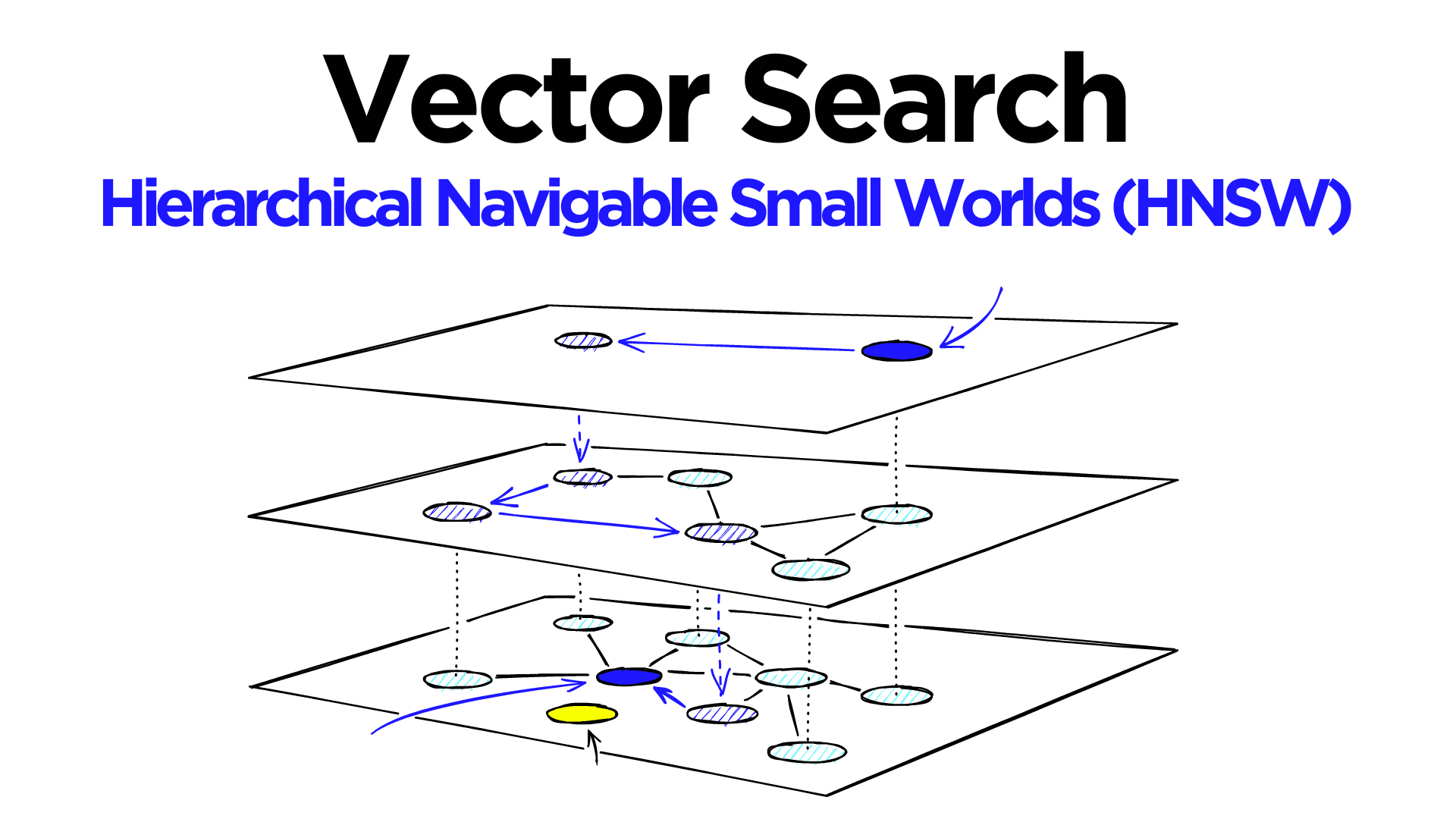 search improvements at scale.
Future Directions
As text analysis technology continues to advance, libraries have unprecedented opportunities to serve their communities better. The shift from syntactic to semantic search represents more than a technical upgrade—it fundamentally reimagines how patrons interact with library collections. By implementing these tools thoughtfully, libraries can ensure that valuable resources no longer remain hidden behind the limitations of keyword matching, making the full richness of their collections truly discoverable to all users.
References
- Khadka, S. (2024). “Semantic vs. Keyword Search in Vector Databases.” Medium. https://medium.com/@nakateashwath/vector-databases-and-semantic-search-a-complete-implementation-guide-0e9f6c19a476
- Fortune Business Insights. (2024). “Natural Language Processing (NLP) Market Size, Share & Industry Analysis.” https://www.fortunebusinessinsights.com/natural-language-processing-nlp-market-103270
- Pinecone. (2024). “What are Vector Embeddings?” https://www.pinecone.io/learn/vector-embeddings/
- Elastic. (2024). “What is Semantic Search?” https://www.elastic.co/what-is/semantic-search
- Provalis Research. (2024). “WordStat – Text Analytics Software.” https://provalisresearch.com/products/content-analysis-software/wordstat-dictionary/
- Morrison, C. & Secker, J. (2023). “Text and Data Mining for Social Science Research.” London School of Economics Library Blog. https://librarysearch.lse.ac.uk/discovery/fulldisplay?vid=44LSE_INST:44LSE_VU1&tab=Everything&docid=alma99149454307102021&lang=en&context=L&query=sub,exact,%20Finance,AND&mode=advanced
- Khademizadeh, S., Nematollahi, Z., & Danesh, F. (2022). Analysis of book circulation data and a book recommendation system in academic libraries using data mining techniques. Library & Information Science Research, 44(4), 101191. https://doi.org/10.1016/j.lisr.2022.101191
- Natural Language Toolkit Project. (2024). “NLTK Documentation.” https://www.nltk.org/
- Malkov, Y. & Yashunin, D. (2024). “Hierarchical Navigable Small World Graphs for Vector Search.” IEEE Transactions on Pattern Analysis and Machine Intelligence. https://www.pinecone.io/learn/series/faiss/hnsw/