
Transforming Learning Through Play: The Evolution of Children’s and Teen Spaces in Modern Libraries
Public libraries have undergone a remarkable transformation in recent decades, evolving from quiet repositories of books into dynamic community hubs that embrace innovative approaches to learning and development. At the forefront of this evolution is the integration of play-based learning environments specifically designed for children and teenagers. This paradigm shift recognizes play not merely as entertainment, but as an essential tool through which young people develop critical cognitive, social, and emotional skills.
Scientific Foundation of Play-Based Learning
Recent research has significantly strengthened the evidence base supporting play-based learning approaches. A comprehensive systematic review published in 2025 examined empirical research on the implementation of play-based learning in formal educational settings, providing robust evidence for its effectiveness across multiple developmental domains (1). Revealing that play-based learning comprises mind-on, hands-on, and body-on activities that can be either technology-enriched or traditional in nature,
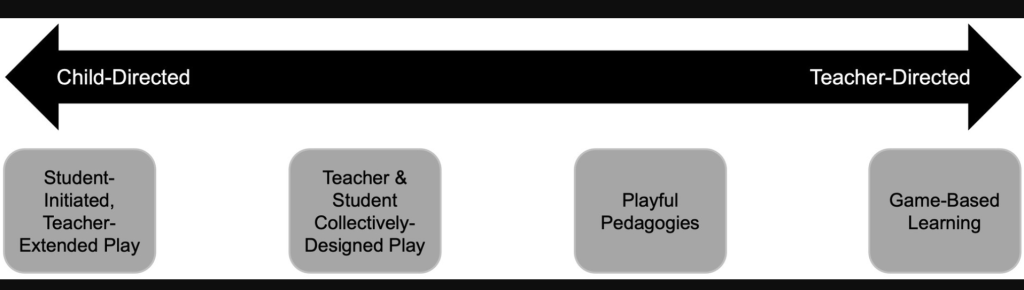
Figure 1. Continuum of play-based learning (adapted from Pyle and Danniels, 2017).
characterized by their ability to engage multiple learning modalities simultaneously (2).
The neurological and developmental foundations for play-based learning are especially compelling during early childhood. Research published in 2024 demonstrates that literacy skills acquired through play-based activities in early years are critical to children’s cognitive development and future academic success (3). Children develop these foundational skills through listening and interacting during play-based activities, both at home and in educational settings, with teachers, peers, and parents serving as crucial facilitators of this learning process.
Contemporary neuroscience research supports the premise that play activates multiple brain regions simultaneously, promoting neural connectivity and cognitive flexibility. A 2022 study published in Edutopia found that play-based learning can be more effective than direct instruction at improving outcomes for early learners, particularly in the development of mathematical and spatial skills (4). This finding challenges traditional educational approaches and provides strong justification for libraries to invest in play-based learning environments.
Design Innovation and Evidence-Based Spatial Planning
Modern library design increasingly incorporates developmental science principles into physical spaces, creating environments that are both engaging and educationally purposeful. A landmark study published in the Journal of Environmental Psychology documented how researchers worked directly with designers to integrate developmental science theory and research into library installations, using naturalistic observation to capture caregiver and child discourse and interaction patterns (5). This collaborative approach between child development experts and design professionals ensures that library spaces are not only visually appealing but also developmentally appropriate and educationally effective.
The Association for Library Service to Children published comprehensive guidelines in 2024 emphasizing that successful library play spaces should function as extensions of early learning programming and services (6). These guidelines emphasize the importance of intentional design that supports specific developmental outcomes, rather than  merely providing entertainment. The most effective play spaces incorporate multiple zones that accommodate different types of play and learning, ranging from quiet, contemplative activities to more active, collaborative experiences.
Current design trends in library play spaces reflect a sophisticated understanding of how physical environments influence learning and behavior. Research comparing traditional library spaces with play-enhanced environments found that libraries implementing the Every Child Ready to Read (ECRR) framework were significantly more likely to provide parent information about early literacy, areas with comfortable seating, technology, toys, and dedicated play areas (7). This integration of multiple environmental elements creates comprehensive learning ecosystems that support both independent exploration and guided discovery.
Contemporary Examples and Innovation
Several libraries have emerged as leaders in implementing innovative play-based learning environments. The Santa Clara County Library District’s Storybook SCCLD initiative exemplifies current best practices, creating inclusive and joyful environments where children are motivated and enthusiastic about learning through play (8). These spaces explicitly foster a passion for books and reading while providing valuable early literacy experiences that support grade-level reading proficiency.
The La Grange Park Public Library, reopened in August 2024, represents the cutting edge of library design innovation. The facility includes not only traditional play areas but also a dedicated ‘Maker Space’ that provides opportunities for people to use and learn different technologies, demonstrating how play-based learning can be extended to include digital literacy and STEM education (9). This integration of traditional play elements with contemporary technology creates learning environments that prepare children for 21st-century challenges while maintaining the developmental benefits of hands-on exploration.
Current trends in library play area design range from simple implementations—featuring area rugs with train tables, puppet theaters, and puzzles—to elaborate dedicated themed spaces with corporate sponsorship that are updated quarterly to maintain novelty and engagement (10). This spectrum of implementation possibilities enables libraries with varying budgets and space constraints to incorporate play-based learning elements that cater to their specific community needs.
Programming Integration and Community Engagement
Beyond physical spaces, libraries have developed sophisticated programming approaches that leverage play-based learning principles to serve diverse community needs. Contemporary research emphasizes that inclusive play-based learning approaches can effectively support children with disabilities in mainstream environments, helping to cultivate inclusive learning communities where all children are supported and valued (11). This inclusive approach acknowledges the diverse learning needs within communities and ensures that play-based programming effectively supports all children.
The integration of play-based learning with traditional library programming has proven particularly effective in supporting family engagement. Research documents how play-based approaches facilitate meaningful interactions between caregivers and children, with library environments serving as supportive contexts for these crucial developmental relationships. Libraries implementing these approaches report increased family participation in programming and higher overall levels of community engagement.
Academic libraries are also beginning to recognize the value of play-based approaches, particularly in serving students and parents, and creating welcoming spaces for diverse populations. Contemporary academic libraries are innovatively creating family areas and sensory-friendly spaces that were previously unheard of ten years ago, reflecting a broader understanding of how play-based principles can support learning across age groups and educational contexts (12).
Social-Emotional Development and Community Building
The social and emotional benefits of library play spaces have become increasingly evident through systematic research. A 2023 study examining mobile early childhood care and 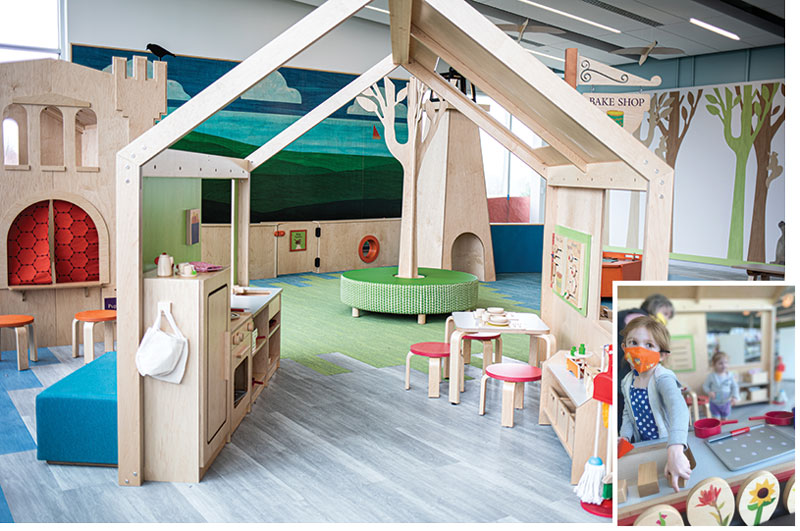 education centers found that play-based learning approaches significantly support multiple areas of children’s development, with practitioners noting particular benefits in communication and social-emotional learning domains (13). These findings are directly applicable to library settings, where children have opportunities to practice social skills in low-pressure environments that encourage exploration and experimentation.
Play-based learning environments in libraries offer unique advantages for developing emotional regulation and social competence. Unlike highly structured classroom settings, library play spaces allow children to naturally develop social skills, fostering the growth of resilience, creativity, and collaborative problem-solving skills that are crucial for success in both academic and social contexts. Research demonstrates that including students with developmental delays in play-based learning benefits all members of the learning community by creating inclusive environments that foster empathetic learning (14).
The community-building potential of library play spaces extends beyond individual child development to encompass broader social benefits. Contemporary research on urban environments emphasizes how spaces that support creativity, exploration, and play serve as catalysts for community connection and social cohesion (15). Libraries, as trusted public institutions, are uniquely positioned to provide these essential community spaces in ways that are accessible, inclusive, and supportive of diverse family structures and cultural backgrounds.
Challenges and Implementation Techniques
Despite the clear benefits of play-based learning environments, libraries face practical challenges in implementation that require strategic planning and community support.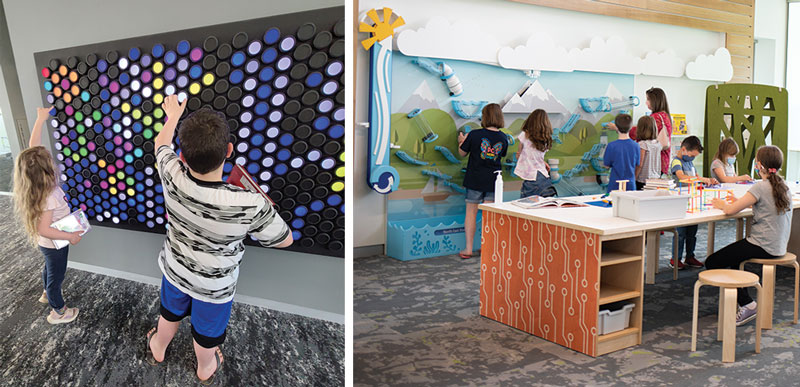 Space constraints, funding limitations, staffing requirements, and community expectations can create significant obstacles to developing comprehensive play-based programs. However, successful libraries have demonstrated that creative solutions can overcome many of these barriers through strategic partnerships, phased implementation approaches, and community engagement strategies.
Professional development for library staff represents a crucial component of successful play-based programming. Contemporary research emphasizes the importance of training library personnel in child development principles, play facilitation techniques, and family engagement strategies. Libraries that invest in comprehensive staff development report higher success rates in implementing play-based programming and greater community satisfaction with services.
The integration of technology into play-based learning environments presents both opportunities and challenges. While digital tools can enhance learning experiences and provide access to diverse educational content, libraries must strike a balance between screen-based activities and hands-on, embodied learning experiences that are crucial for healthy development. Successful implementations carefully curate technology integration to support rather than replace fundamental play-based learning principles.
Into the Future
The revolution of play-based learning in libraries suggests expansion and refinement in both physical design and programming strategies. Research continues to validate the effectiveness of these approaches, while also recognizing new opportunities for innovation and community service. The success of play-based learning in libraries has implications that extend beyond individual institutions to influence broader conversations about informal education, community development, and the utilization of public  spaces.
Modern trends suggest that future library play spaces will increasingly integrate sustainability principles, culturally responsive design, and technology integration, while maintaining a focus on fundamental developmental needs. The growing recognition of libraries as essential community infrastructure positions them to play increasingly important roles in supporting the development of children and adolescents within their communities.
The research base supporting play-based learning in libraries continues to expand, with emerging studies exploring long-term developmental effects, community impact, and cost-effectiveness. This growing evidence base supports continued investment in play-based approaches, while also identifying areas for further research and development.
Play-based learning in libraries represents a research-supported approach to fostering comprehensive development in children and teenagers that aligns with contemporary understanding of how learning occurs most effectively. Through thoughtful design, evidence-based programming, and inclusive community engagement, libraries are creating environments where learning happens naturally through exploration, discovery, and social interaction.
Sources
- Frontiers in Education. (2025, February 20). Patterns and representation in play-based learning: a systematic meta-synthesis of empirical studies in K-13+ settings. Frontiers in Education, 10. https://www.frontiersin.org/journals/education/articles/10.3389/feduc.2025.1557001/full
- Taylor & Francis Online. (2024). A systematic literature review of playful learning in primary education: teachers’ pedagogical activities. Early Child Development and Care. https://www.tandfonline.com/doi/full/10.1080/03004279.2024.2416954
- East African Journal of Education Studies. (2024, September 3). Effectiveness of a Play-Based Learning Method in Promoting Early Literacy Skills Among ECDE Children. East African Journal of Education Studies, 7(3). https://journals.eanso.org/index.php/eajes/article/view/2178
- Edutopia. (2022, August 5). The power of play-based learning in preschool and elementary school. https://www.edutopia.org/article/young-kids-power-play-based-learning/
- Journal of Environmental Psychology. (2020, January 21). Play-and-learn spaces: Leveraging library spaces to promote caregiver and child interaction. Journal of Environmental Psychology, 68. https://www.sciencedirect.com/science/article/abs/pii/S0740818819302282
- Association for Library Service to Children. (2024, July 4). Library play spaces: A guide to design and standards. ALSC Blog. https://www.alsc.ala.org/blog/2024/07/library-play-spaces-a-guide-to-design-and-standards/
- National Association for the Education of Young Children. (2018, July). Public libraries harness the power of play. Young Children, 73(3). https://www.naeyc.org/resources/pubs/yc/jul2018/public-libraries-harness-play
- Santa Clara County Library District. (n.d.). Storybook SCCLD: Children’s spaces. https://sccld.org/storybooksccld/
- MyKidList. (2025, January 31). 10 Best Children’s Libraries with Play Areas 2025. https://mykidlist.com/best-libraries-for-kids/
- Association for Library Service to Children. (2019, February 26). Play areas in libraries. ALSC Blog. https://www.alsc.ala.org/blog/2019/02/play-areas-in-libraries/
- National Center for Biotechnology Information. (2022). Inclusive play-based learning: Approaches from enacting kindergarten teachers. PMC. https://pmc.ncbi.nlm.nih.gov/articles/PMC9214461/
- Association of College and Research Libraries. (n.d.). Nontraditional spaces – Creating welcoming spaces in academic libraries. LibGuides at ACRL. https://acrl.libguides.com/c.php?g=1383394&p=10301357
- ResearchGate. (2023, May 6). Impact of play-based learning on the development of children in mobile early childhood care and education centres: Practitioners’ perspectives. https://www.researchgate.net/publication/370585598_Impact_of_play-based_learning_on_the_development_of_children_in_mobile_early_childhood_care_and_education_centres_Practitioners’_perspectives
- BU Journal of Graduate Studies in Education. (2023). Playing the way to rich learning. BU Journal of Graduate Studies in Education, 15. https://files.eric.ed.gov/fulltext/EJ1398486.pdf
- Frontiers in Psychology. (2025, April 24). Connecting urban green and blue spaces with children’s health: a bibliometric analysis in CiteSpace and VOSviewer. Frontiers in Psychology, 16. https://www.frontiersin.org/journals/psychology/articles/10.3389/fpsyg.2025.1560467/full