
The Top 5 Children’s Book Illustrators Who Shaped Literary Imagination
Children’s book illustration is a magical art form that transforms simple words into vivid worlds, capturing young hearts and minds through visual storytelling. The greatest children’s book illustrators don’t merely decorate text—they create entire universes that live in readers’ imaginations long after the final page is turned. These five legendary artists have defined the standards and expectations for children’s book illustrations, leaving an indelible mark on literature and childhood experience across generations.
1. Maurice Sendak – Master of the Wild Imagination
Maurice Sendak stands as perhaps the most influential children’s book illustrator of all time (1). The Brooklyn-born, self-taught artist illustrated more than 150 works over his career, but his masterpiece “Where the Wild Things Are” remains unparalleled in its emotional depth and artistic innovation (2). Sendak’s genius lay in his refusal to sanitize childhood emotions—his illustrations captured the raw, unfiltered feelings of anger, fear, and longing that children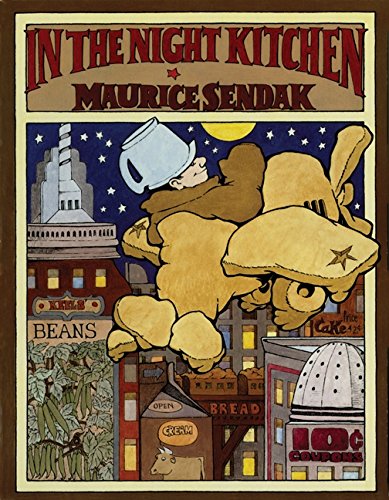 experience.
Sendak’s artistic style combined European folk art influences with a deep psychological understanding of childhood. His cross-hatching technique and muted color palettes created atmospheres that were simultaneously comforting and mysterious. Beyond his most famous work, Sendak’s illustrations for Else Holmelund Minarik’s “Little Bear” series introduced countless children to the wonders of the natural world through gentle, nurturing imagery (3). His work earned him the Hans Christian Andersen Award and established him as the gold standard against which all subsequent children’s book illustrators are measured.
2. Eric Carle – The Collage Innovator
Eric Carle revolutionized children’s book illustration through his distinctive collage technique, creating  artwork using hand-painted papers that he cut and layered to form vibrant, textured images (4). His most famous creation, “The Very Hungry Caterpillar,” published in 1969, has become a cultural phenomenon, ranking as the number two children’s picture book behind Sendak’s “Where the Wild Things Are” in School Library Journal reader surveys (4).
Carle’s artistic approach combined bold colors with educational content, making learning an immersive visual experience. His career began with “Brown Bear, Brown Bear, What Do You See?” in 1967, which became a bestseller and launched his illustrative career (4). Carle’s commitment to children’s literature extends beyond his work—in 2002, he and his wife opened the Eric Carle Museum of Picture Book Art in Amherst, Massachusetts, which celebrates the art form through exhibitions featuring other masters like Beatrix Potter, E.H. Shepard, and Ludwig Bemelmans (5).
3. Beatrix Potter – The Pioneer of Character-Driven Illustration
Beatrix Potter transformed children’s literature in the early 20th century by creating illustrations that made animals into fully realized characters with distinct personalities. Her watercolor paintings for the Peter Rabbit series established the template for anthropomorphic animal stories that continues to influence illustrators today. Potter’s scientific background as a naturalist informed her incredibly detailed and accurate depictions of animals and plants, lending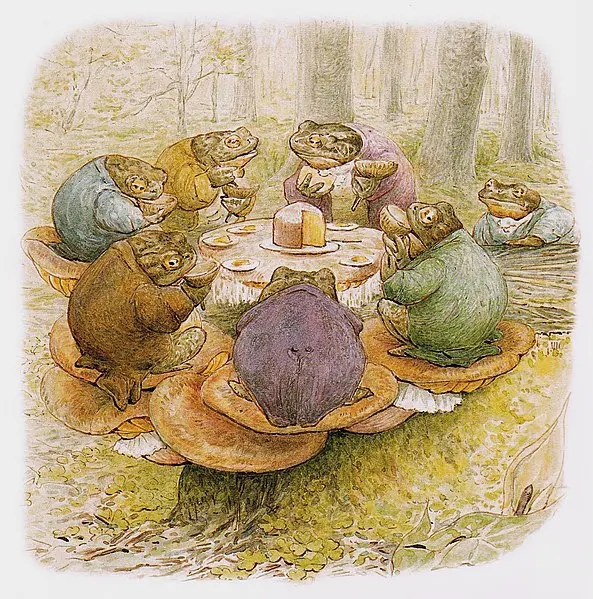 authenticity to her fantastical stories.
Potter’s illustrations demonstrated that children’s books could be both beautiful works of art and compelling narratives. Her ability to capture subtle expressions and body language in her animal characters created emotional connections that transcended the traditional boundaries between illustration and storytelling. The enduring popularity of her work, more than a century after its creation, speaks to the timeless quality of her artistic vision and her deep understanding of what captivates young readers.
4. Quentin Blake – The Master of Expressive Line Art
Quentin Blake, born in 1932, is best known for his collaborations with author Roald Dahl, including the iconic illustrations for “The BFG,” “Matilda,” and “Charlie and the Chocolate Factory” (6). Blake’s loose, expressive line work and energetic style perfectly complement Dahl’s imaginative storytelling, creating visual narratives that feel alive with movement and personality.
Blake began working as a freelance artist in the 1950s and developed a distinctive style characterized by quick, confident strokes and an economy of line that captures maximum expression with minimum detail (6). His illustrations don’t just depict scenes—they convey the emotional energy and humor that make Dahl’s characters so memorable. Blake’s work demonstrates how illustration can enhance and expand upon written narrative, creating a collaborative art form where image and text strengthen each other.
5. Ludwig Bemelmans – The Chronicler of Childhood Adventure
Ludwig Bemelmans captured the charm of everyday life through his beloved “Madeline” series, which began in 1939 (7). Though trained in hospitality, the
Austrian-American artist decided to pursue illustration in the 1930s and created one of the most enduring characters in children’s literature. Bemelmans’ watercolor illustrations of Paris perfectly balanced whimsy with architectural accuracy, creating a believable world where a “little girl in an old house in Paris that was covered with vines” could embark on countless adventures.
Bemelmans’ artistic style featured bold, simplified forms and a distinctive color palette that made his illustrations instantly recognizable. His ability to convey Madeline’s spirited personality through body language and facial expressions created a character who felt real to generations of readers. The “Madeline” books demonstrate how great children’s book illustration can transport readers to specific places and times while telling universal stories about courage, friendship, and growing up.
The Lasting Impact
These five illustrators share common qualities that define exceptional children’s book art: they respected their young audience’s intelligence and emotional complexity, created distinctive visual styles that enhanced rather than competed with text, and understood that children’s books serve as often as a child’s first introduction to art and visual literacy. Their influence extends far beyond individual books—they established the artistic and emotional standards that continue to guide contemporary children’s book illustration.
The legacy of these masters reminds us that children’s book illustration is not merely decoration but a sophisticated art form that shapes how young minds understand storytelling, creativity, and the world around them. Their work continues to inspire new generations of illustrators and, more importantly, continues to spark imagination in children worldwide.
Sources
- WeAreTeachers. (2023, April 24). 21 of the Best Children’s Book Illustrators Everyone Should Know. https://www.weareteachers.com/best-childrens-book-illustrators/
- Skillshare Blog. (2022, June 22). 15 Iconic Children’s Book Illustrators. https://www.skillshare.com/en/blog/eight-childrens-book-illustrators-that-you-should-know/
- Academy of Art University Blog. (2022, December 8). Eleven Famous Children’s Book Illustrators to Help You Get Inspired. https://blog.academyart.edu/get-inspired-by-famous-childrens-book-illustrators/
- Wikipedia. (2025). Eric Carle. https://en.wikipedia.org/wiki/Eric_Carle
- Artsy. (2018, December 13). The Famous Illustrators of Children’s Books, from Shel Silverstein to Eric Carle. https://www.artsy.net/article/artsy-editorial-illustrators-favorite-childrens-books
- Artst. (2023, April 3). Children’s Book Illustrators – 13 Most Famous. https://www.artst.org/childrens-book-illustrators/
- My Modern Met. (2021, May 13). 11 Beloved Children’s Book Illustrators Who Bring Classic Stories to Life. https://mymodernmet.com/best-childrens-book-illustrators/