
ALA Announces Aging Together: An Evaluation of Library Programming for Older Adults
Libraries have a unique and necessary obligation to the oldest of our population. They ha ve been part of our communities for decades and have much to offer. Modern society often brushes aside the old in favor of the new, but as librarians, we need to ensure our programs effectively reach not just the young but also the aged.
The American Library Association (ALA) has launched an ambitious initiative to transform how libraries serve the nation’s growing population of older adults. With support from The John A. Hartford Foundation, the “Aging Together: An Evaluation of Library Programming for Older Adults” project represents a critical step toward addressing social isolation and enhancing the well-being of seniors through library services (1).
A Growing Need
The ALA received $388,363 in support from The John A. Hartford Foundation to conduct a national evaluation aimed at understanding the current state of library programming for older adults and identifying effective program models (2). This  initiative comes at a crucial time when social isolation among older adults has reached alarming levels. Approximately one-quarter of community-dwelling Americans aged 65 and older are considered socially isolated, while 35 percent of adults aged 45 and older and 43 percent of adults aged 60 and older report feeling lonely (7).
The health consequences of social isolation are profound. Research indicates that social isolation or loneliness in older adults is associated with a 50% increased risk of developing dementia, a 30% increased risk of coronary artery disease or stroke, and a 26% increased risk of mortality (6). These statistics underscore the urgent need for community-based interventions that can help seniors maintain social connections and access essential resources.
Libraries as Community Anchors
Public libraries serve as vital community spaces for learning, recreation, wellness, and social connections for many older adults (3). As the population ages, libraries face both an opportunity and a responsibility to design programs that meet evolving needs. Despite their potential impact, there has been limited research on the prevalence and effectiveness of library services tailored to older adults (4).
The Aging Together project seeks to fill this knowledge gap through comprehensive research and analysis. The initiative will equip libraries nationwide to strengthen programs that reduce isolation, support health and well-being, provide end-of-life resources, and assist caregivers (1).
Project Framework and Timeline
To guide this work, ALA will conduct an extensive landscape analysis of existing programs, resources, and data. Nine librarian advisors will support the project by providing expertise on successful models and best practices. A project advisory committee composed of library leaders, community partners, national organizations, and representatives from The John A. Hartford Foundation will help inform the research direction (2).
 ALA has partnered with Knology, a nonprofit research organization specializing in practical social science, to analyze data and produce comprehensive reports (1). The ALA Public Programs Office and the Public Library Association opened a call for advisors in November 2025, with the landscape report expected in February 2026 and the final report in February 2027 (2).
Supporting Diverse Needs
America’s older adults are diverse, differing by age, education, life experience, sexual orientation, health, geographic location, and income (3). This diversity requires libraries to develop innovative practices that address unique circumstances. The initiative recognizes that older adults range from active individuals living independently to those facing mobility challenges or residing in care facilities.
Recent research from the University of Michigan highlights the ongoing challenge. In early 2023, one in three older adults reported infrequent contact with people outside their home, demonstrating that loneliness remains a persistent issue even as pandemic restrictions have eased (8). Libraries are uniquely positioned to address this problem through accessible programming and welcoming spaces.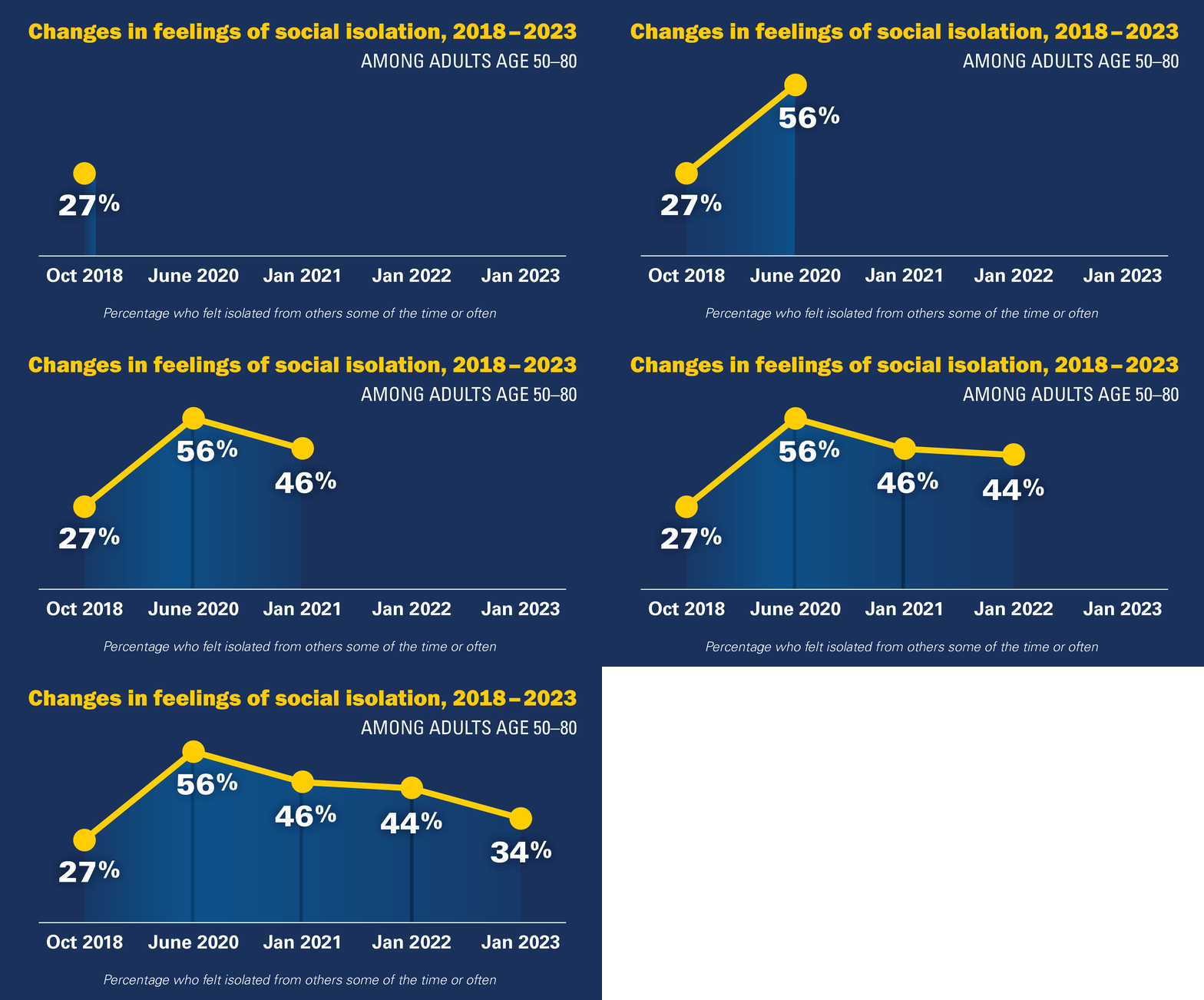
The Hartford Foundation’s Commitment
The John A. Hartford Foundation, established in 1929, has been a leader in improving care for older adults. Since 1982, the Foundation has awarded more than $737 million in grants to enhance the health and well-being of older people (5). The foundation’s three priority areas—creating age-friendly health systems, supporting family caregivers, and improving serious illness and end-of-life care—align perfectly with the goals of library programming for seniors (4).
Public libraries are vital community hubs for older adults, promoting social connection, enhancing well-being, and ensuring access to essential resources, particularly in rural areas (4). By supporting this evaluation project, the Hartford Foundation recognizes that libraries are critical infrastructure within the broader ecosystem of services for aging  Americans.
Looking Ahead
The Aging Together initiative represents more than just research—it’s a roadmap for action. By documenting what works and disseminating best practices, the project aims to elevate library services for older adults nationwide (1). The findings will inform future resource development, partner engagement, and initiative creation, ultimately helping libraries become even more effective at serving their aging communities.
As communities grapple with demographic shifts and the persistent challenge of social isolation, libraries stand ready to play a vital role. With evidence-based guidance from the Aging Together project, they will be better equipped to create programs that foster connection, support health, and enhance the quality of life for millions of older Americans.
Sources
- American Library Association. “Aging Together: An Evaluation of Library Programming for Older Adults.” ALA, https://www.ala.org/tools/programming/agingtogether
- American Library Association. “With Funding from The John A. Hartford Foundation, ALA Announces Aging Together: An Evaluation of Library Programming for Older Adults.” ALA News, September 2025, https://www.ala.org/news/2025/09/funding-john-hartford-foundation-ala-announces-aging-together-evaluation-library
- American Library Association. “Libraries Respond: Services to Older Adults.” ALA, https://www.ala.org/advocacy/diversity/librariesrespond/services-older-adults
- The John A. Hartford Foundation. “Aging Together: An Evaluation of Library Programs for Older Adults.” https://www.johnahartford.org/grants-strategy/aging-together-an-evaluation-of-library-programs-for-older-adults
- The John A. Hartford Foundation. “About Us.” https://www.johnahartford.org/about
- Cudjoe, Thomas K.M., and Carla M. Perissinotto. “Social Isolation and Loneliness in Older Adults: Review and Commentary of a National Academies Report.” PMC, National Library of Medicine, https://pmc.ncbi.nlm.nih.gov/articles/PMC7437541/
- National Academies of Sciences, Engineering, and Medicine. “Social Isolation and Loneliness in Older Adults: Opportunities for the Health Care System.” NCBI Bookshelf, February 27, 2020, https://www.ncbi.nlm.nih.gov/books/NBK557972/
- University of Michigan. “Trends in Loneliness Among Older Adults from 2018-2023.” National Poll on Healthy Aging, https://www.healthyagingpoll.org/reports-more/report/trends-loneliness-among-older-adults-2018-2023