A Growing Demand for Audiobooks: How Libraries Can Meet the Challenge
In recent years, audiobooks have experienced unprecedented popularity, transforming from a niche format to a mainstream media consumption choice. This surge presents opportunities and challenges for libraries, which must adapt their services to meet patron demand while navigating budget constraints and technological requirements.
The Audiobook Boom: Understanding the Market
The audiobook market has witnessed remarkable expansion, with global revenue projected to reach $35.05 billion by 2030, growing at a compound annual growth rate (CAGR) of 26.4% from 2023 to 2030 [1]. This dramatic increase stems from several converging factors fundamentally altering how people consume literature.
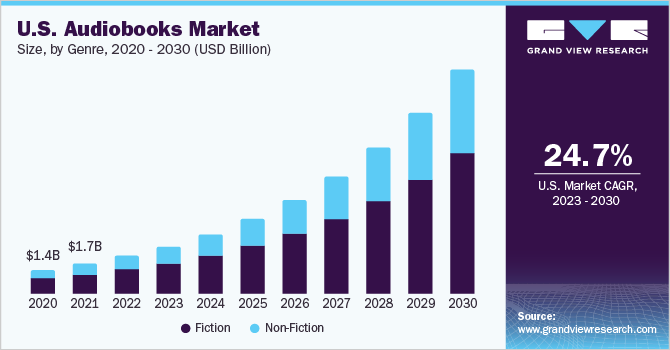 Digital technology has been the primary driver of audiobook adoption. The ubiquity of smartphones has transformed audiobooks from cumbersome physical media to instantly accessible digital content. According to a 2023 Audio Publishers Association (APA) survey, 74% of audiobook listeners use their smartphones as their primary listening device to consume content while commuting, exercising, or performing household tasks [2].
Demographic shifts have also contributed significantly to the audiobook renaissance. Millennials and Gen Z consumers demonstrate a robust affinity for the format, with many listeners between 18 and 44 [2]. These younger generations appreciate audiobooks’ multitasking capabilities, enabling media consumption during otherwise unproductive times.
The COVID-19 pandemic accelerated existing trends, with audiobook sales increasing by 12% in 2020 alone [3]. As people spent more time at home, many turned to audiobooks for entertainment and education. This surge created new listening habits that have persisted beyond the pandemic’s peak.
Challenges Facing Libraries
Libraries face several significant challenges in meeting the growing demand for audiobooks. The most pressing issue is often financial. Digital audiobooks typically cost libraries significantly more than their consumer counterparts—sometimes three to five times the retail price—and frequently come with lending restrictions that limit circulation [4]. Unlike physical books, which can be purchased once and loaned indefinitely, digital audiobooks often operate on licensing models that expire after a certain period or number of loans.
Technical infrastructure presents another hurdle. Libraries must invest in platforms and systems that effectively deliver patrons digital content. This includes maintaining partnerships with digital content providers, ensuring compatibility across different devices, and providing technical support to users who may struggle to access digital resources [5].
Collection development becomes increasingly complex in the audiobook space. Libraries must carefully balance their collections between popular titles that generate high circulation numbers and diverse materials that serve their communities’ interests and needs. This challenge is compounded by the rapid release of new titles and the need to maintain digital and physical collections [6].
Successful Strategies for Libraries
Despite these challenges, many libraries have expanded their audiobook offerings through innovative approaches and strategic partnerships. Consortium models represent one practical solution, allowing libraries to pool resources and negotiate better terms with publishers and distributors. For example, the Digital Public Library of America’s Palace Project enables libraries to license content and share resources across institutions collectively [7].
The development of library-specific audiobook platforms represents another promising direction. The Palace Project aims to create a library-owned and operated platform for digital content distribution, potentially giving libraries more control over their digital collections and lending practices [9].
Staff training and patron education are crucial components of successful audiobook programs. Libraries must ensure that staff members are knowledgeable about digital platforms and can assist patrons with accessing content. Many libraries have implemented digital literacy programs that include audiobook access as part of broader technology education efforts [10].
Case Studies: Libraries Leading the Way
The New York Public Library (NYPL) has been at the forefront of audiobook innovation through its SimplyE platform, consolidating content from multiple providers into a user-friendly app. This approach has simplified the user experience and increased digital circulation by 32% since its implementation [11].
In rural areas, the Wyoming State Library has addressed connectivity challenges by creating an audiobook program that allows patrons to borrow preloaded devices with content that doesn’t require internet access. This program has effectively reached elderly and rural populations with limited technological resources [12].
The Seattle Public Library has taken a community-centered approach, creating curated audiobook collections that reflect local interests and demographics. Their “Peak Picks” program highlights audiobooks of regional significance, fostering community engagement and increasing the circulation of these materials by 28% [13].
Recommendations for Libraries
Based on successful implementations and market trends, libraries should consider several strategies to enhance their audiobook offerings. Firstly, conducting regular user surveys can help libraries understand their specific community’s needs and preferences regarding audiobook content and access methods [14].
Exploring alternative licensing models may also prove beneficial. Some libraries have successfully negotiated pay-per-use arrangements that allow them to offer a broader selection of titles without the upfront costs of traditional licensing [15].
Investing in staff development is crucial. Libraries should ensure that all staff members are comfortable with digital platforms and can effectively assist patrons accessing audiobook content [16].
Creating strategic partnerships with local organizations can help libraries extend their reach. Collaborations with schools, senior centers, and community groups can introduce audiobooks to new audiences and address specific community needs [17].
Finally, libraries should advocate for more equitable licensing terms with publishers and distributors. By working collectively through organizations like the American Library Association, libraries can push for models that better balance publisher interests with public access needs [18].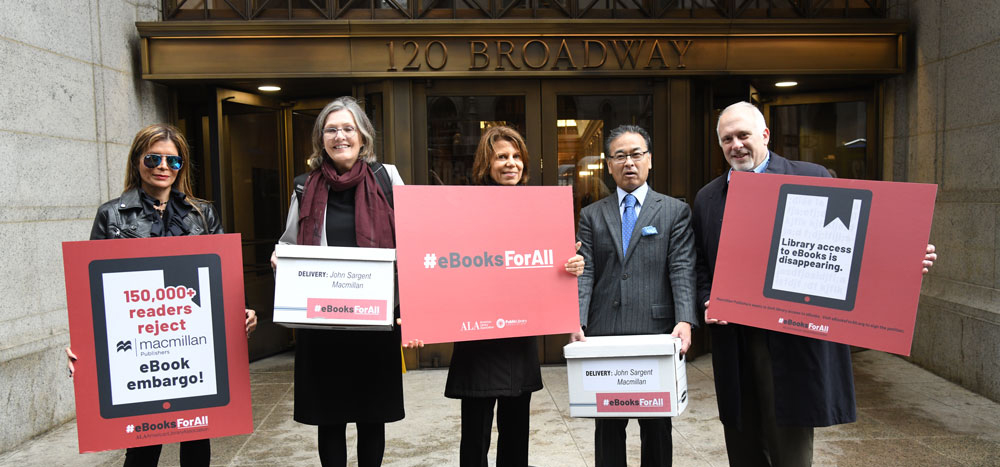
The surging popularity of audiobooks presents both challenges and opportunities for libraries. By embracing innovative approaches, forming strategic partnerships, and advocating for equitable access models, libraries can meet the growing demand for audiobook content.
Sources
- Audiobooks Market Size, Share & Trends Analysis Report by genre (Fiction & Non-Fiction), by preferred device, by distribution channel, by target audience (Kids mode, adult), by region, and segment Forecasts, 2024 – 2030. (n.d.). https://www.grandviewresearch.com/industry-analysis/audiobooks-market
- Audiobooks and Public Libraries 2023 Survey Report — Homepage. (n.d.). Homepage. https://www.audiopub.org/2023-audiobook-survey-report
- Anderson, P. (2021, June 3). APA cites 12-Percent 2020 US audiobook revenue growth. Publishing Perspectives. https://publishingperspectives.com/2021/06/audio-publishers-association-12-percent-audiobook-revenue-growth-in-2020-covid19/
- Megan. (2025, January 22). The true cost of eBooks and audiobooks for libraries. Spokane Public Library. https://www.spokanelibrary.org/the-true-cost-of-ebooks-and-audiobooks-for-libraries/
- Bello, Bukunmi Paul and Adepegba, Itunu Mary, “Digital Transformation: Revitalizing Public Libraries as Inclusive Hubs for National Development” (2023). Library Philosophy and Practice (e-journal). 8061. https://digitalcommons.unl.edu/libphilprac/8061
- Corrall, S. (2011). The concept of collection development in the digital world. In M. Fieldhouse & A. Marshall (Eds.), Collection Development in the Digital Age (pp. 3–24). chapter, Facet. DOI:10.29085/9781856048972.003
- Knight Foundation. (n.d.). New digital platform empowers public libraries and patrons boosts equitable access to knowledge. https://knightfoundation.org/press/releases/new-digital-platform-empowers-public-libraries-and-patrons-boosts-equitable-access-to-knowledge/
- Meesad, P., Mingkhwan, A. (2024). Digital Transformation: Reshaping Access and Engagement. In: Libraries in Transformation. Studies in Big Data, vol 157. Springer, Cham. https://doi.org/10.1007/978-3-031-69216-1_4
- Info, & Info. (2022, June 1). Get to know the Palace Project – Building a Digital Future for Libraries – The Palace Project. The Palace Project – The People’s Palace. https://thepalaceproject.org/get-to-know-the-palace-project-building-a-digital-future-for-libraries/
- American Library Association Office for Information Technology Policy, Colorado State Library, & OCLC’s WebJunction. (n.d.). State Library Guidebook: Support for Digital Literacy in Public Libraries. In State Library Guidebook: Support for Digital Literacy in Public Libraries. https://www.webjunction.org/content/dam/WebJunction/Documents/webJunction/DLG_Digital_Literacy_Planning_in_Action_v2.pdf
- DPLA Exchange and SimplyE, an open platform for E-Content services, helping libraries take back control of E-Content delivery to your patrons. (2018, January 23). EDUCAUSE Library. https://library.educause.edu/resources/2018/1/dpla-exchange-and-simplye-an-open-platform-for-econtent-services
- ALA grants available for small and rural library accessibility | Wyoming State Library. (n.d.). https://library.wyo.gov/ala-grants-available-for-small-and-rural-library-accessibility/
- 2023 Impact Report. (n.d.). The Seattle Public Library. https://www.spl.org/about-us/library-impact/2023-impact-report
- Elena. (2025, February 17). The role of libraries in the digital Age – Elena – medium. Medium. https://medium.com/@elenaelyred/the-role-of-libraries-in-the-digital-age-df96664cb3a3
- ClaudeAi, K. K. W. a. F. (2025, January 31). Finally! A licensing guide to help libraries protect fair use rights in the Digital Age — Association of Research Libraries. Association of Research Libraries. https://www.arl.org/blog/finally-a-licensing-guide-to-help-libraries-protect-fair-use-rights-in-the-digital-age/
- American Library Association. (n.d.). Staff development. https://www.ala.org/tools/atoz/staff-development
- Brioché, R., Berrocal, L., Contractor, H., Digital Empowerment and Inclusion Working Group, Comcast NBCUniversal, Charter Communications, Joint Center for Political and Economic Studies, U.S. Pan Asian American Chamber of Commerce, League of United Latin American Citizens, T-Mobile USA, Verizon, Barcid Foundation, Lerman Senter PLLC, Wireless Internet Service Providers Association, & Public Service Commission of the District of Columbia. (2021). The role of public libraries and community partnerships in promoting digital adoption. https://www.fcc.gov/sites/default/files/acdde-digital-empowerment-wg-digital-inclusion-report-06242021.pdf
- Main page – #eBooksForAll. (2020, September 14). #eBooksForAll. https://ebooksforall.org/