Reevaluating the Shelf: Libraries Are Navigating Rising Periodical Costs
The relationship between libraries and scholarly publishers has never been easy. Still, in 2026, it is producing something genuinely new: a wave of creative, strategic, and sometimes bold decisions about how libraries provide access to periodicals. Budgets are tighter than ever, subscription costs keep climbing, and federal funding has grown uncertain — but libraries are responding not with resignation, but with ingenuity. The serials crisis, long in the making, is forcing changes that many librarians have argued were long overdue. And they certainly are.
A Price Spiral That Demands a Response
The cost of periodicals has been rising well above inflation for decades, and 2026 is no exception. According to Library Journal‘s 2025 Periodicals Price Survey, prices have been

https://about.ebsco.com/blogs/ebscopost/library-journals-2025-periodicals-price-survey-here
trending upward again in recent years, with a 5.5–6.5 percent price increase predicted for 2026. Library Journal. That figure comes from an analysis of thousands of e-journal packages handled by EBSCO Information Services. It represents a continuation of a long-standing structural problem: periodical prices have consistently increased since the 1960s, often rising faster than the Consumer Price Index. Ebsco
Science, technology, and medicine titles present the steepest challenge. Scientific disciplines — particularly Chemistry and Physics — continue to have the highest average journal prices. Ebsco But the Library Journal survey also provides a useful reminder that value is complex: journal pricing and scholarly impact metrics may not always move in parallel, and value is shaped by a range of factors including usage, subject relevance, and institutional priorities — underscoring the importance of a holistic evaluation approach. Ebsco, that holistic thinking is precisely what many libraries are now putting into practice.
The Funding Landscape Shifts
Broader budget pressures in 2026 have accelerated the need for change. The Trump Administration’s Department of Government Efficiency (DOGE) ran through federal agencies, cutting budgets and personnel, and the President signed an executive order that would have resulted in the shutdown of the Institute of Museum and Library Services (IMLS). Library Journal IMLS survived through a federal court injunction, and Library Journal’s 2026 Budgets and Funding Survey — drawing on responses from 288 U.S. public libraries — shows the library field maintaining a careful, considered stance amid ongoing political and financial uncertainty. Library Journal
Grant funding has also shifted significantly. 28% of libraries reported decreases in grant funding, resulting in a net decline of 17.1% from last year. Library Journal. For some libraries, state-level changes compounded the challenge: starting in July 2025, Ohio’s Public Library Fund was reduced by six percent. Library Journal. These pressures, while real, have pushed institutions toward more deliberate and sustainable planning rather than year-to-year patchwork spending.
At California State University San Marcos, for example, the projected structural deficit in the collections budget for fiscal year 2025–2026 stands at 32 percent. Csusm Rather than quietly absorbing the shortfall, the library has been transparent about its cancellation plans and actively invited campus community input — a model of open, participatory collection management. The University of California, San Francisco library is in a similar position, with its collections budget reduced by 15 percent. Yet, UCSF has moved decisively, soliciting faculty feedback on proposed cancellations and renewing titles that received the strongest support.
Breaking Up With the “Big Deal”
For many academic libraries, the most significant move has been to renegotiate or cancel large bundled journal packages — the so-called “big deals” that have dominated library acquisitions since the late 1990s. These packages promised breadth at a discount, but over time, publishers raised prices by 5–15 percent annually, far outpacing library budgets, and libraries found a growing chunk of their spending locked into servicing these deals with little ability to curate collections appropriate for their communities. SPARC

https://sparcopen.org/our-work/big-deal-cancellation-tracking/
The University of Delaware described the dynamic frankly in a December 2025 message to its campus. Subscription costs have been rising between 5 and 9 percent annually since the pandemic, while the collections budget has remained flat — in essence, a decrease in purchasing power. Udel: The university canceled its Wiley package, effective January 1, 2026, following the same path it took with Elsevier in 2021, as a deliberate move toward more sustainable collection management. Udel Crucially, administrators framed this not as a loss but as a reallocation — a chance to redirect funds toward resources that serve the broadest range of disciplines.
At the University of Alberta, subscriptions to 2,168 Springer Nature journals were canceled as of January 1, 2026, with the library noting that the package — costing over CAD $900,000 annually — did not perform as well as comparators in terms of the proportion of its journals valuable to the university’s research and UAlberta. The library also pointed out that Simon Fraser University and UBC are making similar moves in 2026, signaling a coordinated shift across Canadian research institutions. Meanwhile, market consolidation among scholarly publishing companies has led to profit margins nearing 40 percent for some major publishers Csusm — a figure that has stiffened institutional resolve to push back.
Smarter Access, Not Less Access
What makes the current moment genuinely different from earlier rounds of budget cuts is the sophistication of the alternatives libraries have developed. Rather than simply losing access when a subscription is canceled, many institutions have built robust systems for delivering content on demand.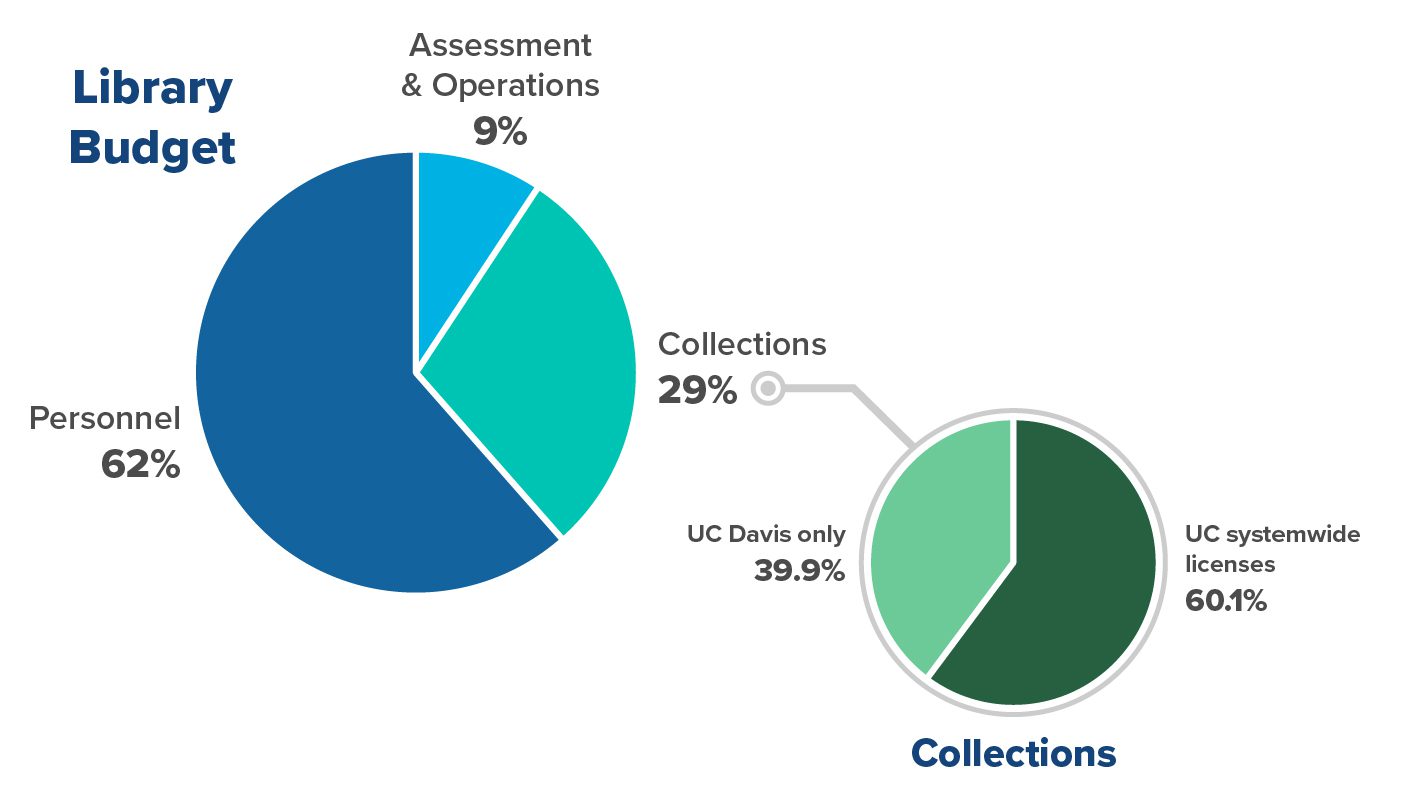
CSUSM Library is a model example. It has been recognized by a global resource-sharing organization for fulfilling interlibrary loan requests faster than 90 percent of libraries worldwide. It has been deliberately moving toward a “just in time” rather than “just in case” model of collections. Csusm This approach preserves budget flexibility and ensures that spending tracks actual use rather than speculative need.
The University of Delaware is piloting a particularly nimble solution: for Wiley content that it no longer subscribes to in bulk, students and faculty will have access to individual articles via Article Galaxy Scholar, a service that delivers articles in real time via email, typically within one to two minutes. Udel Pay-per-article models like this one allow libraries to provide genuine access without the overhead of blanket subscriptions to thousands of rarely-used titles.
Consortial purchasing — where groups of libraries pool their negotiating power — remains another powerful lever. UCSF partners with the University of California Libraries system to provide access to a wide range of resource packages and databases, a model that enables favorable pricing and licensing while expanding access across campuses. UCSF Library. This kind of coordinated approach has proven capable of extracting real concessions from even the largest publishers.
Open Access: Slower Than Hoped, but Growing
Open access has not yet delivered the revolution many predicted, but it continues to mature. Read and Publish agreements are becoming a standard part of library negotiations with Ebsco, allowing institutions to combine subscription access with rights for their researchers to publish open access at no additional charge. In 2024, R&P packages showed  an average price increase identical to traditional subscriptions — a sign that these agreements are becoming increasingly mainstream. Library Journal
CSUSM’s library has actively encouraged faculty to take advantage of open access options, noting that open access articles are cited more frequently than their paywalled counterparts Csusm — turning the conversation from sacrifice into opportunity. Depositing research in open repositories and choosing open-access journals not only reduces the library’s long-term costs but also increases the reach and impact of faculty scholarship.
A Field Finding Its Footing
There is no denying that 2026 is a genuinely difficult year for library periodicals budgets. But it is also a year in which the library community is demonstrating remarkable adaptability. As Library Journal‘s 2026 budget survey puts it, the one constant amid all the uncertainty is that libraries will continue to meet an increasingly critical role in the lives of their communities — providing connectivity, education, literacy, information, and a wide range of lifelines — and continue to serve as careful stewards of the resources they have to work with. Library Journal
The era of signing every big deal and stacking every shelf is ending. In its place, a more intentional, data-driven, and community-responsive model of collection management is taking shape — one that may ultimately serve readers better than the bloated bundles it replaces. The shelf is getting smarter, even as it gets smaller.
Sources
- Library Journal. “Learning from the Past: Periodicals Price Survey 2025.” April 14, 2025. https://www.libraryjournal.com/story/learning-from-the-past-periodicals-price-survey-2025
- EBSCO. “Library Journal’s 2025 Periodicals Price Survey Is Here.” EBSCOpost, April 23, 2025. https://about.ebsco.com/blogs/ebscopost/library-journals-2025-periodicals-price-survey-here
- Library Journal. “Shifting Sands: Budgets and Funding 2026.” March 4, 2026. https://www.libraryjournal.com/story/shifting-sands-budgets-and-funding-2026
- California State University San Marcos Library. “Library Collection Cancellations, 2025–2026: Cancellation Project Summary.” https://libguides.csusm.edu/c.php?g=1125207&p=8207280
- UCSF Library. “Budget Update and Service Transformation 2025–2026.” October 3, 2025. https://www.library.ucsf.edu/news/budget-update-and-service-transformation-2025-2026/
- UCSF Library. “2026 Journal and Database Cancellations.” December 23, 2025. https://www.library.ucsf.edu/news/2026-journal-and-database-cancellations/
- University of Delaware Library. “A Message from the Vice Provost on the Library, Museums and Press 2025–2026 Budget.” December 4, 2025. https://library.udel.edu/news/2025/12/04/a-message-from-the-vice-provost-2025-2026-budget/
- University of Alberta Library. “Library Subscription Changes: Springer Journals.” January 8, 2026. https://news.library.ualberta.ca/blog/2025/12/03/library-subscription-changes-springer-journals/
- UC Davis Library. “Library Budget.” https://library.ucdavis.edu/leadership-mission-and-strategy/budget/
- SPARC. “Big Deal Cancellation Tracking.” https://sparcopen.org/our-work/big-deal-cancellation-tracking/
- California State University San Marcos Library. “Ongoing Subscriptions and Access.” https://libguides.csusm.edu/c.php?g=1125207&p=10670727