Navigating E-Resource Licensing for Libraries
The landscape of library acquisitions has significantly transformed over the past two decades. Where librarians once focused primarily on purchasing physical books and journals, today they find themselves immersed in the complex world of electronic resource licensing. Licensing agreements now determine what materials libraries can access, how those materials may be used, by whom, the associated costs, contract duration, and termination conditions (1). This has fundamentally altered the acquisitions librarian’s role, requiring a new set of skills that blend legal acumen, negotiation expertise, and strategic thinking.
Understanding License Agreements
At its core, an e-resource license is a legal contract between a library and a content provider that governs access to digital materials, including databases, electronic journals, ebooks, and streaming media. Unlike

https://www.electronicresourceslibrarian.com/home/negotiation-licensing
purchasing a physical book, which grants ownership, licensing provides conditional access that can be modified or revoked. This distinction is critical. License terms can restrict use beyond what copyright law might otherwise allow, making careful review and negotiation essential to protecting library patrons’ rights (5).
It is recommended practice to read licenses using a checklist of standard provisions that your institution requires (2). The Association of Research Libraries published a comprehensive guidebook in December 2024 that provides legal explanations and practical strategies for preserving users’ existing rights under US copyright law, particularly when facing restrictive license terms (7). This resource has become invaluable for librarians navigating increasingly complex agreements.
Key Negotiation Points
Several critical elements demand attention during license negotiations. First among these is the definition of authorized users. Public libraries and academic institutions often require walk-in access and consider excluding walk-in users a deal-breaker (6). The COVID-19 pandemic highlighted the limitations of requiring physical presence, prompting many libraries to negotiate broader access provisions.
Pricing represents another crucial area. Vendors employ a wide variety of pricing models, some of which are complex and confusing (9). According to recent data, projected average price increases for periodicals in 2026 range from 5.5% to 6.5%, continuing a decades-long trend in which serial costs consistently outpace general inflation (12). Libraries must carefully evaluate these models against their budgets and usage data.
Particular attention should be given to clarifying whether perpetual rights are granted to the content or only for the duration of the agreement (8). This distinction affects how library access is affected when a subscription is cancelled, making it vital for long-term collection planning.
Interlibrary loan provisions also require careful negotiation. The Reference and User Services Association  updated its Model Interlibrary Loan License Clause in 2024 specifically to address this concern (3). The model clause aims to standardize, simplify, and modernize license language for interlibrary loan purposes and broaden the availability of licensed materials (4). Libraries should advocate for these model terms rather than accepting restrictive provisions that prohibit or severely limit resource sharing.
Power of Consortia
Individual libraries increasingly recognize that collective action strengthens their negotiating position. Libraries choose to work through consortia because they receive more resources for their money while expending less staff time in vendor negotiations (13). The power of this approach is evident in concrete results: the Florida Virtual Campus negotiated favorable vendor pricing for the 2025-26 statewide collection, saving Florida $25 million compared to individual institutional licensing (15).
Founded in 1992, OhioLINK integrates more than 100 libraries across Ohio, providing shared catalogs,  collective licensing agreements, and broad electronic resource access (14). This model has been replicated nationwide, with consortia handling everything from database subscriptions to transformative “read and publish” agreements that combine access to content with open access publishing opportunities (17).
However, consortial arrangements aren’t universally superior. Sometimes individual libraries can negotiate more favorable terms and rates than they would under a consortium agreement (13). The decision depends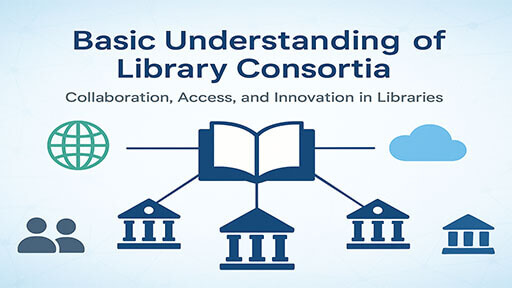 on specific institutional needs, the consortium’s coordination level, and the particular resource in question.
Preparing for Negotiations
Effective negotiation begins long before sitting down with vendor representatives. Vendors often bring presentations and handouts to negotiations that detail the significance of their resource, historical data on its use, and supportive comments from subscribers (6). Libraries should prepare with equal rigor.
Data visualization has emerged as a powerful negotiation tool. By presenting usage statistics, cost-per-use analyses, and budget trend information in clear visual formats, libraries can make compelling cases for pricing adjustments or improved terms (16). This evidence-based approach moves discussions beyond subjective assessments to objective metrics that both parties can evaluate.
 Skilled librarians must undertake complex tasks to successfully license electronic resources, including negotiating the best possible terms in license agreements, maintaining positive working relationships with library vendors, and tracking changes in business models and relevant technologies (2). New professionals should seek out training opportunities. Organizations like the Midwest Collaborative for Library Services offer workshops on licensing fundamentals and advanced negotiation techniques. At the same time, the ONEAL (Open Negotiation Education for Academic Libraries) Project provides free curriculum modules accessible to all librarians (11).
Common Pitfalls and Practical Solutions
Several issues consistently challenge libraries during licensing. Confidentiality clauses that prohibit price sharing deserve particular scrutiny. The use of confidentiality clauses may result in higher prices for all library consumers. At the same time, open sharing of local cost and usage data would provide immediate and beneficial effects on the scholarly publication market (5). Public institutions subject to freedom of information laws may be legally unable to agree to such terms.
The complexity and time investment required for traditional licensing led to the development of alternatives. The National Information Standards Organization’s Shared Electronic Resource Understanding (SERU), created in 2008, offers a mutually agreeable alternative to fully negotiated licenses (5). SERU is most appropriate for straightforward acquisitions in which both parties agree to operate under common-sense principles and require minimal  legal documentation.
Libraries should also examine indemnification provisions, which specify who bears legal responsibility if problems arise. Overly broad indemnification clauses that hold libraries responsible for all user behavior can be problematic (1). Similarly, automatic renewal clauses deserve attention to ensure adequate notification periods for cancellation decisions.
Building Essential Skills
The expanding scope of e-resource licensing means librarians must continuously develop their expertise. With education and experience, librarians and information professionals can become as comfortable addressing licensing issues as they are with other parts of their roles (2). This requires staying current with developments in copyright law, understanding emerging business models, and participating in professional communities that share best practices.
Once a license is signed, libraries must ensure that users use the content in accordance with the terms and conditions (1). This ongoing management aspect is often overlooked during initial negotiations but is critical for maintaining vendor relationships and avoiding breaches.
Looking Forward
The e-resource licensing landscape continues to evolve. Read-and-publish agreements have become increasingly common, with average price increases for these packages in 2024 aligning with those of traditional subscriptions, signaling broader adoption (12). Artificial intelligence tools are beginning to influence both resource discovery and collection management decisions. Libraries must adapt their licensing approaches to address these emerging models while maintaining their core mission of providing equitable access to information.
The work remains challenging, requiring librarians to balance competing priorities: maximizing content access within constrained budgets, protecting user rights while meeting vendor requirements, and maintaining individual institution needs while participating in collaborative arrangements. Success requires preparation, persistence, and a willingness to advocate firmly for library and patron interests.
 As budgets tighten and resources proliferate, strategic licensing and negotiation skills have never been more essential. Libraries that invest in developing these competencies—whether through formal training, participation in consortia, or engagement with professional resources like the new ARL licensing guidebook (7)—position themselves to navigate these challenges successfully. The future of library collections depends on librarians who can not only understand the legal and financial complexities of licensing but also negotiate effectively to secure the best possible terms for their communities.
Sources
- “Licensing Electronic Resources,” Legal Issues in Libraries and Archives, October 29, 2021. https://mlpp.pressbooks.pub/librarylaw/chapter/licensing-electronic-resources/
- Dygert, C. & Barrett, H., “Negotiation & Licensing,” Electronic Resources Librarian. https://www.electronicresourceslibrarian.com/home/negotiation-licensing
- “RUSA Model Interlibrary Loan License Clause (2024),” American Library Association, May 2024. https://www.ala.org/news/2024/05/rusa-model-interlibrary-loan-license-clause-2024
- “RUSA Model Interlibrary Loan License Clause,” Reference and User Services Association, 2024. https://www.ala.org/rusa/rusa-model-interlibrary-loan-license-clause
- Harris, L.E., “A Simple Guide to Licensing Electronic Resources,” Copyright Laws, January 16, 2025. https://www.copyrightlaws.com/simple-guide-licensing-electronic-resources/
- Alford, D.E., “Negotiating and Analyzing Electronic License Agreements,” February 11, 2002. https://www.researchgate.net/publication/228204637_Negotiating_and_Analyzing_Electronic_License_Agreements
- Enimil, S., et al., “e-Resource Licensing Explained: An A–Z Licensing Guidebook for Libraries,” Association of Research Libraries, December 2024. https://www.arl.org/resources/e-resource-licensing-explained-an-a-z-licensing-guidebook-for-libraries/
- “Current Issues in Electronic Resource Licensing,” NELLCO Law Library Consortium. https://www.nellco.org/page/issuesineresourcelicensing
- “International Journal of Library and Information Science – Pricing and Licensing Models,” February 28, 2015. https://academicjournals.org/journal/IJLIS/article-full-text/B6BEA9550959
- “Negotiation and Cost Containment Strategies for Electronic Resources,” ALCTS, March 15, 2019. https://www.studypool.com/documents/8947375/negotiation-cost-containment-strategies-eresources-slides
- “ONEAL Project,” Open Negotiation Education for Academic Libraries, 2024. https://oneal-project.org/
- “Library Journal’s 2025 Periodicals Price Survey,” EBSCOpost, April 23, 2025. https://about.ebsco.com/blogs/ebscopost/library-journals-2025-periodicals-price-survey-here
- Parmar, “Basic Understanding of Library Consortia,” Library & Information Management, September 13, 2025. https://limbd.org/basic-understanding-of-library-consortia/
- News releases. (n.d.). OhioLINK. https://www.ohiolink.edu/press
- “FLVC Library Services,” Florida Virtual Campus, 2025. https://libraries.flvc.org/
- Spratt, S., “Datavi$: Negotiate Resource Pricing Using Data Visualization,” The Serials Librarian. https://www.tandfonline.com/doi/full/10.1080/0361526X.2018.1428002
- “Couperin 2024 Negotiations for 2025 Agreements,” Couperin Consortium, 2024. https://couperin.org/non-classe/2024-negotiations-for-2025-agreements-scoping-letter-for-the-negotiation-of-electronic-resources