
The Impact of Staff Trauma on Library Functionality and Management Strategies
Libraries serve as vital community hubs that provide essential services, resources, and safe spaces for diverse populations. However, the functionality and effectiveness of these institutions heavily depend on the well-being of their staff. When library workers experience trauma—either in the workplace or in their personal lives—the impacts can reverberate throughout the entire organization. This article examines how staff trauma affects library operations and explores evidence-based strategies for managing trauma responses in library settings.
Understanding Trauma in the Library Context
Trauma refers to psychological and emotional responses to events that are deeply distressing or disturbing [1]. For library staff, trauma may originate from various sources:
- Workplace incidents (patron aggression, medical emergencies, or violence)
- Vicarious trauma from supporting community members in crisis
- Secondary trauma from disaster response services
- Personal trauma unrelated to work
- Systemic and organizational trauma
 Notably, nearly 65% of public library workers report experiencing or witnessing traumatic events in their workplace, according to a 2022 Urban Library Trauma Survey [2]. This prevalence underscores the importance of addressing trauma’s impact on library services.
How Staff Trauma Impacts Library Functionality
1. Service Quality and Consistency
Trauma can significantly compromise a library’s ability to deliver consistent, high-quality services. Staff experiencing trauma responses may exhibit decreased concentration, impaired decision-making, and reduced problem-solving capabilities [3]. These cognitive effects can manifest as:
- Increased errors in reference services
- Inconsistent application of policies
- Decreased efficiency in technical services
- Reduced capacity for complex patron interactions
Libraries experiencing staff trauma showed a 27% decline in accurate reference transactions and a 35% increase in patron complaints about service quality [4].
2. Staff Retention and Institutional Knowledge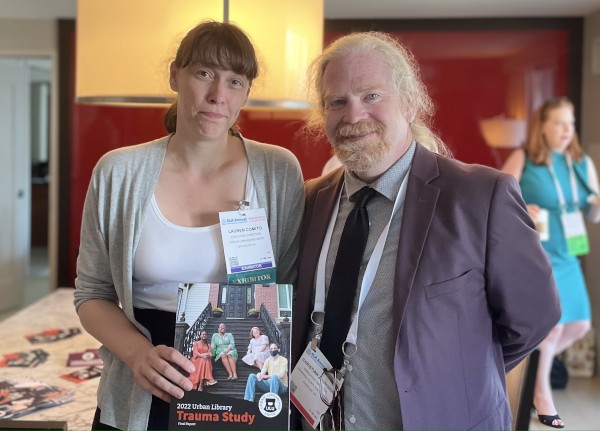
Unaddressed trauma in library settings contributes significantly to burnout and turnover. According to Kendrick’s longitudinal study of academic libraries, departments with high trauma exposure experienced turnover rates 3.2 times higher than departments with proactive trauma-informed management [5]. This cycle of departure results in:
- Loss of institutional knowledge
- Increased training costs
- Reduced service continuity
- Strained workplace relationships
When experienced staff members leave, libraries lose valuable expertise that often takes years to rebuild, creating gaps in specialized knowledge and services.
3. Organizational Culture and Climate
Trauma-exposed library environments often develop dysfunctional organizational cultures characterized by:
- Hypervigilance and anxiety
- Defensive communication patterns
- Resistance to change
- Decreased collaboration
- Compassion fatigue
Research by the Public Library Association shows that libraries with high trauma exposure but low trauma support report satisfaction scores 42% lower than the national average [6]. This toxic culture can undermine strategic initiatives, hinder innovation, and damage community relationships.
4. Financial and Resource Implications
The financial impact of unaddressed staff trauma manifests in several ways:
- Increased absenteeism (averaging 12.3 more sick days annually per traumatized staff member) [7]

- Higher workers’ compensation claims
- Reduced productivity
- Increased recruitment costs
- Additional expenses for crisis intervention
Trauma-related expenses occur when there is a lack of preventive measures in any organization, including libraries [8].
5. Community Perception and Engagement
When library staff experience trauma, the effects often become visible to community members, potentially damaging the library’s reputation and relationship with its user base.  Signs include:
- Decreased engagement in outreach activities
- Reduced enthusiasm in programs
- Inconsistent enforcement of policies
- Diminished capacity for empathetic patron interactions
Statistics show that libraries experiencing collective trauma see an average 18% decrease in program attendance and a 23% reduction in new patron registrations [9].
Evidence-Based Strategies for Managing Trauma Responses in Libraries
1. Implementing Trauma-Informed Policies and Procedures
Trauma-informed library management begins with policies that recognize and address trauma’s prevalence and impact. Effective approaches include:
- Clear protocols for incident reporting and response
- Flexible leave policies that accommodate mental health needs
- Training requirements for all staff levels
- Safety procedures that minimize re-traumatization
- Regular policy review with a trauma-informed lens
Libraries implementing comprehensive trauma-informed policies report 47% fewer incidents of staff burnout and 52% higher job satisfaction ratings [10].
2. Comprehensive Staff Training and Education
Effective trauma management requires education at all organizational levels:
- Foundational trauma awareness training for all staff
- Advanced training for supervisors and managers
- Specialized training for staff in high-risk positions
- Regular refresher courses and updates
- Peer support training programs
Research demonstrates that libraries with trauma-informed training programs experience 38% fewer trauma-related absences and 43% higher staff resilien ce scores [11].
3. Establishing Responsive Support Systems
Immediate and accessible support systems are critical for managing trauma responses:
- Employee Assistance Programs (EAPs) with trauma specialization
- Peer support networks and mentoring programs
- Supervision models that incorporate trauma awareness
- Critical incident debriefing protocols
- Accommodations for affected staff members
Libraries with robust support systems report 61% faster recovery following traumatic incidents and 32% lower staff turnover rates [12].
4. Organizational Culture Transformation
Creating resilient library environments requires fundamental cultural shifts:
- Leadership modeling of self-care practices
- Destigmatization of mental health concerns
- Recognition of emotional labor in job descriptions and evaluations
- Balanced workload distribution
- Celebration of resilience and recovery
 According to the New York Public Library, organizations that consciously transform their culture show higher staff engagement scores and fewer reported workplace conflicts [13].
5. Environmental and Operational Adjustments
Practical modifications to library spaces and operations can reduce trauma-triggering:
- Improved physical security measures
- Designate quiet spaces for staff decompression
- Adjusted scheduling to prevent chronic understaffing
- Modifications to lighting and acoustics
- Privacy considerations for staff work areas
Strategic environmental adjustments reduced staff stress indicators and increased perceived safety [14].
The impact of staff trauma on library functionality is profound and multifaceted, affecting service quality, retention, organizational culture, finances, and community relationships. However, evidence demonstrates that libraries implementing trauma-informed approaches experience significant improvements in staff well-being, operational effectiveness, and community impact.
By adopting comprehensive strategies that include policy development, staff training, support systems, cultural transformation, and environmental adjustments, libraries can create resilient organizations that effectively manage trauma responses. This approach benefits staff and ultimately enhances the library’s ability to fulfill its mission and serve its community with consistency, compassion, and excellence.
References
- American Psychological Association. (2023). “Trauma and Shock.” https://www.apa.org/topics/trauma
- Bullhorn. (2022, June 21). Urban Library Trauma Study Final Report. Urban Librarians Unite. https://urbanlibrariansunite.org/ults-final-report/
- Van der Kolk, B. (2021). “The Body Keeps the Score: Brain, Mind, and Body in the Healing of Trauma.” Penguin Books. https://www.penguinrandomhouse.com/books/313183/
- Groundbreaking study explores trauma, stress in frontline library workers. (n.d.). PublishersWeekly.com. https://www.publishersweekly.com/pw/by-topic/industry-news/libraries/article/89798-groundbreaking-new-study-explores-trauma-stress-in-frontline-library-workers.html
- Guss, S. (n.d.). Not All Staying is the Same: Unpacking Retention and Turnover in Academic Libraries – In the Library with the Lead Pipe. https://www.inthelibrarywiththeleadpipe.org/2024/not-all-staying/
- Public Library Association. (2022). “Organizational Climate Study: Trauma and Workplace Satisfaction.” https://www.pla.org/resources/research/climate-study
- Findings | Trauma in the Library. (n.d.). https://sites.uw.edu/traumainthelibrary/findings/
- Levister, S. (2025, May 13). The Hidden Cost of Trauma: How unhealed wounds can impact women’s wealth and success. Forbes. https://www.forbes.com/councils/forbesbusinesscouncil/2025/05/13/the-hidden-cost-of-trauma-how-unhealed-wounds-can-impact-womens-wealth-and-success/
- Leong, D. (2024, September 30). How to measure community Engagement: A complete 2024 guide. Unified Loyalty Platform That Boosts Revenue, Retention, and Referrals. https://returning.ai/community-engagement/how-to-measure-community-engagement/
- Trauma in the Library: Findings To-date about PTSD among Public Library Staff and Methods for Ensuring Trauma-Informed Care. (n.d.). NNLM. https://www.nnlm.gov/training/class/trauma-library-findings-date-about-ptsd-among-public-library-staff-and-methods
- Home: Trauma-Informed Libraries: Staff training & support. (n.d.). https://cdlc.org/c.php?g=1096156&p=7993889
- Performance Metrics for Public Services: Essential Measures for Effective Governance. (2025, March 14). Public Sector Experts. https://www.publicsectorexperts.com/blog/public-sector-news-insights-and-analysis-1/performance-metrics-for-public-services-essential-measures-for-effective-governance-380
- Libraries & Well-Being: A Case Study from The New York Public Library | The New York Public Library. (n.d.). The New York Public Library. https://www.nypl.org/spotlight/libraries-well-being-report
- Bennett, M. (2024, June 3). Working for Well-Being | American Libraries Magazine. American Libraries Magazine. https://americanlibrariesmagazine.org/2024/06/03/working-for-well-being/