
Unwelcome AI: Examining the Negative Impacts on Libraries
Integrating artificial intelligence (AI) into libraries has prompted significant concerns about its effects on information access, privacy, and the fundamental role of libraries in society. While AI promises increased efficiency and improved services, mounting evidence suggests these technologies may undermine core library values and create new challenges for patrons and institutions. As a result, many librarians vehemently oppose this technology and its use in libraries.
Data Integrity, Security, and Privacy Issues
The implementation of AI systems in libraries often aggravates existing digital divides. A 2023 study by the American Library Association found that 27% of library patrons, particularly those from lower-income communities and rural areas, need help to use AI-powered catalog systems (1) effectively. This technological barrier creates a two-tiered system where digitally literate patrons gain enhanced access while others face increasing difficulties accessing essential library services.
The cost of implementing and maintaining AI systems also strains library budgets. Research indicates that small and rural libraries spend an average of 15-20% of their annual budgets on AI-related technology and maintenance, diverting resources from traditional services and physical collections (2). This financial burden often results in reduced hours, fewer available staff, and reduced community programs.
Library AI systems collect piles of user data, raising serious privacy concerns. Library AI systems gather personal information, including search histories, reading preferences, and browsing patterns (3). While this data collection enables personalized recommendations, it contradicts the library profession’s long-standing commitment to patron privacy and intellectual freedom.
The potential for data breaches presents another significant risk. In 2022, three major library systems reported AI-related security incidents that exposed patron data (4). These breaches compromised the personal information of over 50,000 library users, damaging public trust and highlighting the vulnerability of AI-dependent systems.
AI-powered search and recommendation systems can create “filter bubbles” that limit exposure to diverse perspectives. Research demonstrates that AI algorithms recommend materials similar to users’ previous choices, narrowing their intellectual horizons. One study found that 65% of AI-generated recommendations aligned with users’ existing viewpoints, potentially reinforcing biases and limiting exposure to alternative perspectives (5).
In the ALA Think Tank on Facebook (a private librarian discussion group), I asked why AI is disparaged. The responses were strong and clear, but since permission to share the responses was limited. One response from R. Biracree,
“As librarians, it’s irresponsible to rely in any way upon a tool for communicating knowledge when the knowledge base it draws from is both inaccessible to evaluate and frequently inaccurate or misleading, owned by a corporate entity with zero transparency, and increasingly manipulated to express particular points of view with no responsibility to accuracy, privacy, or equity… the privacy concerns alone are invalidating and potentially dangerous to all users who interact with it, as all queries to it are recorded, all results recorded and extrapolated upon, and all of this information incorporated into…AI, more generally, where it is used with no transparency, no accountability, and no explanation to users.”
The increasing reliance on AI for reference services may also impair information literacy development. Traditional librarian-patron interactions teach critical thinking and research skills, but AI chatbots and automated systems often provide quick answers without teaching the underlying research process. A longitudinal study of academic libraries found that students who primarily used AI-powered reference services scored 23% lower on information literacy assessments than those who worked directly with librarians (6).
Job Displacement and Role Transformation
The automation of library tasks through AI has led to significant staffing changes. Statistics indicate that libraries implementing comprehensive AI systems reduce professional staff by an average of 15-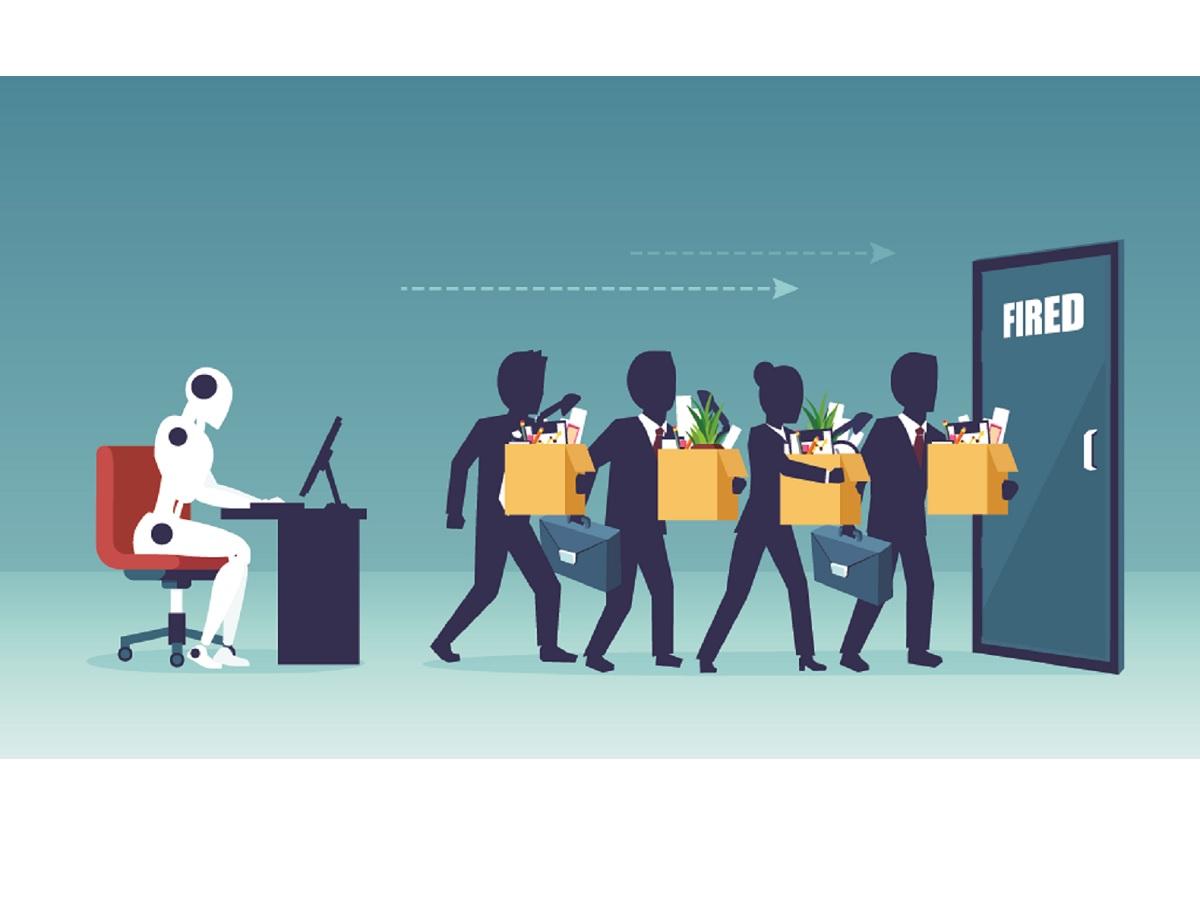 20% within three years (7). While some positions may get eliminated, others are transformed into technical support roles, potentially diminishing the professional expertise traditionally associated with librarianship.
This shift affects not only employment but also the quality of library services. Human librarians bring contextual understanding, cultural sensitivity, and nuanced judgment to their work—qualities that AI systems cannot replicate. A survey of library patrons found that 72% preferred human assistance for complex research queries and reported lower satisfaction rates with AI-only interactions (8).
Environmental and Community Impact
Libraries have historically served as community centers and cultural institutions. Increased digitization and automation of library services through AI can diminish this vital social role. Studies show that libraries heavily invested in AI technology experience a 30% reduction in community program attendance and a 25% decrease in patron-staff interactions (9).
Also, since AI data centers are highly taxing on the environment, a few other librarians in the ALA Think Tank on Facebook mentioned: “It’s terrible for the environment, trained on stolen data, often inaccurate, and even when accurate it gives less diverse book suggestions than a human librarian.” While another also stated, “The amount of human suffering needed to meet both AI’s energy and capital demands (as a tertiary evil, the AI industry is also propping up the crypto industry, which is itself a pyramid scheme reliant upon slave labor) is colossal and exponentially increasing, let alone the catastrophic environmental cost of even smaller AI tools. The industry is horrifically unregulated…”
Small libraries often maintain unique collections reflecting local history and community interests. AI-driven collection management systems, designed for efficiency and broad appeal, may undervalue these specialized materials, leading to their gradual elimination (10).
Economic Implications
The financial burden of AI implementation extends beyond initial investment. Ongoing costs include:
– Software licensing fees averaging $50,000-$100,000 annually for medium-sized libraries
 – Technical support and maintenance costs of approximately $25,000 per year
– Staff training expenses averaging $15,000 annually
– Regular hardware upgrades every 3-5 years costing $75,000-$150,000 (11)
These expenses often force libraries to reduce spending on books, programs, and staff, fundamentally altering their service capacity and community role.
Recommendations for Mitigation
To address these challenges, experts recommend:
- Enforcing hybrid systems that maintain human oversight of AI operations
- Setting strict data collection and privacy protocols
- Holding traditional services alongside AI-powered options
- Infusing digital literacy programs to help bridge the technology gap
- Develop clear policies governing AI use and patron privacy protection
While AI offers potential benefits to libraries, its negative impacts are significant. From widening digital divides to compromising privacy and reducing human interaction, these technologies pose significant challenges to the traditional library mission. Careful consideration is needed to balance technological advancement with preserving core library values and services.
References
- American Library Association. (n.d.). New Public Library Technology Survey report details digital equity roles. https://www.ala.org/news/2024/07/new-public-library-technology-survey-report-details-digital-equity-roles
- Hodonu-Wusu, J.O. The rise of artificial intelligence in libraries: the ethical and equitable methodologies, and prospects for empowering library users. AI Ethics (2024). https://doi.org/10.1007/s43681-024-00432-7
- Atske, S., & Atske, S. (2024, August 12). How Americans view data privacy. Pew Research Center. https://www.pewresearch.org/internet/2023/10/18/how-americans-view-data-privacy/
- Lomax, B. (2024, April 23). 2024 Library Systems Report. American Libraries Magazine. American Libraries Magazine. https://americanlibrariesmagazine.org/2024/05/01/2024-library-systems-report/
- Jin Huang, Harrie Oosterhuis, Masoud Mansoury, Herke van Hoof, and Maarten de Rijke. 2024. Going Beyond Popularity and Positivity Bias: Correcting for Multifactorial Bias in Recommender Systems. In Proceedings of the 47th International ACM SIGIR Conference on Research and Development in Information Retrieval (SIGIR ’24). Association for Computing Machinery, New York, NY, USA, 416–426. https://doi.org/10.1145/3626772.3657749
- Research guides Generative AI and Information Literacy: AI and Information Literacy. (n.d.). https://guides.lib.uci.edu/gen-ai/info-literacy
- American Library Association. (n.d.). Labor Trends & Statistics for Library Workers. https://www.ala.org/educationcareers/careers/stats
- Patron Privacy and Enhanced Research | American Libraries Magazine. (2024, July 1). American Libraries Magazine. https://americanlibrariesmagazine.org/blogs/the-scoop/patron-privacy-and-enhanced-research/
- Breeding, M. (2024, May 1). Perceptions 2024: an International Survey of Library Automation. Library Automation Survey 2023. https://librarytechnology.org/perceptions/2023/
- Wagner, A., de Clippele, MS. Safeguarding Cultural Heritage in the Digital Era – A Critical Challenge. Int J Semiot Law 36, 1915–1923 (2023). https://doi.org/10.1007/s11196-023-10040-z
- 60% of libraries evaluating or planning for AI integration – report. Research Information. https://www.researchinformation.info/news/60-libraries-evaluating-or-planning-ai-integration-report