
DEI Divert: Public Libraries Navigate New Hiring Challenges
The landscape of diversity, equity, and inclusion initiatives in American public libraries is transforming as political and legal pressures reshape hiring practices nationwide. What was once a cornerstone of library workforce development has become increasingly contentious, prompting institutions to reconsider how they attract and retain diverse talent amid an uncertain regulatory environment.

https://www.whitehouse.gov/presidential-actions/2025/01/ending-radical-and-wasteful-government-dei-programs-and-preferencing/
The shift accelerated dramatically in January 2025 when an executive order was signed mandating the termination of DEI programs across federal agencies (1). The directive specifically targeted positions, training, and grants related to diversity initiatives, declaring such programs “illegal and immoral discrimination” (1). While the order primarily affects federal operations, its ripple effects are being felt across public libraries, many of which rely on federal funding through the Institute of Museum and Library Services.
Recent data reveals the complexity of this transition. According to the Public Library Association’s 2024 Staff Survey, approximately 88.5 percent of public libraries still employ at least one hiring strategy to recruit staff from underrepresented groups, a decline from 91.5 percent in 2021 (2). The most common approaches include posting positions to diverse audiences, conducting blind resume reviews, and including equity statements in job postings. However, these practices are increasingly vulnerable as states pass anti-DEI legislation.
By late 2024, six states had enacted laws restricting DEI offices and programs at public universities, and lawmakers in at least ten additional states had proposed similar
https://www.ala.org/sites/default/files/2025-08/PLA_Staff_Survey_2025.pdf
legislation (3). Higher education institutions in Ohio, Michigan, Texas, Florida, Iowa, Kentucky, and Virginia have eliminated DEI offices and chief diversity officer positions in response to executive actions, funding threats, and lawsuits (4). These changes are creating a chilling effect on public library hiring, as institutions preemptively restructure programs or rename positions to avoid potential legal challenges.
The consequences extend beyond semantics. A 2024 analysis of hiring data found that recruitment for DEI positions nationwide declined by 48 percent year over year, even during an economic expansion (5). For libraries already struggling with workforce diversity—where white staff members comprise 65.3 percent of city library employees, 78.9 percent in suburban libraries, and 89.3 percent in town and rural libraries (2)—this retreat threatens decades of incremental progress.
The situation is particularly acute because libraries face structural barriers independent of political pressures. Librarians of color represent only 7 percent of the profession, while Hispanic or Latinx librarians account for 11 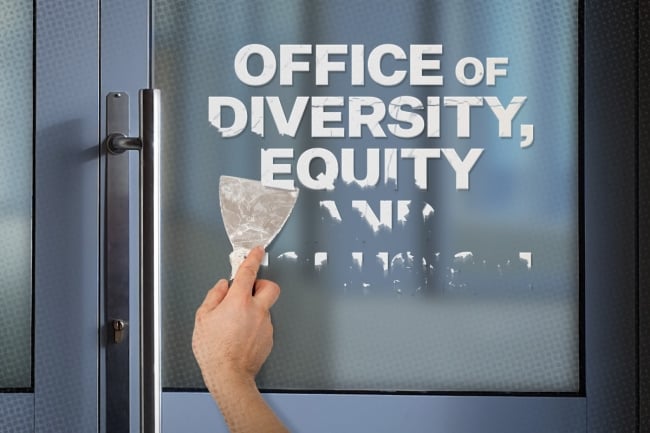 percent (6). Beginning librarian salaries have remained essentially flat for over a decade, with the median annual wage for new hires sitting at just $41,864 in 2021 (7). These economic challenges compound diversity recruitment efforts, as competitive private sector opportunities draw potential candidates away from public service.
Library professionals are responding creatively to these constraints. Some institutions are integrating diversity work into broader organizational units or reframing initiatives using terms like “inclusion and belonging” rather than DEI (4). Others are focusing on proven hiring strategies that don’t explicitly reference diversity but still broaden candidate pools, such as offering flexible work arrangements, partnering with community organizations, and emphasizing cultural competencies in job descriptions (8).
The American Library Association has maintained its commitment to equity principles despite external pressure, releasing advocacy toolkits and reaffirming core values related to intellectual freedom and inclusive service (6). Professional organizations continue supporting mentorship programs and leadership development for underrepresented library workers, though the sustainability of these efforts remains uncertain.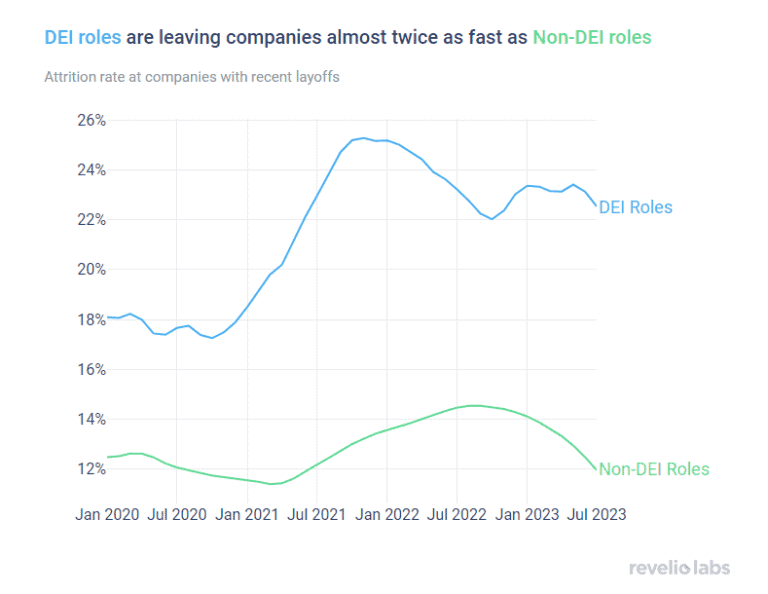
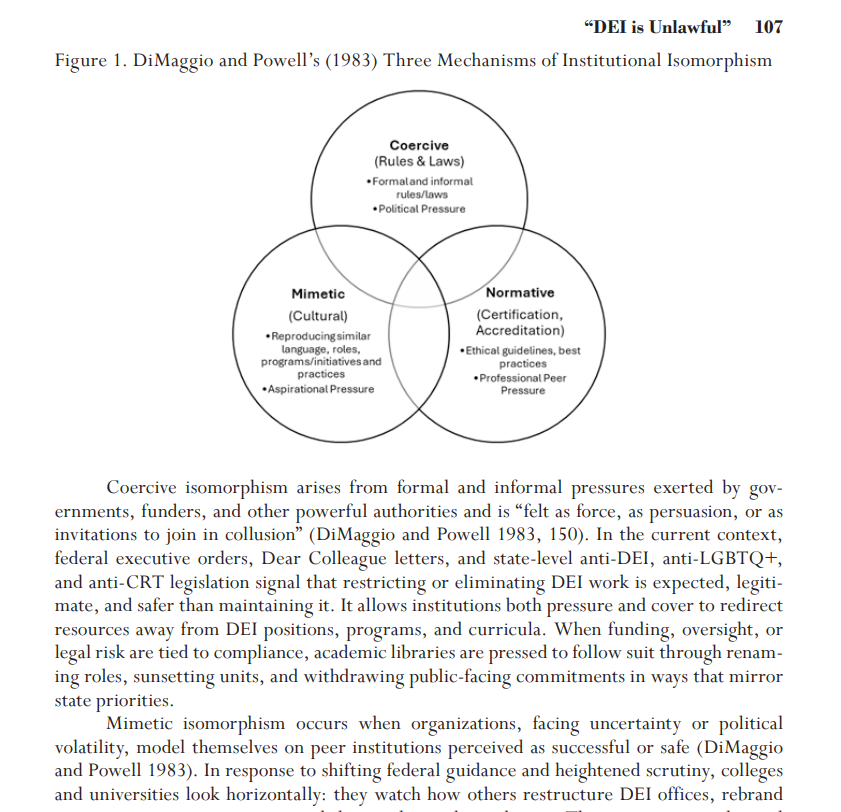
Yet the broader trend is undeniable. As one library director noted in the Political Librarian journal, institutions are being forced to “unpublish DEI LibGuides” and “sunset DEI committees,” all framed as preemptive compliance measures (4). The convergence of legislative mandates, funding restrictions, and social media campaigns targeting corporate DEI programs has created an
https://journals.library.wustl.edu/pollib/article/9144/galley/25891/view/
environment where even supportive library leaders feel pressured to scale back visible diversity initiatives.
The long-term implications for library service remain unclear. Advocates argue that workforce diversity is essential for libraries to serve increasingly diverse communities effectively, citing research indicating that representative staffing increases patron engagement and trust. Critics counter that hiring should focus solely on qualifications without considering demographic factors, though this perspective overlooks systemic barriers that have historically limited access to library careers for underrepresented groups.
What is certain is that public libraries now face a fundamentally different hiring environment than existed just three years ago. How libraries balance these competing demands will shape not only their staffing patterns but their ability to fulfill their mission in an increasingly polarized America.
Sources
- The White House. (2025, January 21). Ending Radical And Wasteful Government DEI Programs And Preferencing. https://www.whitehouse.gov/presidential-actions/2025/01/ending-radical-and-wasteful-government-dei-programs-and-preferencing/
- Public Library Association. (2025, August). Public Library Staffing Report: Results from the 2024 PLA Survey. https://www.ala.org/sites/default/files/2025-08/PLA_Staff_Survey_2025.pdf
- Inside Higher Ed. (2024, December 16). How the battle over DEI shook out in 2024 and what’s to come. https://www.insidehighered.com/news/faculty-issues/diversity-equity/2024/12/16/how-battle-over-dei-shook-out-2024-and-whats-come
- The Political Librarian. (2025, December). “DEI is Unlawful”: Examining Academic Libraries’ Responses. Special Issue, vol. 8.2. https://journals.library.wustl.edu/pollib/article/9144/galley/25891/view/
- Bersin, J. (2024, January 12). Are Diversity And Inclusion Programs Going Away? Josh Bersin. https://joshbersin.com/2024/01/are-diversity-and-inclusion-programs-going-away/
- Department for Professional Employees, AFL-CIO. (2025, June 11). Library Professionals: Facts, Figures, and Union Membership. https://www.dpeaflcio.org/factsheets/library-professionals-facts-and-figures
- How to Become a Librarian. (2024, March 6). Librarian Salary: How much do Librarians Make? https://howtobecomealibrarian.com/librarian-salary/
- National League of Cities. (2023, January 20). Public Library Staff Support Diverse Communities. https://www.nlc.org/article/2022/10/31/public-library-staff-support-diverse-communities/