Collection Development and the Self-Help Genre: Meeting Patron Demand in Libraries
The self-help genre has experienced explosive growth, creating both opportunities and challenges for library collection development. With over 15,000 self-help books published
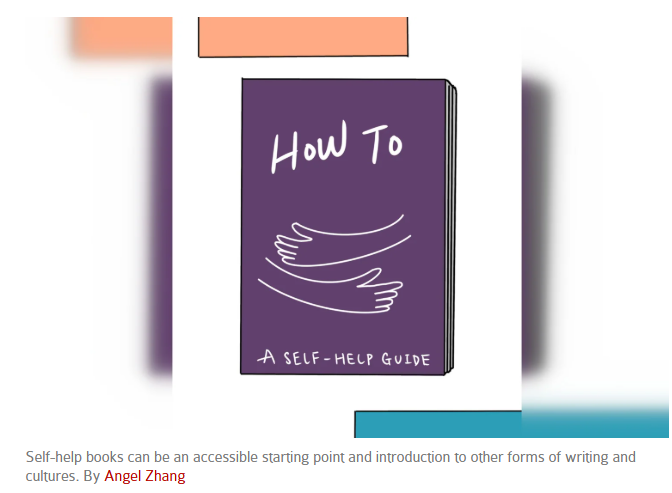
https://www.thecrimson.com/article/2024/11/7/self-help-books-accessible-introductions-cultures-genres/
annually in the United States and the industry projected to reach $14 billion by 2025 (1), librarians must strategically navigate this market while balancing patron demand against budget constraints.
Collection development requires careful attention to emerging trends (2). Self-help has proven particularly dynamic,  with circulation data indicating that it is among the most popular nonfiction genres. According to Library Journal’s surveys, self-help and psychology titles rank among the top-performing categories, with 50% of libraries reporting strong print circulation and 67% noting robust ebook demand (3).
The phenomenon reached new heights in 2024 with Mel Robbins’ “The Let Them Theory,” which became the top-selling book of 2025 according to Publishers Weekly, moving over 7 million copies within nine months of its December 2024 release (4). Libraries nationwide added this title to their collections, with major systems making it available through  both physical and digital formats (5). The book’s core premise—releasing control over others’ actions and focusing on personal agency—resonated with readers seeking practical stress management tools.
Robbins’ success exemplifies the sustained dominance of accessible self-improvement titles. James Clear’s “Atomic Habits” continues to appear on bestseller lists seven years after its publication, demonstrating the genre’s staying power (6). Other perennial favorites include “The Four Agreements” by Don Miguel Ruiz and “The Courage to Be Disliked” by Ichiro Kishimi (7).
Recent circulation patterns indicate that audiobooks are particularly popular for self-help content. Library Journal’s 2024 Audiobook Survey Report found that self-help titles accounted for 12% of adult nonfiction audiobook circulation (8). The convenience of consuming motivational content during commutes has driven growth in digital audiobook circulation, with 90% of libraries reporting increases (9).
Collection development librarians employ various strategies to build self-help collections while maintaining quality. Selection criteria typically include author credentials, critical reviews, patron requests, and alignment with community needs (10). Many consult professional resources, such as Baker & Taylor’s bestseller data, to identify high-demand titles (11).
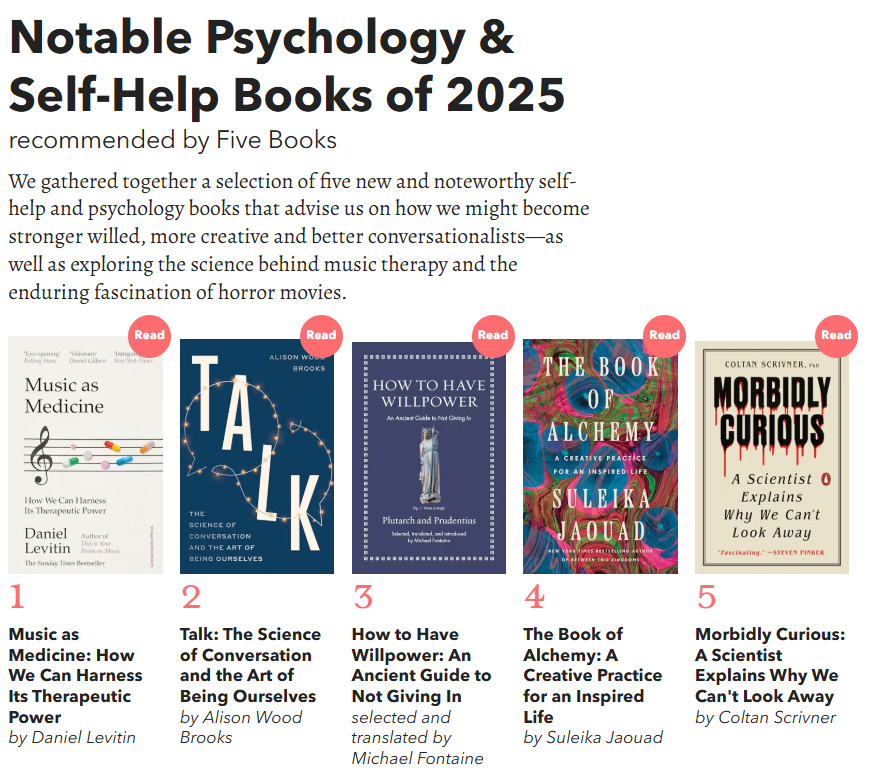
https://fivebooks.com/best-books/self-help-books-2025/
The challenge lies in balancing popularity with diversity. While blockbuster titles generate significant holds, professionals must also consider works addressing specific demographics, cultural perspectives, and specialized topics within the broader self-help umbrella.
Budget allocation requires careful consideration of circulation rates. High-demand titles often necessitate purchasing multiple copies across formats—print, ebook, and audiobook—to manage wait times. Digital lending has introduced new purchasing models, allowing libraries to optimize spending based on actual usage (12).
Looking ahead, collection development in self-help will continue evolving alongside reader  preferences. Libraries must remain responsive to patron needs while maintaining standards for quality and diversity. As recent collection management guides note, the process demands ongoing evaluation to ensure resources effectively serve community needs (13).
The popularity of the self-help genre shows no signs of waning. By strategically developing these collections, libraries fulfill their mission of providing accessible resources that empower individuals to improve their lives, relationships, and well-being.
Sources
- Demneri, E. (2024, November 7). Bridging the gap: Self-Help books as accessible introductions to other genres and cultures. Arts | the Harvard Crimson. https://www.thecrimson.com/article/2024/11/7/self-help-books-accessible-introductions-cultures-genres/
- Ashikuzzaman, M. (2025, July 30). What is library collection development? A comprehensive guide. Library & Information Science Education Network. https://www.lisedunetwork.com/collection-development-library/
- Library Journal survey finds that public library circulation has dipped slightly (0.5%) for the first time since 1999. (2019, April 26). Library Research Service. https://www.lrs.org/2019/04/26/library-journal-survey-finds-that-circulation-has-dipped-slightly-0-5-for-the-first-time-since-1999/
- Amazon.com: The Let Them Theory. (2025). https://www.amazon.com/Let-Them-Theory-Life-Changing-Millions/dp/1401971369
- The Let Them Theory. Boston Public Library. (2024). https://bpl.bibliocommons.com/v2/record/S75C8968230
- Notable Psychology & Self-Help Books of 2025. (2025). Five Books. https://fivebooks.com/best-books/self-help-books-2025/
- Self-Help 2024 Books. (2024). Goodreads. https://www.goodreads.com/shelf/show/self-help-2024
- Anderson, P. (2025, January 17). New Research on Audiobook Circulation in US Libraries. Publishing Perspectives. https://publishingperspectives.com/2025/01/new-research-on-audiobook-circulation-in-us-libraries/
- Celebrating Audiobooks from Our Libraries! (2025). Library Research Service. https://www.lrs.org/2025/06/06/celebrating-audiobooks-from-our-libraries/
- Nine Basics of Collection Development. (2024, April 5). Biblionix. https://www.biblionix.com/nine-basics-of-collection-development/
- 20 Bestselling Self-Help Books. (2025, April 9). Library Journal. https://www.libraryjournal.com/story/Best-Selling-Self-Help-Books-The-Most-Sought-After-Titles-by-Public-Libraries
- Library transformation: Ten ways to make it happen in 2025. (2024, December 17). ProQuest. https://about.proquest.com/en/blog/2024/library-transformation-ten-ways-to-make-it-happen-in-2025/
- An updated, top-to-bottom guide to collection development and management. (2025, March). American Library Association. https://www.ala.org/news/2025/03/updated-top-bottom-guide-collection-development-and-management