Doing Some Good: Libraries Helping Those with Substance Abuse Disorders
Libraries play an often-overlooked but vital role for people struggling with drug and substance use disorders. As accessible, public spaces, libraries serve as points of contact where basic needs are met, life-saving supplies are often available, and connections to treatment and recovery supports are made—actions that reduce harm and save lives. [1] American Library Association+1
Libraries increase access to life-saving interventions. Many systems have begun stocking naloxone (Narcan) and training staff to respond to opioid overdoses—moves recognized at the national level and promoted by
https://library.samhsa.gov/sites/default/files/overdose-prevention-response-kit-pep23-03-00-001.pdf
harm-reduction advocates and health agencies. Having naloxone available in community sites like libraries makes immediate reversal possible in public settings where overdoses increasingly occur. [2] American Library Association+1 . I spoke with a woman named Brittany who had shared her story about substance abuse previously. I asked her if libraries had helped her recover from addiction, and she said books were a large part of her efforts in self-education, which directly led to her turning her life around.
Second, libraries reduce barriers to information and referral. Librarians and specially trained library social workers help patrons locate treatment, housing, food assistance, and peer-recovery groups—services that people with substance use disorders commonly need but may not know how to find. Libraries’ trusted public presence enables staff to discreetly refer patrons to behavioral health services and community organizations, thereby bridging to longer-term care that many clients would otherwise miss. [3] American Library Association+1
Third, libraries contribute to harm reduction and public-health strategies. In several cities, public health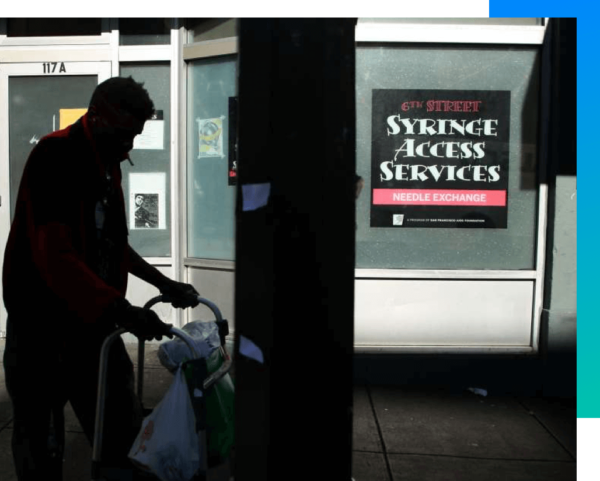 partnerships have distributed harm-reduction supplies—such as naloxone and drug-testing strips—at library locations, and libraries have served as distribution points or information hubs for syringe services and disposal guidance. These low-threshold services reduce disease transmission and unsafe drug use practices while fostering relationships that can lead to treatment engagement. [4] oppl.org+1
Fourth, libraries protect vulnerable populations by providing safe daytime shelter and essential resources. Many patrons who use substances also face homelessness, mental illness, or poverty; libraries provide warmth, restrooms, internet access, and a stable place to be that can reduce harms associated with street survival. Research shows people experiencing homelessness face substantial obstacles getting help for substance use; meeting basic needs in safe settings is a necessary precursor to effective outreach and recovery. [5] PMC+1
Finally, libraries can be part of data-driven public-health responses. Cities that integrated libraries into

https://pmc.ncbi.nlm.nih.gov/articles/PMC8753323/#Sec6
overdose-prevention strategies—including distributing naloxone and drug-checking supplies—have reported measurable declines in overdose deaths after combining library efforts with surveillance and community outreach. This demonstrates that library-centered interventions, while not a substitute for clinical care, are a scalable component of comprehensive overdose-prevention systems. [6] The Guardian+1
Challenges remain: staff burnout, safety concerns, inconsistent funding, and policy barriers can limit what libraries can provide. Yet the trend is clear—libraries are evolving from quiet repositories of books into active public-health partners that meet people where they are, reduce immediate risks, and connect patrons to recovery pathways. Supporting libraries with training, funding for naloxone and harm-reduction supplies, and formal partnerships with health agencies multiplies their impact and helps communities save lives.
Sources
- American Library Association. (2024, October 8). White House recognizes libraries’ efforts to save lives from overdose. ALA. American Library Association
- Substance Abuse and Mental Health Services Administration. (2025, July 28). Overdose prevention and response toolkit. SAMHSA. SAMHSA Library
- Feuerstein-Simon, R., et al. (2022). Substance use and overdose in public libraries. [Article]. PubMed Central. PMC
- Harm Reduction Coalition / HarmReduction.org. (n.d.). Syringe access resources. National Harm Reduction Coalition
- Nicholls, M., et al. (2021). Homelessness and polysubstance use: A qualitative study. PubMed Central. PMC
- The Guardian. (2025, October 17). How Chicago succeeded in reducing drug overdose deaths. The Guardian