
The Environmental Cost of AI: How Data Centers Impact Our Planet
The artificial intelligence revolution has transformed how we interact with technology, from chatbots that can research anything to systems that can generate realistic videos from text prompts. However, this technological leap forward comes with a hidden environmental cost that is difficult to ignore. The massive data centers powering AI applications are consuming unprecedented amounts of energy and resources, sparking outrage among communities and creating an ecological challenge that requires prompt attention and innovative solutions.
The Scale of the Problem
The environmental impact of AI data centers is staggering in scope and continues to grow rapidly.
https://www.techtarget.com/searchdatacenter/feature/How-the-rise-in-AI-impacts-data-centers-and-the-environment
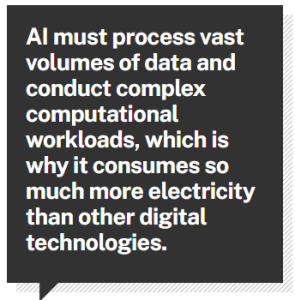
Data centers and data transmission networks each account for 1% to 1.5% of global electricity consumption and 1% of energy-related greenhouse gas emissions (1). To put this in perspective, a request made via ChatGPT, an AI-based virtual assistant, uses 10 times as much electricity as a Google Search (2).
The carbon footprint of AI training is particularly alarming. The training process for a single AI model, such as an LLM, can consume thousands of megawatt hours of electricity and emit hundreds of tons of carbon (3). In 2024 alone, data centers produced 140.7 megatons of CO2, which would require 6.4 gigatons of trees to absorb all the CO2 (4).
The problem is accelerating at an unprecedented pace. Research estimates that AI will drive a 160% increase in data center demand, with 2024 expected to witness a colossal $57 billion investment in the sector (5). This rapid expansion has real economic consequences for consumers, with a 2024 report from the Virginia legislature estimating that average residential ratepayers in the state could pay an additional $37.50 every month in data center energy costs (6).
Beyond Energy: Water and Waste Concerns
The environmental impact extends far beyond electricity consumption. AI model training can also lead to the evaporation of a massive amount of freshwater into the atmosphere for data center heat rejection, potentially exacerbating  stress on freshwater resources (3). This water consumption is particularly problematic in regions already facing water scarcity.
Additionally, the sprawling data centers that house AI servers generate toxic electronic waste (7), contributing to the growing global e-waste crisis. The rapid obsolescence of AI hardware compounds this problem, as companies continuously upgrade to more powerful systems to remain competitive.
Corporate Environmental Setbacks
Even tech giants with ambitious climate goals are struggling to meet their targets due to the rapid expansion of AI. In 2024, Google failed to meet key goals from its net zero plan, partly due to its work with AI, and experienced a 48% increase in greenhouse gas emissions attributable to its growth in AI (2). This setback highlights how AI development can undermine established sustainability commitments.
The Root of the Problem
The fundamental issue lies in the energy sources powering these data centers. The International Energy Agency has

https://www.nlc.org/article/2025/05/23/data-centers-and-local-environmental-considerations/
stated that AI is contributing to a significant increase in power demand, which in turn is contributing to a rise in emissions because our grids haven’t yet been decarbonized. They’re still hugely reliant on fossil fuels (8).
As of 2025, there are an estimated 3,600 data centers in the U.S. Of these, at least 600 are hyperscale data centers, which are the most resource-intensive (9), making them the primary targets for environmental remediation efforts.
Technological Solutions and Green Innovations
Despite the challenges, several promising solutions are emerging to address AI’s environmental impact. The concept of  “green AI” is gaining traction, as green artificial intelligence is more environmentally friendly and inclusive than conventional AI, producing accurate results without increasing computational costs (10).
Data center operators are implementing innovative approaches to reduce their environmental footprint. To address the rising challenges of energy efficiency in data centers, operators are implementing innovative cooling systems, integrating renewable energy sources, and adopting on-site power solutions (11).
Artificial intelligence itself is becoming part of the solution. The green data center has emerged as a promising solution, leveraging AI to optimize efficiency and reduce carbon emissions (12). A variety of innovative grid solutions, including those enabled by artificial intelligence, can help utilities and asset owners improve utilization of existing infrastructure through technologies such as dynamic line ratings and grid topology optimization (13).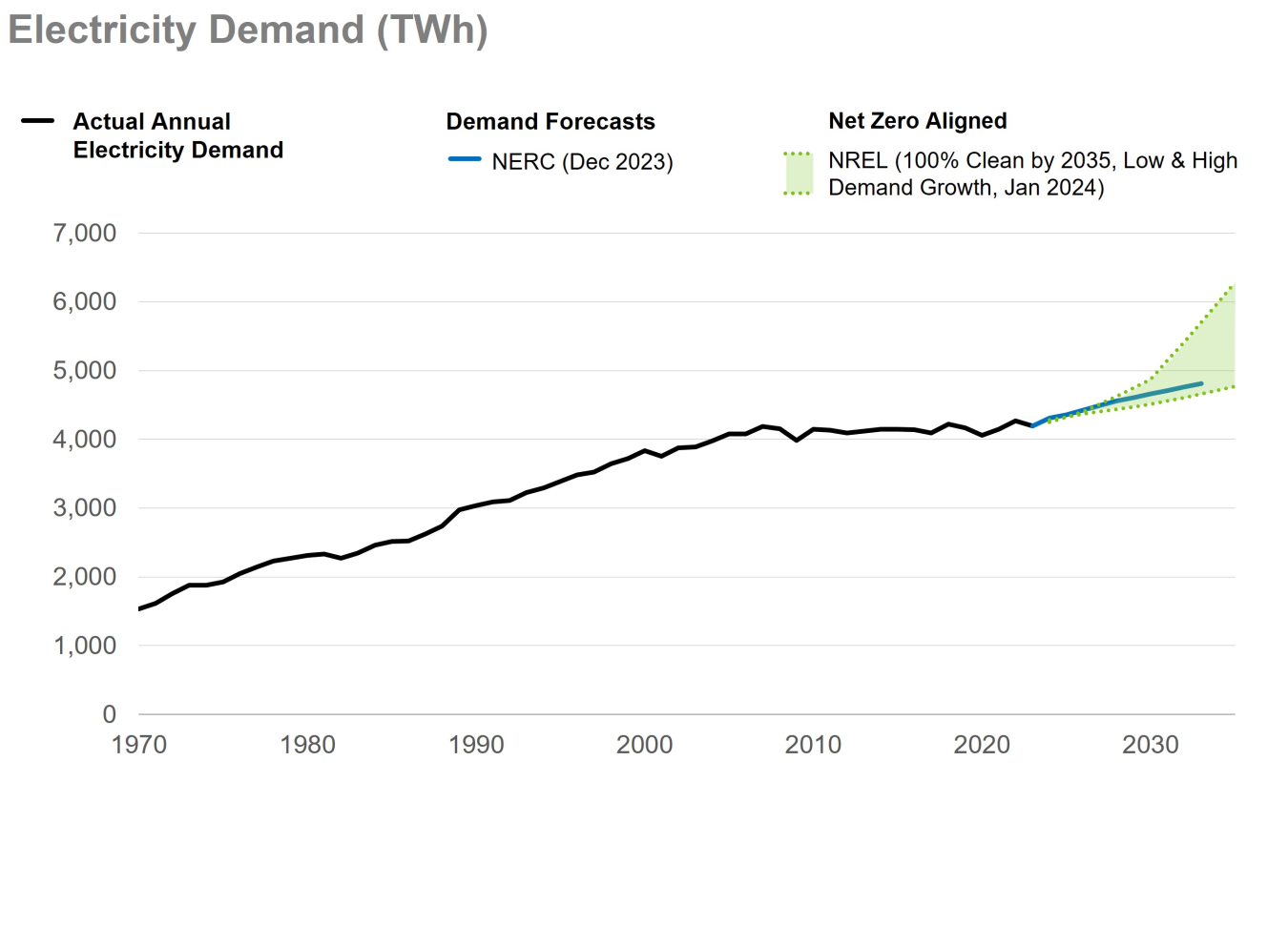
Looking toward the future, energy projections show potential for improvement. Continuous improvements in AI and data center processing efficiency could yield an energy consumption level of approximately 1,000 TWh by 2030 (14), though this outcome depends on the successful implementation of efficiency measures.
Policy and Infrastructure Solutions
Addressing the AI environmental crisis requires coordinated efforts across multiple sectors. Governments can incentivize the adoption of renewable energy for data centers through tax credits and regulatory frameworks. Investment in grid modernization and renewable energy infrastructure is crucial for supporting clean data center operations.
Companies must be held accountable for their environmental commitments, with transparent reporting requirements for emissions related to AI. Industry standards for green AI development should be established, encouraging efficient 
The Critical Role of Libraries in Environmental Awareness
Libraries play a unique and vital role in addressing the environmental challenges posed by AI data centers. As trusted community institutions, libraries are ideally positioned to educate the public about the hidden environmental costs of digital technologies. They can host educational workshops explaining how everyday AI use impacts the environment, helping citizens make more informed decisions about their digital consumption.
Libraries can serve as information hubs, maintaining current collections of resources about sustainable technology practices and the environmental impacts of emerging technologies. Through their digital literacy programs, libraries can teach users about energy-efficient computing practices and alternatives to resource-intensive AI applications.
Furthermore, libraries can model sustainable practices by choosing environmentally responsible digital services and platforms for their operations. They can partner with environmental organizations to host community discussions about the ecological impact of technology and advocate for sustainable technology policies at the local level.
Libraries can also facilitate access to green technology alternatives, providing public computers optimized for energy efficiency and offering training on sustainable digital practices. By leveraging their role as community connectors, libraries can help build coalitions focused on promoting environmental awareness about the impact of technology.
The environmental impact of AI data centers represents one of the most pressing sustainability challenges of our digital age. While the scale of the problem is daunting, with data centers contributing significantly to global emissions and resource consumption, the emergence of green AI technologies and sustainable data center practices offers hope for a more environmentally responsible future.
Success in addressing this crisis will require coordinated action from technology companies, governments, and communities. Libraries, as trusted educational institutions, play a crucial role in raising public awareness and promoting sustainable digital practices. Only through collective effort can we ensure that the benefits of artificial intelligence don’t come at the expense of our planet’s future.
Sources
- TechTarget. “How the rise in AI impacts data centers and the environment.” https://www.techtarget.com/searchdatacenter/feature/How-the-rise-in-AI-impacts-data-centers-and-the-environment
- Wikipedia. “Environmental impact of artificial intelligence.” Last updated 1 week ago. https://en.wikipedia.org/wiki/Environmental_impact_of_artificial_intelligence
- Harvard Business Review. “The Uneven Distribution of AI’s Environmental Impacts.” July 15, 2024. https://hbr.org/2024/07/the-uneven-distribution-of-ais-environmental-impacts
- University of San Francisco – Office of Sustainability Student Blog. “The Environmental Impact of Data Centers and Artificial Intelligence.” March 6, 2025. https://usfblogs.usfca.edu/sustainability/2025/03/06/the-environmental-impact-of-data-centers-and-artificial-intelligence/
- Hitachi Energy. “AI load impact on Data Centers.” March 20, 2025. https://www.hitachienergy.com/us/en/news-and-events/blogs/2025/03/ai-load-impact-on-data-centers-adapting-to-the-future-of-infrastructure
- MIT Technology Review. “We did the math on AI’s energy footprint. Here’s the story you haven’t heard.” May 20, 2025. https://www.technologyreview.com/2025/05/20/1116327/ai-energy-usage-climate-footprint-big-tech/
- UN Environment Programme. “AI has an environmental problem. Here’s what the world can do about that.” https://www.unep.org/news-and-stories/story/ai-has-environmental-problem-heres-what-world-can-do-about
- PBS NewsHour. “The growing environmental impact of AI data centers’ energy demands.” May 25, 2025. https://www.pbs.org/newshour/show/the-growing-environmental-impact-of-ai-data-centers-energy-demands
- National League of Cities. “Data Centers and Local Environmental Considerations.” May 23, 2025. https://www.nlc.org/article/2025/05/23/data-centers-and-local-environmental-considerations/
- ScienceDirect. “A review of green artificial intelligence: Towards a more sustainable future.” June 22, 2024. https://www.sciencedirect.com/science/article/pii/S0925231224008671
- Bloom Energy. “Powering AI: Future-Proofing Data Centers.” April 28, 2025. https://www.bloomenergy.com/blog/powering-ai/
- Data Center Knowledge. “Sustainable Future: How AI Is Powering the Green Data Center Revolution.” May 13, 2025. https://www.datacenterknowledge.com/sustainability/sustainable-future-ai-powers-the-green-data-center-revolution
- U.S. Department of Energy. “Clean Energy Resources to Meet Data Center Electricity Demand.” https://www.energy.gov/gdo/clean-energy-resources-meet-data-center-electricity-demand
- Deloitte. “As generative AI asks for more power, data centers seek more reliable, cleaner energy solutions.” June 11, 2025. https://www.deloitte.com/us/en/insights/industry/technology/technology-media-and-telecom-predictions/2025/genai-power-consumption-creates-need-for-more-sustainable-data-centers.html