
Job Satisfaction Rates Among Public Library Librarians: A 2024 Analysis
The library profession has undergone significant transformation in recent years, particularly following the COVID-19 pandemic, evolving technology demands, and shifting societal expectations. Understanding job satisfaction among public library librarians provides crucial insights into workforce stability, recruitment challenges, and the overall health of the profession. Recent surveys and studies have revealed complex patterns in librarian job satisfaction, with notable declines from pre-pandemic levels, while highlighting both persistent challenges and emerging opportunities within the field.
Current Job Satisfaction Trends
Recent data indicates a concerning decline in job satisfaction among public library professionals. In a 2013 survey, job satisfaction was at 71 percent among respondents in public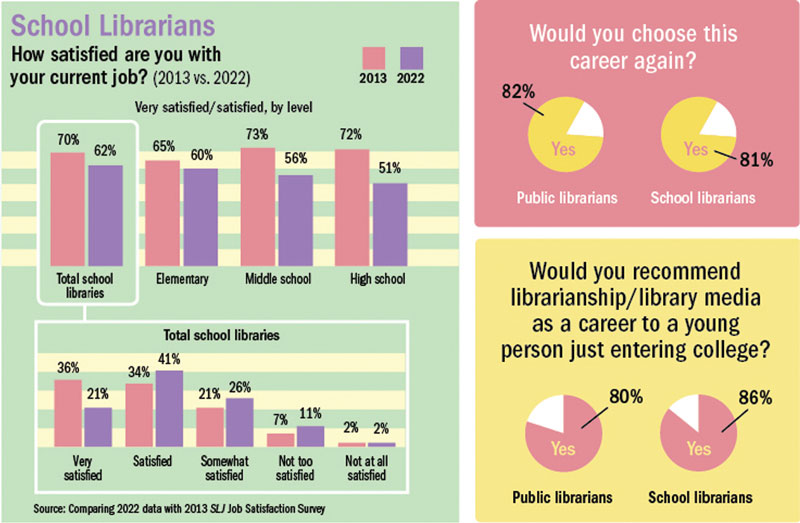 libraries and 70 percent in school libraries. This year, job satisfaction levels are at 57% and 62%, respectively (1). This represents a significant 14 percentage point drop in public library satisfaction over the past decade, suggesting systemic challenges affecting the profession.
The broader library workforce has experienced similar declines. In the intervening years, job satisfaction has dropped notably—from 70 percent of library employees who stated that they were either “very satisfied” (32 percent) or “satisfied” (38 percent) with their positions in 2012 to 56 percent who say the same in 2022 (2). This trend reflects industry-wide concerns that extend beyond public libraries alone, affecting academic, school, and special libraries as well.
Notably, there has been a significant decline in satisfaction among those working with teens in public libraries. The most significant decrease was among those working with teens in public libraries, from 81% to 49% (1). This 32 percentage point drop represents one of the steepest declines in satisfaction within any library specialty area, potentially indicating unique stressors affecting youth services librarians.
Employment Patterns and Career Satisfaction
Despite challenges to satisfaction, the field continues to attract new graduates, although employment patterns reveal shifting preferences and priorities. While public libraries continue to draw the most new degree earners, 2023 was the third year in a row in which the share of graduates moving into public library roles dropped slightly, moving from 33 percent (2021) to 30 percent (3). This decline suggests that while public libraries remain the largest employer of new librarians, their appeal may be diminishing relative to other opportunities.
Recent graduates entering the field demonstrate strong initial satisfaction rates. Regarding post-degree placements, 74 percent of those surveyed report being satisfied with their position (3). However, this satisfaction appears to be influenced by realistic expectations and awareness of career trajectory, with many new librarians understanding that they may need to progress through entry-level positions before reaching their ideal roles.
The connection between organizational culture and job satisfaction remains a strong one. Libraries with positive and happy librarians and staff, characterized by a more supportive team atmosphere, had higher satisfaction and engagement (4). This finding underscores the importance of the workplace environment and management practices in maintaining high staff satisfaction levels.
Factors Driving Job Dissatisfaction
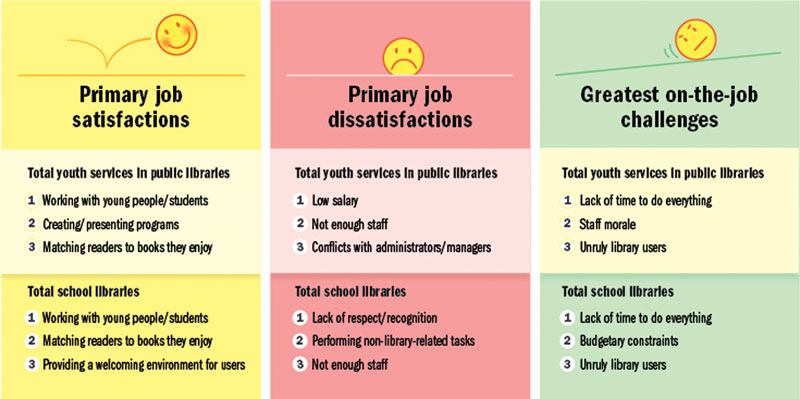
Compensation concerns represent the most frequently cited source of dissatisfaction among library professionals. Among the open-ended responses to “What is the single most important thing you look for in an employer?” the words “pay” or “salary” were mentioned close to 150 times. “Benefits” got 67 mentions, and different iterations of “work-life balance” also had a strong showing (3). The emphasis on financial compensation reflects ongoing challenges with library salaries failing to keep pace with the increasing educational requirements and rising living costs.
The financial strain is particularly acute for new graduates. The topic of job satisfaction carries extra weight when graduates share their student loan debt; on average, the class of 2023 carries $35.5 thousand in student loans, though 44 percent did graduate without incurring any debt (3). For those with debt, inadequate salaries create additional stress and may influence career decisions and job satisfaction levels.
Specific examples of compensation-related dissatisfaction illustrate the severity of the issue. One public library graduate reported being “working in the same position I held before and during my time as a graduate student, which I am now overqualified and underpaid for” (3). Another noted that working “three library jobs and still do not make a living wage” (3) highlights how inadequate compensation forces librarians to seek multiple employment arrangements to achieve financial stability.
Career trajectory limitations also contribute to dissatisfaction. Some graduates expressed frustration with organizational transparency and advancement opportunities. While I love my current job, I am dissatisfied with my organization’s lack of transparent policy regarding pay grades and advancement steps, noted one public librarian who received only a minimal raise despite completing their MLS degree (3).
Sources of Professional Satisfaction
Despite these challenges, library work continues to provide meaningful satisfaction for many professionals. When asked, “What do you consider to be the primary satisfaction of your job?” the most frequent answer among both public and school libraries was “Working with young people/students.” “Helping users discover and use library resources” was the answer most often selected among academic libraries (2). This alignment between personal values and daily work responsibilities represents a core strength of the library profession.
The mission-driven nature of library work continues to attract and retain professionals who find purpose in their roles. Graduates prioritized positions that align with their values, including a commitment to DEI (diversity, equity, and inclusion) practices and strong institutional stances on upholding intellectual freedom rights (3). This values-based satisfaction can help counterbalance some financial and organizational frustrations.
Professional autonomy and variety in responsibilities also contribute to job satisfaction, particularly in smaller library systems. One community college librarian noted the appeal of working “in a small community college with only two librarians, so I have a huge variety of responsibilities and autonomy” (3). This diversity of tasks and independence can provide professional fulfillment that may be lacking in more specialized or hierarchical organizations.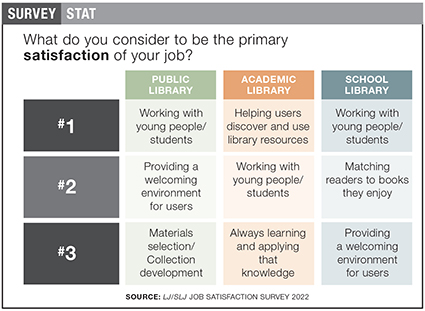
Workplace Flexibility and Remote Work
The pandemic has permanently altered workplace expectations, with implications for job satisfaction. While the majority (71 percent) of full-time employed graduates are working entirely in-person (up from 64 percent last year), five percent (down from nine percent) are fully remote, and 24 percent are hybrid (3). The continuation of flexible work arrangements, even as many organizations return to in-person operations, suggests recognition of their importance for employee satisfaction and recruitment.
However, remote work arrangements in library settings present unique challenges. Recent graduates working in private industry (33 percent) and consultants (67 percent) are the most likely to be working exclusively from home. None of those working in public libraries, school libraries, and archives/special collections work remotely (3). This limitation may affect public libraries’ competitiveness in recruiting professionals who have come to value workplace flexibility.
Emerging Roles and Professional Development
The library profession continues to evolve, with new responsibilities and specializations emerging that may influence job satisfaction. Digital content job assignments accounted for 20 percent, a significant increase from the 3.4 percent reported a decade ago; other relatively new roles included makerspace work (10 percent), emerging technologies (9 percent), and AI (4 percent) (3). These technological advances create opportunities for professional growth and specialization that may enhance job satisfaction for librarians interested in innovation.
Artificial intelligence represents a particularly significant emerging area. Several graduates reported that they taught AI literacy and developed AI-related resources as part of their roles. We teach AI in credit-bearing information literacy courses, noted one academic librarian, while school librarians reported teaching students and staff about AI applications (3). These emerging responsibilities can provide intellectual stimulation and professional development opportunities that contribute to job satisfaction.
The expansion of library services into new technological domains reflects the profession’s adaptability and continued relevance. One graduate working in archives noted dealing “with digital assets in many formats, including new/emerging formats that didn’t exist when the library was founded, such as GIFs and TikTok-style videos” (3). This evolution of professional responsibilities can provide variety and learning opportunities that enhance job satisfaction for those embracing change.

Geographic and Institutional Factors
Geographic location has a significant impact on both job availability and job satisfaction. The class of 2023 found jobs across the country and beyond, with 18 percent relocating for their placement (3). However, relocation requirements can create barriers and stress for professionals who face family or financial constraints that limit their mobility.
Regional salary variations also affect satisfaction levels. The Pacific region had the highest average full-time salary, at $75,526; the South-Central region had the lowest, with an average of $54,189 (3). These geographic disparities can significantly influence career decisions and satisfaction, particularly when the cost-of-living differences are taken into account.
The challenge of geographic limitations affects career progression for some professionals. I worked in a library for 20 years before beginning my MLIS. I’ve been applying for five years since leaving that role, and obtained my MLIS during that time, but I have yet to be hired as a librarian again. I do not have the flexibility to move for a position at this time (3). This example illustrates how geographic constraints can trap experienced professionals in unsatisfying situations despite their qualifications and commitment to the field.
Future Implications and Recommendations
The decline in job satisfaction among public library librarians presents a significant challenge that requires systemic responses. The emphasis on compensation in job searches suggests that competitive salaries and benefits packages will be crucial for attracting and retaining top talent. Fifty-three percent of students with loans expect public service loan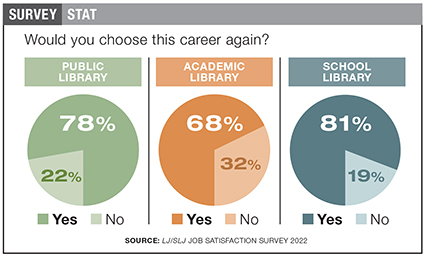 forgiveness after 10 years with qualifying employers. This factor made a difference in choosing a placement for 55 percent of those expecting loan forgiveness (3). This reliance on loan forgiveness programs indicates that many librarians view library salaries as inadequate without additional financial support.
Professional development opportunities and career advancement pathways also require attention. Libraries that can provide clear advancement structures, diverse responsibilities, and ongoing learning opportunities may be better positioned to maintain higher staff satisfaction levels. The appeal of emerging technologies and new service areas suggests that libraries investing in innovation and professional growth may see corresponding benefits in staff satisfaction and retention.
The persistent appeal of mission-driven work and service to communities provides a foundation upon which libraries can build to improve job satisfaction. By addressing compensation concerns while maintaining focus on the meaningful aspects of library work, public libraries can work toward reversing the declining satisfaction trends and building a more sustainable professional workforce for the future.
Sources
- School Library Journal. (2023, February 21). Under Pressure: Survey Provides Insight into Librarians’ Job Satisfaction. https://www.slj.com/story/Under-pressure-insight-into-librarians-Job-Satisfaction-from-LJ-SLJ-survey-school-and-youth-services-libraries
- Library Journal. (2023, March 6). Satisfaction (Not Always) Guaranteed | Job Satisfaction Survey 2022. https://www.libraryjournal.com/story/Satisfaction-Not-Always-Guaranteed-job-satisfaction-survey-2022
- Witteveen, A. (2024, October 15). Challenges, Opportunities | Placements and Salaries Survey 2024. Library Journal. https://www.libraryjournal.com/story/challenges-opportunities-placements-and-salaries-2024
- American Library Association. (2019, September 10). Job Satisfaction and Workplace Engagement in Libraries. Library Worklife. https://ala-apa.org/newsletter/2019/09/10/job-satisfaction-and-workplace-engagement-in-libraries/
- Hiring Librarians. (2024, March 27). 2024 State of the Library Job Market Survey. https://hiringlibrarians.com/stats/2024-state-of-the-library-job-market-survey/