
ICE in the Library with a Warrant
In times of heightened immigration enforcement, libraries serve as vital sanctuaries for vulnerable community members. By implementing informed policies and offering targeted resources, libraries can uphold their commitment to inclusivity and intellectual freedom during and after Immigration and Customs Enforcement (ICE) actions.
Understanding Legal Rights and Responsibilities
Libraries must be well-versed in their legal rights and obligations concerning ICE activities. The American Library Association (ALA) emphasizes the importance of understanding the distinction between warrants and subpoenas and the specific conditions under which ICE agents can access library records or facilities. For instance, without a judicial warrant, ICE agents generally do not have the authority to enter non-public areas of a library or access patron records. Equipping staff with this knowledge ensures libraries can protect patron privacy and uphold constitutional rights. [1]
Developing Clear Policies and Staff Training
Establishing clear policies regarding interactions with law enforcement is essential. The Illinois Library Association advises libraries to create guidelines that delineate procedures for responding to ICE inquiries, including designating a point of contact and outlining steps to verify the validity of any warrants presented. Regular staff training on these policies ensures a consistent and lawful response during enforcement actions. [2]
Creating Safe Spaces and Community Trust
Libraries should reaffirm their role as safe havens by clearly communicating their commitment to patron confidentiality and safety. Displaying “Know Your Rights” 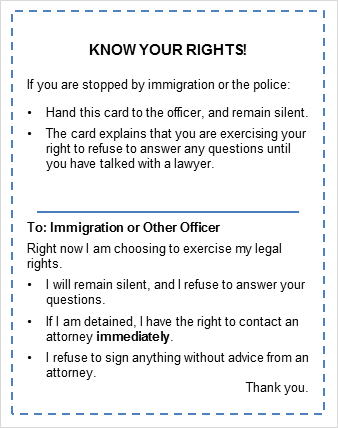 information in multiple languages and providing resources about legal rights during ICE encounters can empower patrons. Collaborations with local organizations to offer workshops or legal clinics within the library can further support immigrant communities. [3]
Advocacy and Community Engagement
Beyond internal policies, libraries can engage in broader advocacy efforts. Participating in community discussions about immigration enforcement and its impacts fosters solidarity and informs the public about the library’s stance and resources. By partnering with local advocacy groups, libraries can amplify their support for affected individuals and families. [4]
Post-ICE Visit Support
After an ICE visit, libraries should assess the event’s impact on the community and staff. Providing counseling services or support groups can help address trauma and fear resulting from enforcement actions. Continuing to offer educational programs on legal rights and available resources reinforces the library’s role as a steadfast community ally.
In conclusion, libraries can best serve their communities during and after ICE visits by being informed, prepared, and proactive. Through clear policies, staff training, community engagement, and unwavering support, libraries uphold their mission as inclusive spaces for all.
References
- Caldwell-Stone, D. (2025, January 29). Libraries and immigration enforcement – Intellectual Freedom blog. Intellectual Freedom Blog. https://www.oif.ala.org/libraries-and-immigration-enforcement/?utm_source=chatgpt.com
- Illinois Library Association. (n.d.). Libraries and immigration enforcement. https://ila.org/advocacy/libraries-and-immigration-enforcement?utm_source=chatgpt.com
- American Library Association. (n.d.). Libraries respond: immigrants, refugees, and asylum seekers. https://www.ala.org/advocacy/advocacy/diversity/libraries-respond-immigrants-refugees-and-asylum-seekers?utm_source=chatgpt.com
Carlton, A. (2020, January 13). Know your rights—and theirs | American Libraries Magazine. American Libraries Magazine. https://americanlibrariesmagazine.org/2020/01/02/know-your-rights-and-theirs-library-ice-raids/?utm_source=chatgpt.com